Climate change is changing the way El Niño impacts the weather worldwide, and scientists say that old patterns used to forecast its effects may no longer hold.
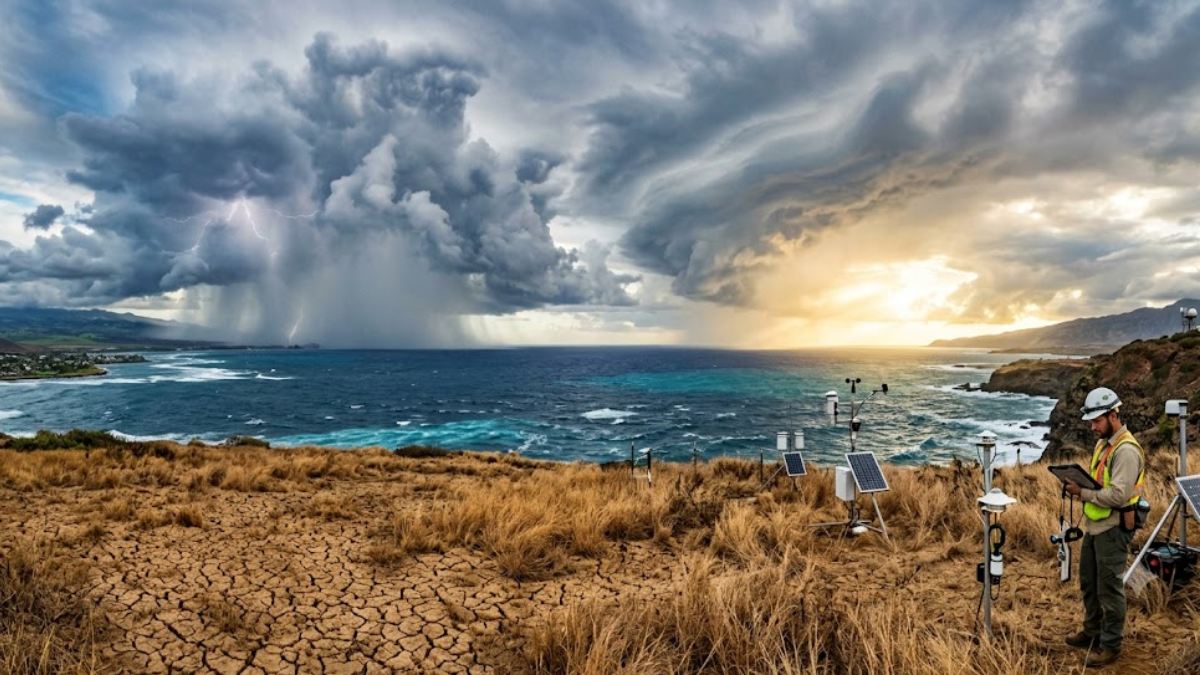
El Niño is a climate phenomenon that is a natural phenomenon in the Pacific Ocean that can affect rainfall, temperatures, storms and droughts thousands of kilometres from where we live. These distant relationships are referred to as climate “teleconnections.” New research also indicates that human-influenced warming is already modifying some of them so that an El Niño event in a warmer world may not yield the same weather patterns as in previous years.
The authors of a study led by climate scientists Eran Vos, Peter Huybers and Eli Tziperman found evidence that anthropogenic warming has been responsible for changing the teleconnection patterns between different periods since the mid-20th century.
The unusual behaviour during the 2023-24 El Niño period added to those concerns. During a conventional El Niño, some parts of North America and other parts of the world are known to have measurable changes in rainfall and temperature. But scientists studying the recent events have found that these relationships can be modified when background ocean temperatures change.
The Amazon region, for example, faced extreme drought in the 2023-24 period, and some forecasted El Niño-associated rainfall and dryness patterns across North America did not develop in the way historical records might have predicted. Scientists are also trying to determine whether warming in the tropical Atlantic and Indian oceans may lead to an altered response to the atmosphere that is typical for Pacific El Niño.
The work of Eran Vos and colleagues gives a broader historical perspective in this regard. By examining meteorological records and climate patterns across different periods, they found that a number of El Niño-related temperature responses have changed as the planet has warmed.
They compared the data from 1960-1990 with the recent years and concluded that a number of major climate teleconnections have changed more than natural variations and, therefore, climate change needs to be taken into account. The study has been done in connection with many climate modes such as the El Niño-Southern Oscillation, North Atlantic Oscillation, Southern Annular Mode, Indian Ocean Dipole and Pacific Decadal Oscillation.
The problem has been particularly urgent with the development of the powerful 2026 El Niño. The current reports describe this event as probably the strongest one since modern monitoring started in the '40s, though 'super El Niño' is not a scientific term. The event started to develop around 2026 and will continue into winter and possibly longer into 2027.
Ocean temperatures in parts of the tropical Pacific have reached extraordinarily high levels, and it has already been associated with significant disruption of weather and marine conditions. Scientists are monitoring its evolution because an extremely strong El Niño and an already warm global climate could have regional effects that are quite different from those observed during previous major events.
One of the biggest challenges for climate researchers is to know just how the warming background state will interact with El Niño. Scientists have been able to use past major events as reference points to compare the potential effects. But when global warming changes ocean temperatures outside the Pacific and changes atmospheric circulation, comparisons to past events may no longer be as reliable.
Recent studies have found that anthropogenic warming has already altered teleconnections, and other studies have found evidence that human-caused warming is driving stronger El Niño variability. A 2026 study based on long-term coral records found that El Niño variability has increased since the industrial era, though researchers are still trying to understand how and why.
The consequences go well beyond temperature forecasts. Changes in El Niño teleconnections could affect rainfall, drought risk, agriculture, water supplies, wildfire conditions, fisheries and extreme weather preparedness across the continents.
Regions such as the Amazon, parts of Asia, Africa, North America and Europe can have highly different impacts from one El Niño event to another depending on the structure and strength of the event. Scientists say that the ability to understand teleconnections in a warming climate is going to become increasingly important in seasonal forecasting and disaster preparation.
The 2026 El Niño is another big opportunity to study such changes in real time, but experts warn that they can't yet predict the regional effects. As global temperatures rise, understanding how natural climate variability and human warming are interacting to forecast the event would be very important for predicting future weather extremes.