In Namkhana of West Bengal’s South 24 Parganas district, an emotional moment has gone viral on social media after electricity reportedly reached the home of an elderly couple who had lived for decades without a household power connection.
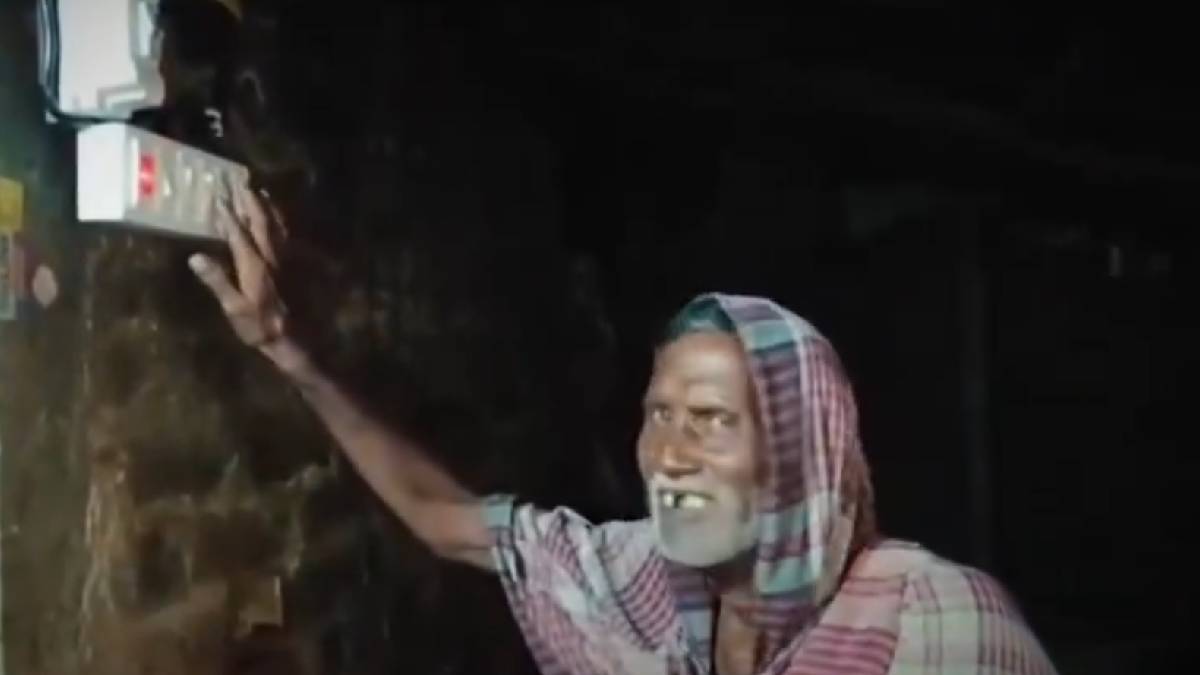
The development has raised wider questions about rural infrastructure, access to basic services and the pace of development in parts of West Bengal. For the elderly couple, it is much more immediate — a basic modern amenity that has finally become part of their daily lives.
The story has also sparked a political debate: critics of successive governments in Bengal have asked why some rural households haven’t been able to access basic infrastructure decades after Independence.
Political commentary on the development specifically blamed decades of Communist and Trinamool Congress rule for keeping Bengal behind in infrastructure. Those are political claims, though, and the reasons why this particular household has been delayed in getting electricity connected would have to be made separately.
80 years after Independence, electricity has FINALLY reached this elderly couple’s home in Namkhana, South 24 Parganas. 👏
— Megh Updates 🚨™ (@MeghUpdates) September 9, 2026
Decades of Communist & TMC rule kept Bengal in the past. Today, Bengal is FINALLY entering the 21st century. 🔥 pic.twitter.com/oSxoxcqltD
What makes the incident so important is that electricity isn’t just a convenience anymore. It’s part of modern life — education, health care, communication, household appliances, businesses and access to digital services too.
For an elderly household, the impact can be huge. Electric lighting makes life safer after dark; fans and other appliances make everyday life much easier to access; electricity can help families stay in touch through televisions, mobile phone charging, etc.
Namkhana episode thus shows us what difference basic infrastructure can make at the household level.
West Bengal has gone through a lot of economic and social change over the decades but infrastructure disparities become visible only in rural and geographically difficult areas. South 24 Parganas (large coastal deltaic geography) has some areas where connectivity and delivery of public services is particularly difficult.
Namkhana is in the Sundarbans (waterways, islands and difficult terrain). Building infrastructure in those areas is more difficult than in dense urban areas.
The elderly couple’s experience has therefore become a symbol in the political debate about whether development has reached every household equally.
The incident also comes against a political background of ongoing arguments in West Bengal over governance, public infrastructure and rural development. Proponents of the current administration can say programmes are on; access to services increased; but opponents often say implementation is patchy and some communities have been left behind.
Rather than reduce the issue to a political slogan, the episode asks “how many households are still missing basic services?” and “what can governments do so that infrastructure gets to the last mile?”
For the Namkhana couple, the answer has been a working electricity connection.
After decades without power at home, they can have something most households take for granted — switch on a light at the end of the day.
The moment reminds us that development isn’t about big projects or economic statistics — it’s also whether services for families get there.
At the same time, political assertions about responsibility for delay need to be checked against official records and specific circumstances of the household before definitive conclusions can be drawn.