India’s schools are starting to adopt a technology that could change how students are identified, monitored and managed on campus.
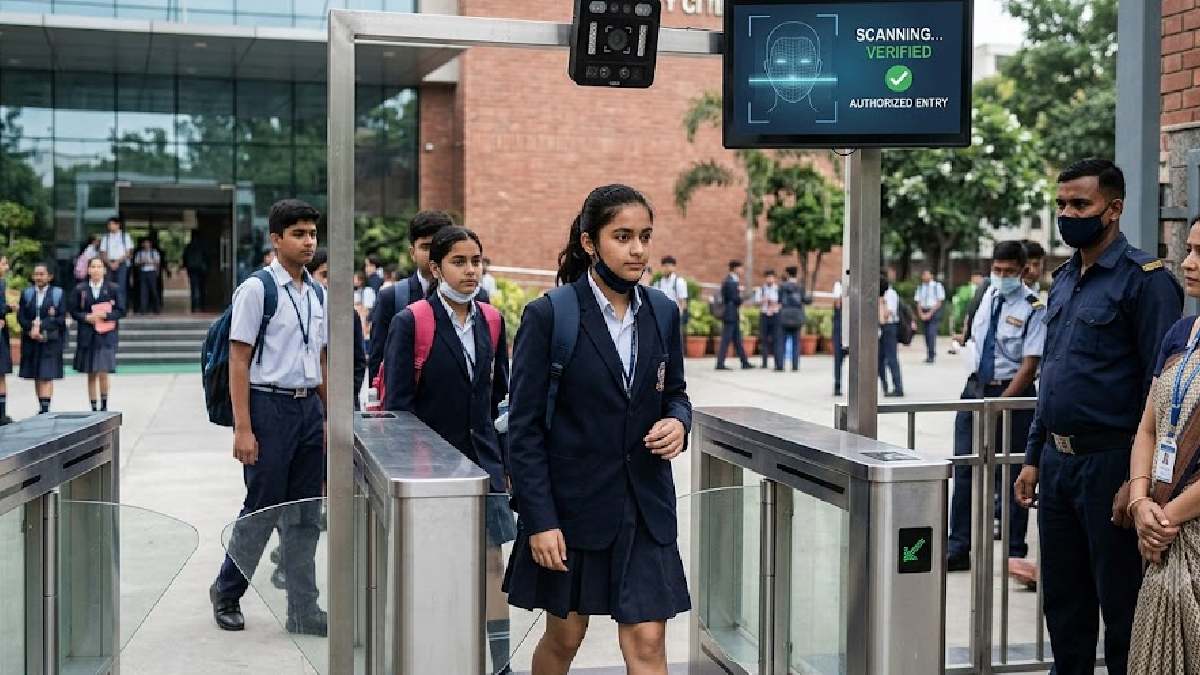
From Delhi to Karnataka, facial recognition systems are increasingly being explored or introduced as part of digital attendance, school identification and security initiatives.
For years, schools have relied on identity cards, registers, biometric systems or manual attendance to track students. Facial recognition is a different approach.
Whereas students are required to carry or scan an ID card, cameras can identify people if they match their facial features with a database.
In Delhi, the use of technology in schools has received a lot of media attention as institutions and authorities are looking at digital systems that will be able to enhance attendance monitoring and campus security on the ground.
Similar technology initiatives are also being launched in Karnataka, as well as in the broader trend of automated identification in educational institutions.
Facial recognition proponents say it can speed up basic school processes. Automated attendance could save teachers from calling out names or maintaining registers.
Schools could also apply the technology to identify authorised students and staff, monitor entry points and beef up security around school premises.
Parents and administrators’ appeal is mainly safety and convenience. A digital identification system could also help schools keep accurate attendance records and know who enters or leaves the campus.
But the technology also raises important questions in itself, especially if it involves kids. Facial data is highly sensitive as, unlike a password or identity card, one cannot simply change their face if biometric information is compromised. That is why schools collect, store and protect such data in a big way.
Privacy proponents have also questioned whether students and parents fully understand how facial recognition systems work, what information is collected, how long it is retained and who can access it.
Other issues include accuracy, and whether systems that don't accurately identify students.
The discussion gets more serious because children may have limited understanding of the long-term implications of providing biometric information to an institution. Schools, therefore, have to balance technological benefits with strong privacy rights for students.
With facial recognition moving from airports, offices and public spaces into classrooms and school gates, India is entering a new era of digital education management.
The technology might bring practical benefits, but its adoption will likely have to be done within rules, transparently and in line with the care of children’s data.
For Indian schools, the new ID may no longer be a card hanging around a student’s neck. It could increasingly become their face and the question of how that data is used is just as important as the technology itself.