A heartwarming video of a Sumatran elephant saving a tiger from raging floodwaters in Indonesia has gone viral and left millions of people crying. In the video (above), the elephant is trying to save a tiger from drowning in a strong current.
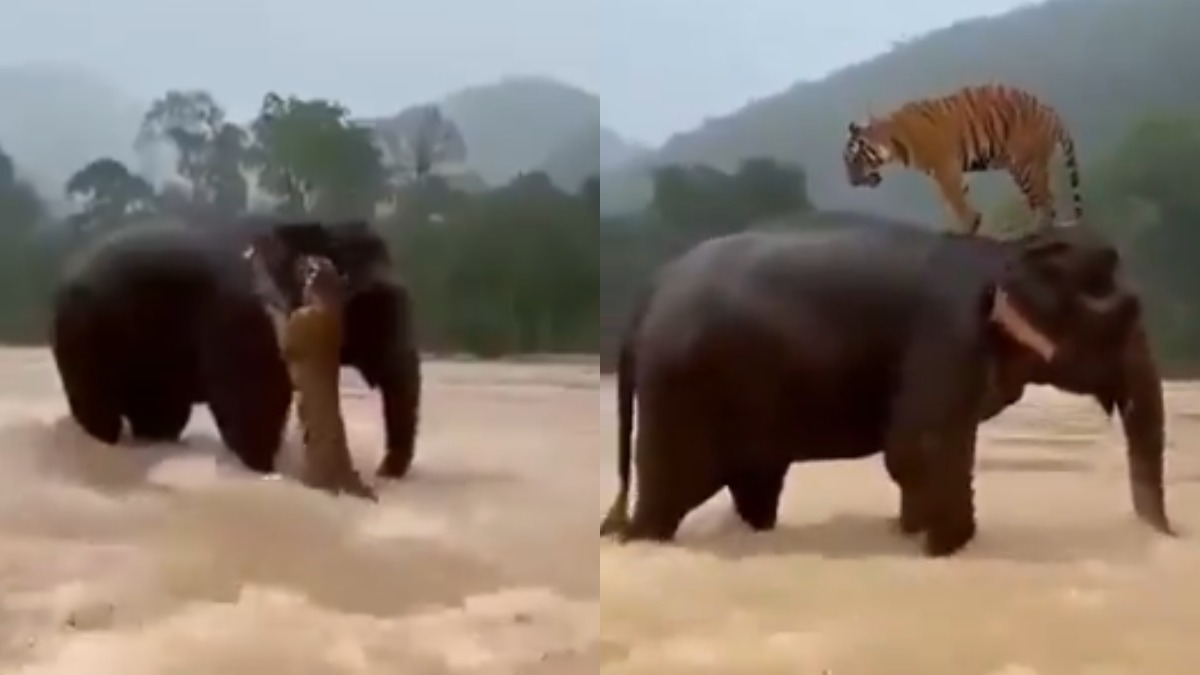
The video has been widely shared with mentions that it happened on Indonesia’s Sumatra Island in recent floods, in which the Sumatran elephant had intervened to save a drowning tiger. We found it to be an amazing example of animal compassion. Some people said that animals are more humane than humans.
However, a more detailed fact-check has revealed that the viral video is completely fake.
What the Viral Claim Says
The circulating posts claim that a sudden flood in Sumatra trapped a Sumatran tiger in fast-moving muddy waters. A nearby Sumatran elephant entered the flood despite the danger and helped the tiger reach safety, according to the caption.
The emotional tale quickly spread across social media (from YouTube to Facebook and Twitter), and it has been viewed and shared worldwide.
Fact Check: AI-Generated Video
The video was not recorded during any real flood.
Experts have confirmed that the visuals were created using Artificial Intelligence (AI) and advanced digital video-generation tools. The clip is designed to look very realistic, and so viewers can’t tell it from genuine footage.
In reality, the same AI-generated video first appeared in November 2025, when it went viral before being debunked by fact-checkers.
The current version is a recycled copy that has been uploaded again with a new false narrative associated with recent monsoon floods and natural disasters.
No Evidence from Indonesia
There are no official reports from Indonesian authorities, wildlife conservation agencies, or credible news organisations that such an incident ever took place.
Similarly, there is no evidence that a Sumatran elephant rescued a tiger during flooding in Indonesia.
The viral claim is therefore false, and the accompanying captions are misleading.
How AI is making fake videos more convincing
Artificial Intelligence has developed rapidly in recent years, so that creators can create lifelike videos with realistic animal movements, lighting, water effects, and environmental details in them.
Technology experts say that AI-produced videos are harder to identify and can be even harder to verify when you combine them with emotional stories that make users feel that this is the right time to share them.
As AI tools become more sophisticated, misinformation campaigns can spread rapidly by exploiting public emotions.
Social Media Users React
Once it was revealed that the video was AI-generated, many users were unhappy and angry at the increasing use of artificial intelligence.
Some wildlife enthusiasts put forth evidence to verify such fantastic claims before posting them online.
Others said AI technology has advanced so much that even the most careful viewers could mistake fake videos for real events.
More people also asked for better labeling of AI-generated content to prevent misinformation from spreading across social media.
Verify Before You Share
The viral elephant-and-tiger rescue video is a good example of how not everything on social media is true.
Even though AI technology has the potential to create great creativity and education, it is also being misused to create emotionally manipulative fake content.
Experts suggest checking credible news media sources and fact-checking organisations before believing or forwarding sensational wildlife videos, especially those that seem too extraordinary to be true.
Digital awareness and responsible sharing are more important in the age of AI-generated media.