Five young orangutans have been rescued from Bichitrapur Casuarina Forest in Odisha’s Balasore district — a shocking wildlife find that begs the question: how did these endangered great apes travel thousands of kilometres away from their natural habitat and end up in a coastal forest in eastern India?
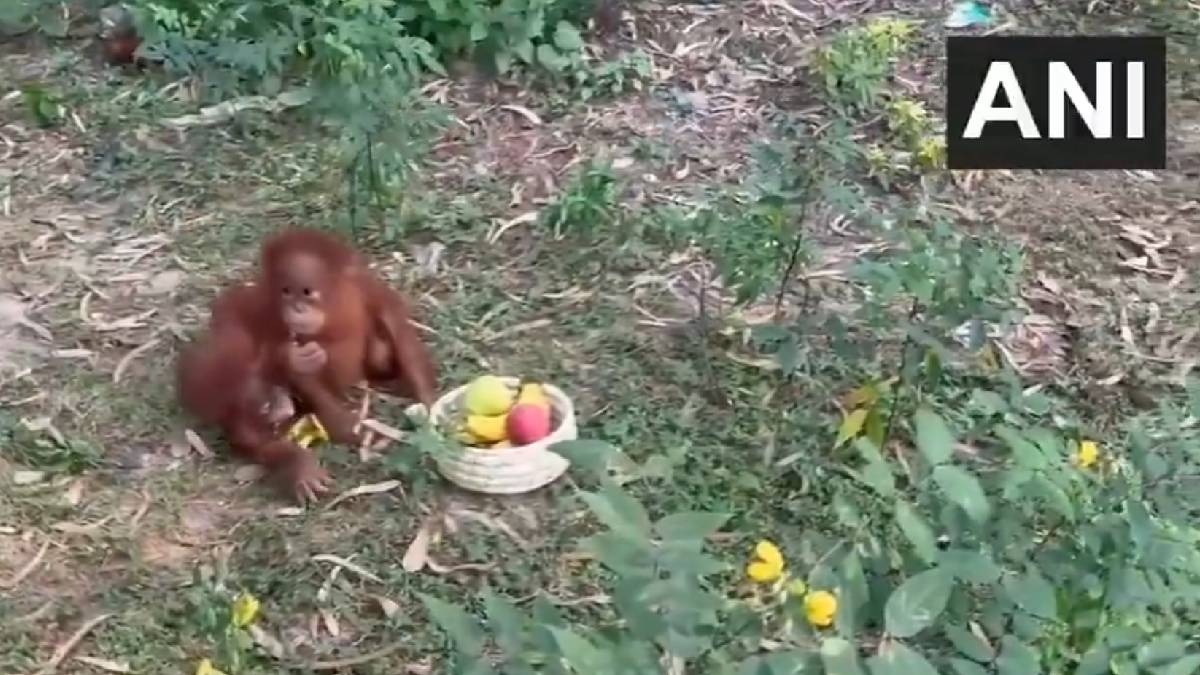
Forest and wildlife officials are looking into the unusual find — poaching angles, illegal wildlife trade angles, trafficking angles. Orangutans aren’t native to India — tropical rainforests of Borneo and Sumatra only naturally contain them.
The animals were said to have been dumped in coastal forest. They are in an unfamiliar ecosystem; wildlife officials want to know how they got there — smuggled into the country or transported through an organised trafficking network before being dumped?
Orangutans are some of the world’s most threatened great apes and populations have been severely reduced by habitat destruction, illegal hunting and wildlife trade. Baby orangutans are especially vulnerable to trafficking because they are small animals (and therefore valuable in the illegal exotic-animal market).
#WATCH | Balasore, Odisha: Five baby orangutans were found in the Ranakatha Protected Reserve Forest (PRF) near Badapai village. (08.09) pic.twitter.com/AoPNWxpAVN
— ANI (@ANI) September 8, 2026
If reports that an orangutan could sell for ₹20–25 lakh on the international illegal wildlife market (if true) are correct, then investigators have another disturbing piece of information to work with. High prices attract criminal networks who transport young animals for sale to private collectors or the exotic pet trade.
But what happened to the five orangutans? Where did they come from and who can be held responsible for them? Authorities will have to establish if they were illegally caught in their natural habitat, transported internationally or domestically, and abandoned in Odisha.
But it’s not over yet. Health and survival of young animals are concerns right now. Reports say rescued orangutans will be hand-reared at the Centre for Rearing Animal Babies (at the zoo) — with vet care, nutrition and round-the-clock care.
Young orangutans are very dependent on their mothers for food protection and survival skills, so separation early in life can have serious physical and behavioural consequences. Rehabilitation will be necessary before they can be considered for a long-term conservation programme.
The case also illustrates the bigger picture of illegal international wildlife trade. Smugglers target rare and endangered species because they make so much money (not a commodity like coffee). Animals can travel through many intermediaries and locations so enforcement agencies don’t know where they started or where they were going.
The find in Bichitrapur’s casuarina forest is thus not just an odd rescue mission — it could also help investigators track illegal wildlife trade movement and networks behind it all.
“They will probe further — where did they come from and how did they get to Balasore? If trafficking is found, then more arrests can be made, and a wider probe into illegal movement of exotic wildlife would follow.”
For now, the five young orangutans are in care. Their rescue left them vulnerable, but it also raised a bigger question: how did five animals from the rainforest of Southeast Asia end up abandoned in coastal forest thousands of kilometres away?
The answer might be a link to the international illegal wildlife trade.