India’s online food delivery market could soon be transformed as Flipkart, one of the nation’s largest e-commerce companies, is planning to launch its own food delivery service. If the company does, it will enter a fiercely competitive space that Swiggy and Zomato dominate and have more competition between delivery platforms.
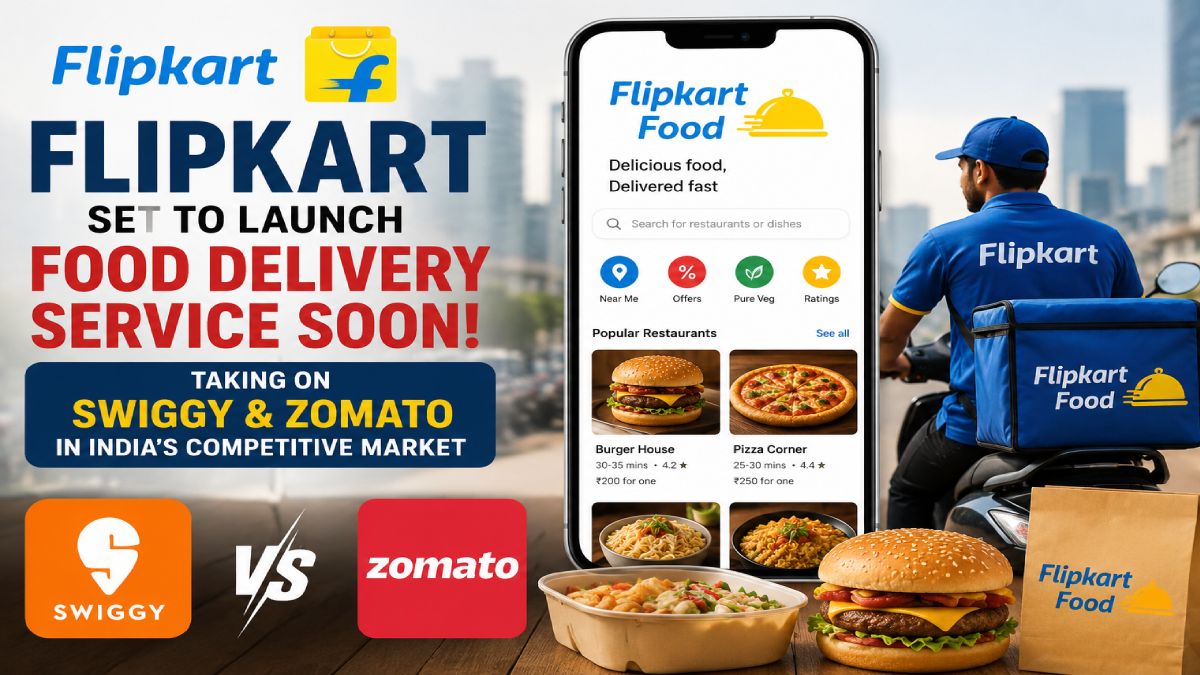
The move is part of Flipkart's overall strategy of expanding beyond traditional e-commerce and strengthening its presence in India’s rapidly growing quick-commerce and digital services ecosystem. With millions of active users already shopping on its platform, the company is well placed to use its existing customer base and logistics infrastructure to enter the food delivery segment.
Flipkart is considering ways to integrate food delivery into its digital ecosystem, allowing people to order from nearby restaurants through its app. Although the company has not announced launch dates, pricing, or rollout plans, industry experts think it could launch in a handful of cities before spreading to other parts of the country.
Over the past 10 years, India's food delivery industry has been booming with smartphone adoption, digital payments, cheap internet access, and changing consumer demographics. For food delivery apps, the local population is increasingly using it for convenience, and the sector is among the fastest-growing domains in the digital economy.
Swiggy and Zomato dominate the market today with restaurant collaborations, grocery delivery, and quick-commerce services, in addition to meal delivery. The huge delivery networks, customer loyalty programs, and technology platforms of these firms have propelled them to success in India. Flipkart would be an entry of another top-tier player with huge financial resources and a strong logistics network.
Flipkart could also differentiate itself by using its expertise in e-commerce operations, warehousing, customer service, and digital payments, analysts say. Integration of Flipkart’s current app could also make the shopping, grocery, and food delivery services available through one platform.
The move might also benefit restaurants in that more platforms will provide them with a wider marketplace space to reach customers. More platforms may have to compete for customers, lower commission rates for merchants, and more promotional opportunities for restaurant partners. Smaller restaurants, in particular, would be more visible if several delivery platforms are on the market.
If another food delivery platform is to arrive soon, customers will get great introductory deals, discount coupons, loyalty rewards, and subscription programs as well as a lot of speed and quick delivery options. Competition has historically led to better innovation, customer service, and competitive pricing, which would be much better for the user experience.
Entering the food delivery business is not without challenges. There is a lot of investment in technology, logistics, delivery personnel, customer support, restaurant onboarding, and quality assurance at the heart of the process, and the food delivery industry is expensive.
Flipkart’s logistics expertise may be a competitive advantage as well. The company already has one of India’s largest supply chain networks and serves customers in urban and rural markets. Food delivery has a different process from e-commerce delivery, and the existing infrastructure and technology expertise may help to accelerate expansion.
The reported development also aligns with the growing convergence of e-commerce, quick commerce, fintech, and hyperlocal delivery services. People today want digital platforms that bring together numerous services in one ecosystem, from shopping and grocery delivery to travel booking and financial services. Food delivery is another area where platforms might want to get more users and more daily app usage.
Experts in the sector say Flipkart’s entry could further accelerate innovation in this space. Existing players may respond by expanding restaurant partnerships, improving delivery speed, introducing new loyalty programs, or enhancing AI-driven recommendations to retain customer loyalty.
Flipkart has not yet disclosed all of the details of the service cities, restaurant partnerships, delivery models, etc. To date, neither Flipkart nor industry regulators have made any formal public details about the new service launch cities, restaurant partnerships, or delivery plans. As the company is readying to expand, consumers and restaurant owners are interested in how this new entrant is positioning itself in one of the most competitive digital markets in India.
If proven successful, Flipkart's food delivery service could revolutionize the market, changing the game in Flipkart's favor to help consumers and spur innovation in the industry by giving them a new option for food delivery. The next few months should reveal further details as the company develops the product in the fast-paced food delivery space of India.