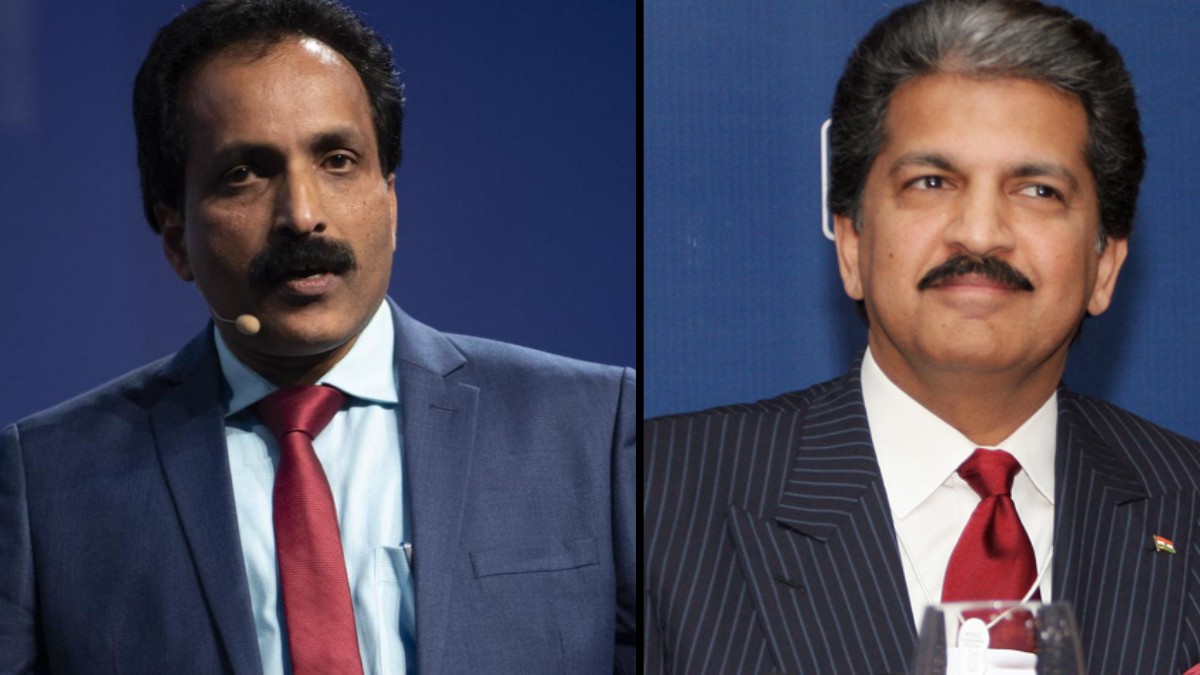
Former Indian Space Research Organisation (ISRO) chairman S. Somanath has been appointed as a part-time, non-official director on the Central Board of RBI as one of India’s top scientists and technology leaders. In a statement, the Central Government said Somanath would be appointed on 20 August 2026 and will serve on the RBI Central Board for four years, or until further orders, whichever comes first.
The appointment brings Somanath’s extensive experience in science, engineering, technology management and national level institutions into the country’s central banking framework. He has been primarily linked to India's space programme but his new role at the RBI puts him in a much larger institutional context through financial and economic policy, governance and the functioning of one of India’s most important public institutions.
Somanath is well-known for his leadership at ISRO during a period of major developments in India's space programme. He has served as chairman of the space agency before he left and has continued to be involved in discussions about science, technology and India's strategic technological capabilities. Work on launch vehicles, spacecraft and complex engineering programmes has established him as a great leader in large scale technology projects.
His relationship with ISRO began to make its mark when India’s lunar and space exploration projects became an important part of the national agenda. He was one of the top leaders of the agency at a time when India’s space achievements were under the microscope and the government’s focus was also on growing India’s space ecosystem and private companies.
The RBI Central Board plays a central role in the governance and functioning of the Reserve Bank. The board oversees the monetary system and the central bank administration under the RBI Act. Permanent, part-time and non-official directors from outside the central banking system will help expand the board's governance model.
Somanath’s appointment is especially interesting as it can help to draw on the knowledge of the science and technology. And with the digital payments, cybersecurity, artificial intelligence, financial infrastructure and the emerging digital systems in India, India’s financial system is becoming more and more connected to technology. His history of organising complex technological projects could thus be a useful perspective within the financial institutions as technology becomes more and more important.
The appointment also underscores the increasing interconnectedness of India’s economy and technology. And India is investing in advanced science, digital infrastructure, manufacturing, space technology and financial innovation at the same time. ISRO and RBI are different domains yet are at the same time important to India's long-term goal of national development.
Somanath has extensive experience in engineering and project management. He has worked on some of India's most technically demanding programmes and has been involved in the development and implementation of major launch systems. Long-term planning, risk assessment, institutional coordination and resource management are skills that are much more relevant to governance than in the scientific sector.
The RBI has also been one of the central banks most closely monitoring changes in the rapidly evolving digital economy of India. Digital payments, fintech innovation, cybersecurity and financial technology have changed customers and businesses’ interactions with the banking system.
In this context, a senior technology leader like Somanath on the Central Board could be particularly valuable. His experience does not make him a monetary policy decision-maker by any means but his presence can add to board-level discussions. The RBI Central Board is separate from the Monetary Policy Committee, which sets India’s benchmark policy rate and determines policy under RBI Act.
Somanath's appointment is coming shortly after he joined ISRO where he became an experienced public figure with the nation's space ambitions. His talk about science and technology opened space missions for the general public, and his career has been closely linked with India’s drive to build up its indigenous technological capabilities.
The four-year appointment is a big one for Somanath to participate in RBI's institutional governance. The position is also a good change from leading one of India's most technologically advanced government organisations to the board of the central bank.
For India, the appointment of this role is a sign of the value of bringing in all levels of expertise from various fields of expertise into big public institutions. Science, technology, finance and governance are now becoming even more intertwined as economies depend on digital infrastructure and advanced technologies.
Somanath's appointment to RBI Central Board is then not only a new position for a former ISRO chief but the continuation of his public service career in a different field and a scientific and technological voice on the central bank's board. As he begins his four-year term, we will be looking at how his experience in engineering, innovation and big-scale institutional management will help the RBI to address its larger governance responsibilities.