What started as a media and public-awareness campaign has now become part and parcel of local governance, and the “Check The Kitchen” initiative has made restaurant food preparation transparent. The campaign encouraged restaurants to install CCTV cameras in their kitchens and screen the live footage to customers so that they can see how their food is being made.
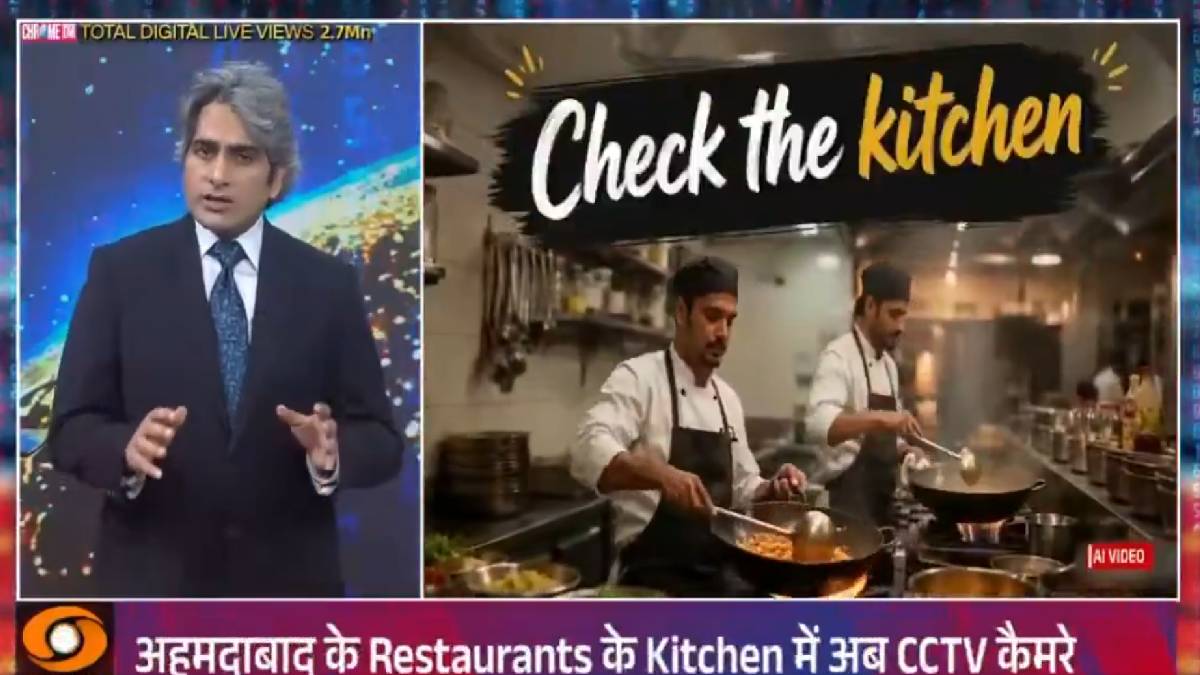
Now the idea has been advocated for in the city by Ahmedabad Municipal Corporation (AMC), which has advised more than 11,000 restaurants across the city to take action. And that could change everything about how restaurants approach food hygiene, transparency and customer confidence.
The idea behind “Check The Kitchen” is simple: If customers can see the kitchen, restaurants have another incentive to keep it clean and follow proper hygiene practices.
Restaurants typically have kitchen areas that are inaccessible to customers. That is standard for operational reasons, but restaurant guests have no real access to how food-handling is done. A live CCTV display might give them a sense of the cleanliness and working environment of the food-preparation area.
The Ahmedabad project will come as food safety and hygiene are now bigger problems in restaurants, hotels and cafés. Not only do people want to know what they’re eating, but also how it’s being cooked.
What started as a media campaign is now turning into action on the ground.
— Megh Updates 🚨™ (@MeghUpdates) August 25, 2026
The “Check The Kitchen” campaign called on restaurants to install CCTV cameras in kitchens and display live feeds, allowing customers to see how their food is actually being prepared.
Now, the Ahmedabad… pic.twitter.com/D4HqsjxmiO
Kitchen hygiene is a combination of cleanliness of food preparation surfaces, proper storage of ingredients, safe handling of raw and cooked food, kitchen staff’s personal hygiene, pest control and waste disposal. CCTV may not replace inspections or food-safety regulations, but proponents say it can add a layer of transparency.
For restaurants to keep a good relationship going, they need to show kitchen footage to their customers to show that they’re building trust. Clean and organized kitchens could give people confidence in their food. Transparency would eventually be something in the food sector that would be a selling point in an ever more competitive food-service industry.
The development in Ahmedabad is particularly significant because of its scale. With 11,000+ restaurants being advised to look into the approach, the idea can have a big impact on a lot of the food-service ecosystem in that city.
The campaign also raises a wider question: Is kitchen transparency something that should be a norm in India?
If such initiatives were taken up by municipal corporations in other major cities, restaurants might face more public pressure to maintain visible hygiene standards. Cities might have similar guidelines around camera placement, privacy, live displays, recording practices and accessibility for customers.
For now, CCTV should be viewed as a complementary measure, and not as a substitute for regulatory inspections. A camera can show cleanliness but cannot independently check food temperatures, ingredient quality, water safety or compliance with all food-safety requirements.
There would also be practical problems. Small eateries would have to pay for cameras and display screens, and employees’ privacy would be at stake. We would need to abide by rules for surveillance to be done properly and not invade employee privacy.
But the underlying idea is very powerful for all these challenges as it links transparency to accountability. When customers see food preparation areas are visible, restaurants may have an even greater incentive to keep the standards high.
The effort also reveals how the relationship between consumers and companies and local authorities is changing. Social media campaigns are now having a larger impact on our discourse than ever, and civic bodies can turn popular ideas into policy.
Ahmedabad’s action could thus become a test case for whether greater visibility can improve food-safety practices in the restaurant sector.
If done right, the “Check The Kitchen” approach would develop from a campaign to a whole movement for restaurant transparency. Customers would have more visibility, responsible businesses would stand out through openness, and authorities would be free to find different ways to supplement traditional food-safety inspections.
A simple idea—letting customers see the kitchen—has now entered the conversation at the local-government level. If other cities follow Ahmedabad’s lead, kitchen transparency might become an increasingly familiar part of India’s dining culture.