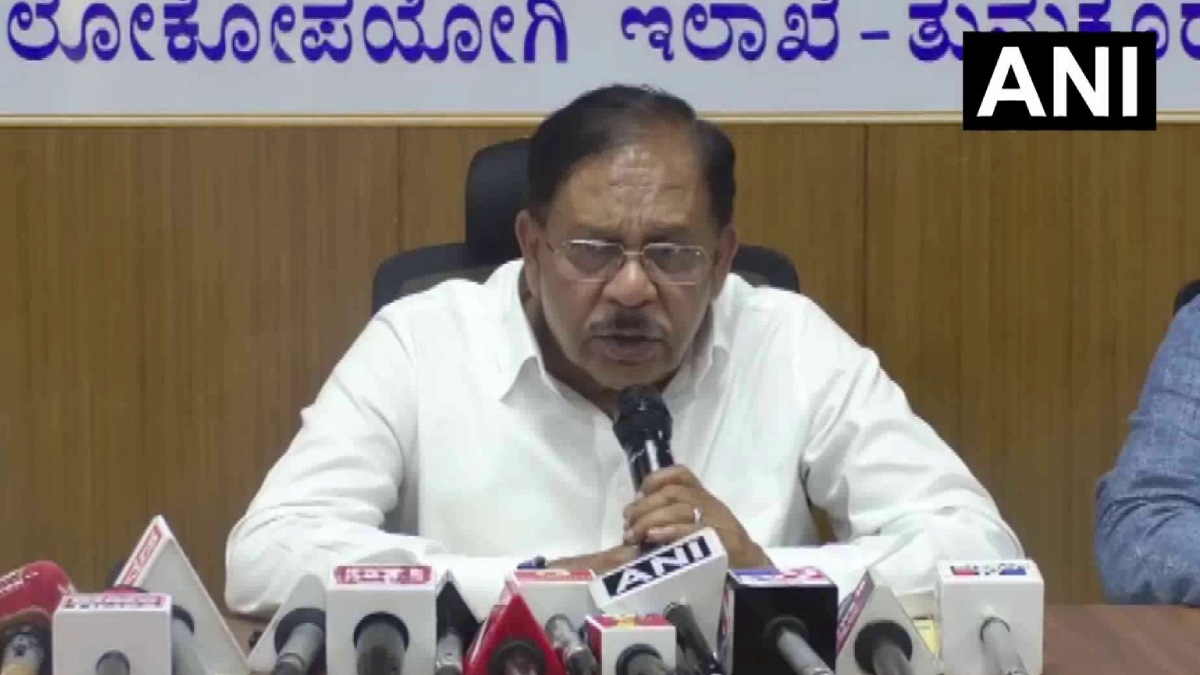
Karnataka Deputy Chief Minister Dr G Parameshwara has expressed concern over the manner in which the Union government plans to carry out caste enumeration, saying that the exercise must be to achieve social justice and fair opportunity for people who have been disadvantaged, he told reporters at Tumakuru.
Parameshwara observed that the main objective of caste enumeration should not only be statistics but also to construct a good picture of India's social structure. And accurate information is crucial for identifying the communities that are still suffering from social and education disadvantages and for planning policy to help them to gain access to opportunities, he said. His remarks are part of a larger national debate on how caste data should be collected and categorised in advance of the upcoming Census.
“The primary purpose is that everybody should get justice,” Parameshwara said, and government responsibilities remain to fill the gaps that remain in society. According to him if some sectors of the population are still being excluded from opportunities in the 21st century, the bigger goals of independence and equal opportunity cannot be achieved.
Parameshwara has also questioned the proposed open-ended approach to recording caste identities. In recent comments he has warned that different spellings, sub-caste names, regional identities and locally spoken names could potentially lead to the same community appearing under multiple entries. Such fragmentation would make it difficult to determine the actual population of individual communities and could affect the usefulness of the resulting data for policymaking.
The Karnataka Deputy Chief Minister has suggested that the Centre consider developing a standardised framework for caste enumeration, including common caste codes and mechanisms for mapping alternative names and regional identities. In this way respondents could still be able to give genuine local or community identities and the information would be mapped to an appropriate standard category during data processing. Parameshwara has said this would help improve the consistency and usability of the final dataset.
He has also pointed to the experiences of states that conducted caste-related surveys and social and educational exercises. Karnataka has conducted a Social and Educational Survey, while Bihar and Telangana have also conducted caste-based enumeration exercises. Parameshwara has suggested that the Union government should take lessons from these state-level experiences and consult the state governments, experts, political parties and representatives of different communities before finalising the methodology.
The debate is important because caste-related data can influence policy discussions regarding reservation, education, employment, welfare programmes, political representation and economic opportunities. Parameshwara has maintained that updated information is needed to know which communities have access to opportunities and which still suffer from social and educational backwardness.
As he says in his remarks this is a bigger question about how caste enumeration should be conducted rather than whether there should be any social data collected at all. The Union government has brought caste enumeration into the planned 2027 Census, and state leaders have raised questions about the method and how to categorise different caste identities.
Parameshwara has called for the exercise to be undertaken in a way that will produce reliable and scientifically useful information. Accurate enumeration will ultimately help governments to understand the communities' composition and circumstances and use that information to inform public policy, he said.
Tumakuru | Karnataka Deputy Chief Minister Dr G Parameshwara says, "The way the central government is implementing the caste census is questionable. The main purpose is that everyone should get justice. When we do not get it, we have to raise our voice. Our duty is to provide… pic.twitter.com/fb8vmabC2M
— ANI (@ANI) September 16, 2026
So caste enumeration is likely to be a big issue as we approach 2027 census preparations. Parameshwara has said that Karnataka is ready and willing to share its knowledge with the Union government. His main point is that the credibility of the exercise will depend not only on caste-based questions but will also need to be that the information collected is accurate, consistently classified and can be used to inform policies for improving opportunities and tackling social inequalities.