Pune: The Chief of Army Staff General Dhiraj Seth reviewed the operational preparedness and mission readiness of the Indian Army’s Southern Command during his visit to its headquarters in Pune. The review focused on combat capabilities, adaptability to new forms of warfare and training standards and personnel availability to respond to rapidly changing operational challenges and how the troops should be able to respond effectively.
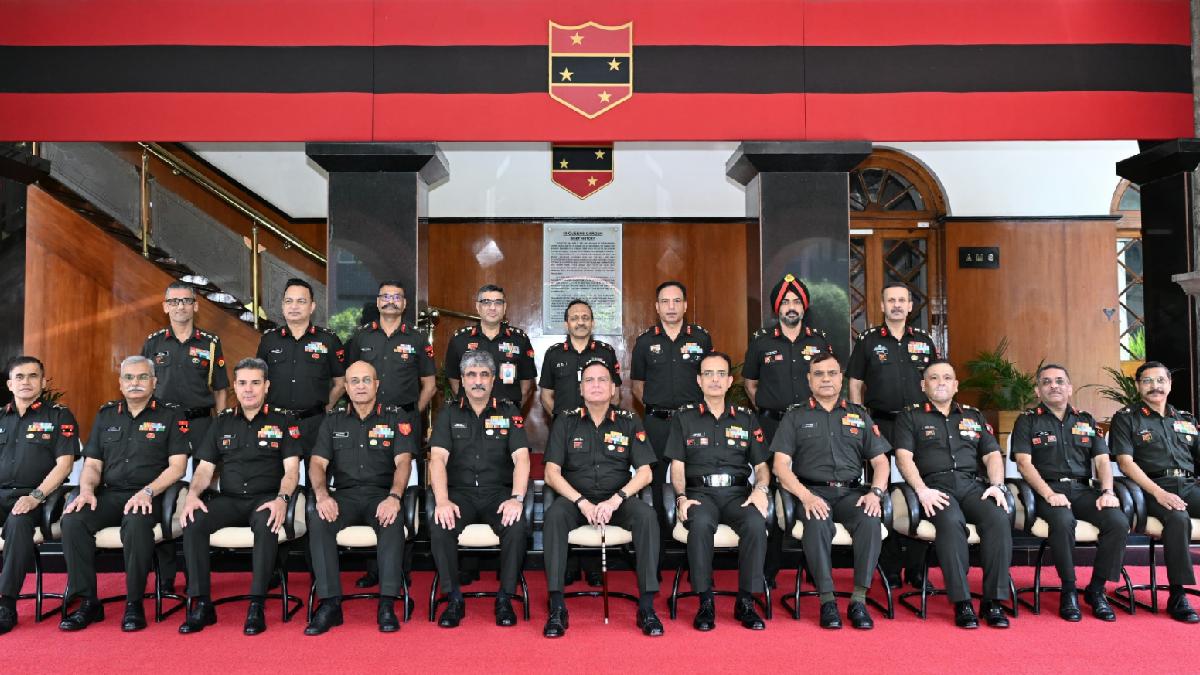
General Seth was briefed on the current state of operations and on the operational work being done by Southern Command to ensure its level of readiness. Lieutenant General Rajesh Pushkar, General Officer Commanding-in-Chief of Southern Command, gave an overview of the Command’s operational position, training and how to improve its combat effectiveness and capability development.
The review is therefore of great significance as military operations are rapidly evolving and battlefield dynamics are being changed. Armed forces have to constantly adapt to the new reality of the world of surveillance and communication systems and technology based on information and fast information-driven decision-making. With commanders and soldiers, General Seth showed the need to prepare for those troops to work effectively in this world.
The Army Chief stressed the need for realistic, demanding and mission-oriented training. The training enables soldiers and commanders to develop the skills to meet complex situations in a realistic way that very closely resembles actual operational scenarios. He also stressed the need to train warfighting skills in the field of warfighting so that people are prepared for the conventional and next-gen security threats.
Technology adaptation was another critical area of the review. With technology becoming more and more integrated into military operations, the ability of individuals to understand and use new systems has become a key aspect of operational readiness. General Seth asked to keep up the pace at which we adopt technologies so as to develop capabilities that can help in an operational advantage.
The Army Chief also stressed that coordination between different arms and services of the Indian Army is very important and the Indian Army must work in cooperation to achieve operational efficiency, communication and decision making during challenging missions. The need to strengthen coordination is especially pressing in contemporary military life as multiple arms and different arms are required to be connected and working in a coordinated manner to achieve strategic coordination of forces.
Indigenous capability development was another major focus of General Seth during his engagement with India. Building and strengthening domestic defence capabilities can lead to greater operational self-reliance and reduce dependence on external sources for critical equipment and technologies. The focus on indigenous systems is also consistent with India’s overall aim to develop domestic defence production and technological capabilities.
General Seth asked all ranks to remain focused on their operational responsibilities and keep up high standards of discipline and professionalism and preparedness. He recognized the dedication and commitment of personnel working with Southern Command and encouraged them to continue working towards strengthening the Command's ability to respond to missions and contingencies.
The visit also highlighted the contributions of the Army’s veterans community. General Seth presented distinguished veterans with the Yoddha Seva Samman for continued service to veterans and for their efforts in welfare of veterans, youth development and community service. The recognition was to thank veterans for their service to society even after their service in the military.
The Army’s relationship with its veterans extends well beyond their service in uniform. A lot of former military veterans are still in the Army’s service personnel who have continued to support community building and the development of young people and others - both young people, social welfare and other public service work. And as such, honouring such contributions speaks to the continued attachment to serving personnel and the veterans.
The Southern Command is an important component of the Indian Army’s operational structure and the ability to be prepared is crucial to the country’s overall defence posture. Senior military leaders regularly review capabilities and identify what has to be addressed and train and operate as needed so that the training and the operation will keep pace with evolving security issues.
General Seth’s visit therefore brought up immediate operational preparedness and the longer-term transformation of the force. With warfare becoming technology-driven, military effectiveness is not only about manpower and traditional combat skills but also adaptability, integration, technological awareness and rapid decision-making.
The focus on realistic training, technological modernisation, coordination and indigenous capability development is in line with the larger need for a military force that is able to respond to change in security environment. Southern Command will continue to be at the forefront of these efforts and its personnel will be well prepared for the future.