India has invited global bids to build 10 gigawatt-hours (GWh) of Advanced Chemistry Cell (ACC) battery manufacturing capacity under the government’s Production-Linked Incentive (PLI) scheme, which is a crucial step in building a national battery manufacturing industry and in promoting clean energy development.
The initiative is a logical part of India’s overall strategy to develop its electric vehicle (EV) industry, reduce reliance on imported battery cells and become a world leader in battery manufacturing. Boosting domestic production of high-performance batteries to improve energy security and promote sustainable industrial development.
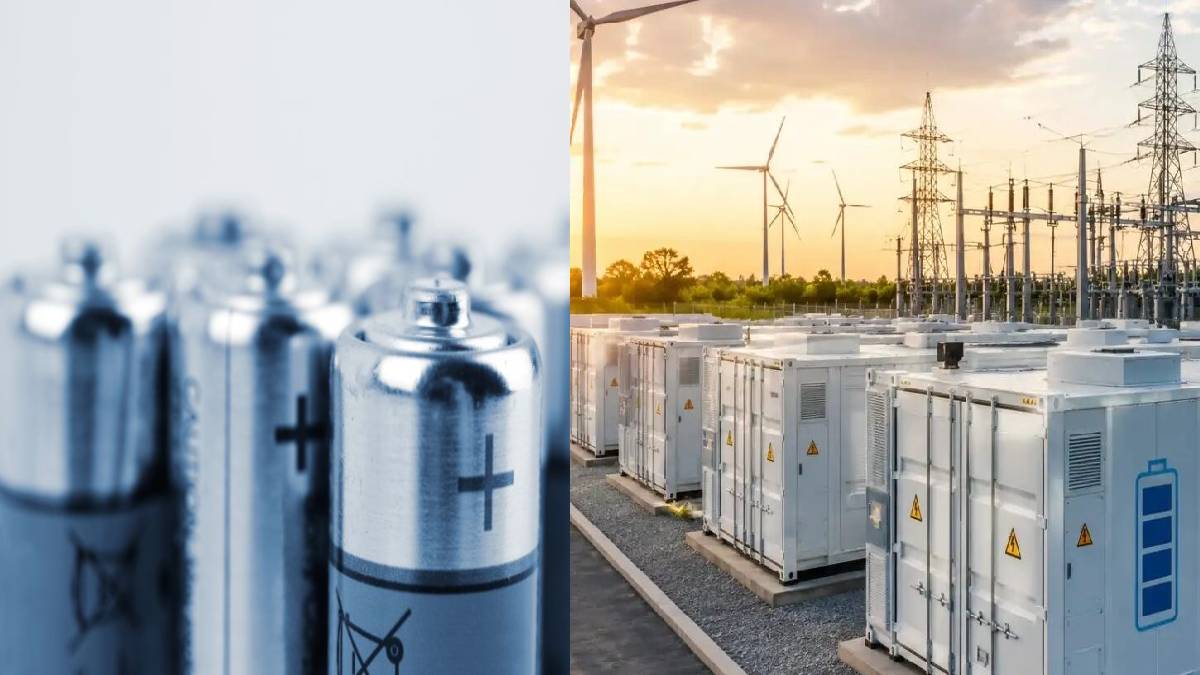
Advanced Chemistry Cell (ACC) batteries are the backbone of the rapidly expanding electric mobility sector. These batteries are used not only in electric cars, buses, two-wheelers, and commercial vehicles but also in renewable energy storage systems, consumer electronics, and grid-scale energy storage projects. As demand for these sectors increases, domestic manufacturing capacity will become a major factor in fulfilling it.
The latest invitation for global bids seeks proposals from companies that have a cumulative manufacturing capacity of 10 GWh. It is expected to attract participation from Indian and international battery manufacturers, technology giants, and investors looking to expand operations in one of the world’s fastest-growing clean energy markets.
The PLI scheme is a mechanism for incentives in production; companies will be able to invest in advanced manufacturing technologies with economies of scale. This is to make Indian battery manufacturing globally competitive by supporting investments in research, innovation, and large-scale production facilities.
India is going to push forward with battery production to become more connected to its ambitious electric mobility goals. As EVs and battery technology are rapidly adopted, battery demand will continue to increase significantly in the coming decade. In the process of domestic production, cost-saving solutions will be brought into play, supply chain resilience will be improved, and reliance on imported battery cells and critical components will be reduced.
Besides electric vehicles, advanced batteries are crucial for the transition from renewable energy into the power grid. Energy storage systems allow solar and wind power to be stored and used when generation is low, thus improving grid stability and supporting India’s clean energy transition. Further manufacturing capacity is needed to increase the electrification of transportation and the use of renewable energy in the power grid.
The initiative will also produce substantial economic benefits. New battery manufacturing facilities will generate jobs in manufacturing, engineering, research, logistics, and supply chain management. Higher domestic production could also lead to investments in battery materials, recycling, electronics, and advanced manufacturing equipment.
India's huge domestic market, friendly government policies, and growing renewable energy sector make the country attractive to global battery manufacturers. The PLI scheme is already leading to investments in several strategic sectors of the manufacturing industry, such as electronics, semiconductors, pharmaceuticals, automotive components, and other sectors on the ground.
Sustainability has been a primary emphasis of the government for the battery value chain. Future battery manufacturing will have to be based on good environmental practices such as responsible sourcing, high-quality production technologies, recycling infrastructure, and a circular economy.
Since countries around the world are competing for leadership in battery technology, India’s new global bid is a sign of the country’s desire to be a major player in the global clean energy supply chain. Strengthening domestic ACC battery production will also aid the country in achieving greater energy independence, EV adoption, and renewable energy conversion.
The invitation for global bids is another step in India’s industrial and energy transition and a step in the direction of becoming a manufacturing hub of advanced battery technologies that will support India’s economic and environmental development at the same time.