Gujarat High Court has dismissed the plea of former Delhi CM Arvind Kejriwal to disclose Narendra Modi’s educational qualifications, saying it is personal information under the Right to Information (RTI) Act. The decision was taken by a division bench of Chief Justice Sunita Agarwal and Justice D N Ray.
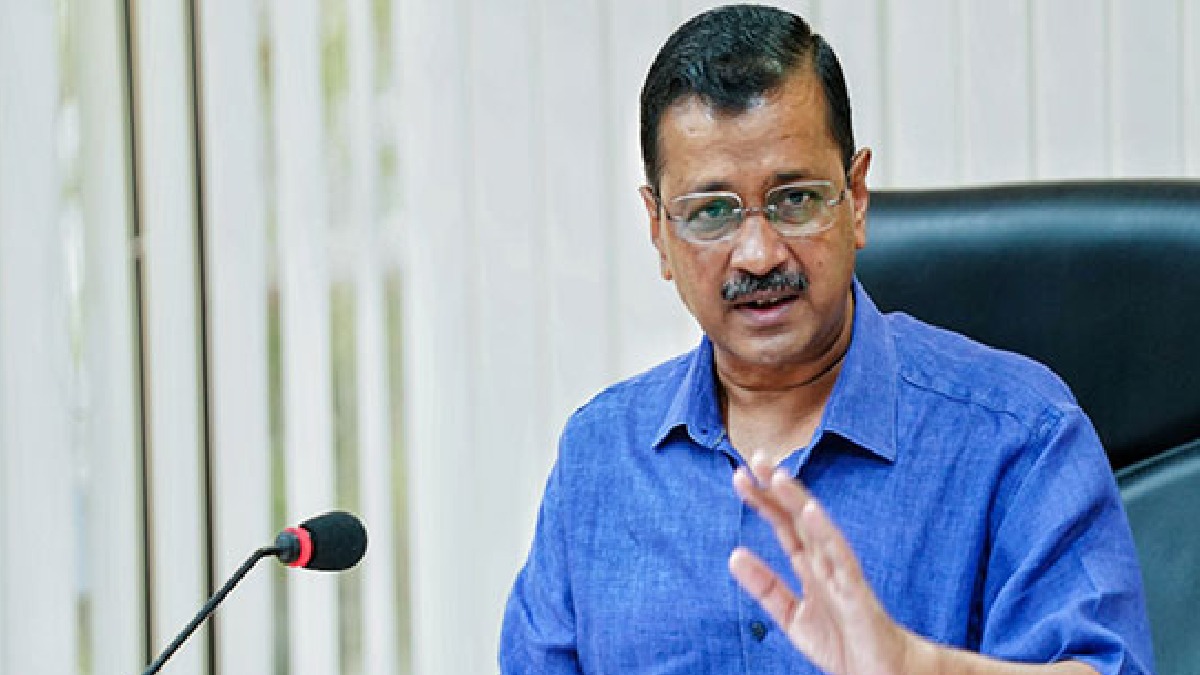
The court also upheld a single-judge bench which had earlier rejected a 2016 Central Information Commission (CIC) direction on Modi's educational qualifications. The Division Bench did not find any reason to challenge the earlier order and dismissed Kejriwal's appeal.
The judgment also leaves intact the Rs 25,000 cost imposed on Kejriwal in the earlier proceedings. The legal dispute has been going on for many years to see if information on the educational qualifications of the Prime Minister can be obtained and disclosed under the RTI framework.
What Gujarat High Court said.
The court held that the fact that the information sought relates to the Prime Minister does not automatically bring it within the scope of public interest or larger public interest. In other words, the status of the individual whose personal information is being sought does not, by itself, make the information subject to mandatory disclosure.
The court’s decision follows on from a separate case in which the education records were considered under the exemptions to the RTI Act. The single judge had held that information about the educational degrees could fall under the exemption for personal information unless the public interest was above all else and justified disclosure.
The issue before the division bench was also related to the Rs 25,000 cost imposed on Kejriwal when the earlier order was passed in March 2023. That single judge had dismissed the CIC's order to Gujarat University and concluded that the information sought was exempt from disclosure under relevant provisions of the RTI Act.
How The PM Modi Degree Case Started.
The dispute dates back to 2016, when the Central Information Commission directed Delhi University and Gujarat University to search for information on Narendra Modi's degrees. The CIC proceedings followed Kejriwal's submission during an RTI-related matter related to his own information.
The CIC considered Kejriwal’s submission as an RTI application and directed the universities to provide information on Modi’s undergraduate and postgraduate degrees. Gujarat University subsequently challenged the direction before the Gujarat High Court.
Gujarat High Court’s single judge later quashed the CIC direction for Gujarat University. Kejriwal paid the Rs 25,000 cost, too. He later challenged the decision and faced the division bench of Chief Justice Sunita Agarwal and Justice D N Ray.
The debate over Personal Information Under RTI
In the RTI Act, the law of transparency and privacy is a different thing and the case has raised a bigger legal question. The legislation grants access to information that public authorities hold but also includes exemptions for certain types of information, individual information subject to the statutory conditions.
The court in this case holds that educational records of an individual cannot be made publicly accessible because the individual holds a high constitutional or political office. It considered the nature of the information and the public interest basis for disclosure.
The same situation was examined in 2025 by the Delhi High Court in relation to requests for the information about Modi's degree from Delhi University. The Delhi High Court also ruled that educational qualifications, including degree and marks-related information, would be personal information protected under the RTI Act in the absence of overriding public interest.
Rs 25,000 Cost Remains In Place
The Gujarat High Court’s decision also means that the Rs 25,000 cost imposed in the earlier proceedings remains unchanged. In its 2023 decision, the single judge had concluded the CIC had exceeded its jurisdiction and directed the university to search for information relating to Modi’s degrees.
Before the latest ruling, the division bench heard arguments from both sides. Kejriwal's counsel had challenged the rationale for imposing the cost and argued that the proceedings had not been pursued continuously. The authorities countered that RTI should not only be used to satisfy public curiosity and sought continuation of the cost.
In the light of the September 29 judgment, Gujarat High Court has dismissed Kejriwal’s appeal and maintained the earlier order on the release of Modi's degree information. The ruling underlines the court’s view that personal educational records do not become automatically disclosed under the RTI Act only if they concern a prominent public office-holder.