Dera Sacha Sauda chief Gurmeet Ram Rahim Singh has walked out of jail again after being granted a 21-day parole, drawing renewed public attention to the repeated temporary releases of the convicted rapist. Ram Rahim, who is on a 20-year sentence for raping two disciples in 2017, was released from Sunaria Jail in Rohtak.
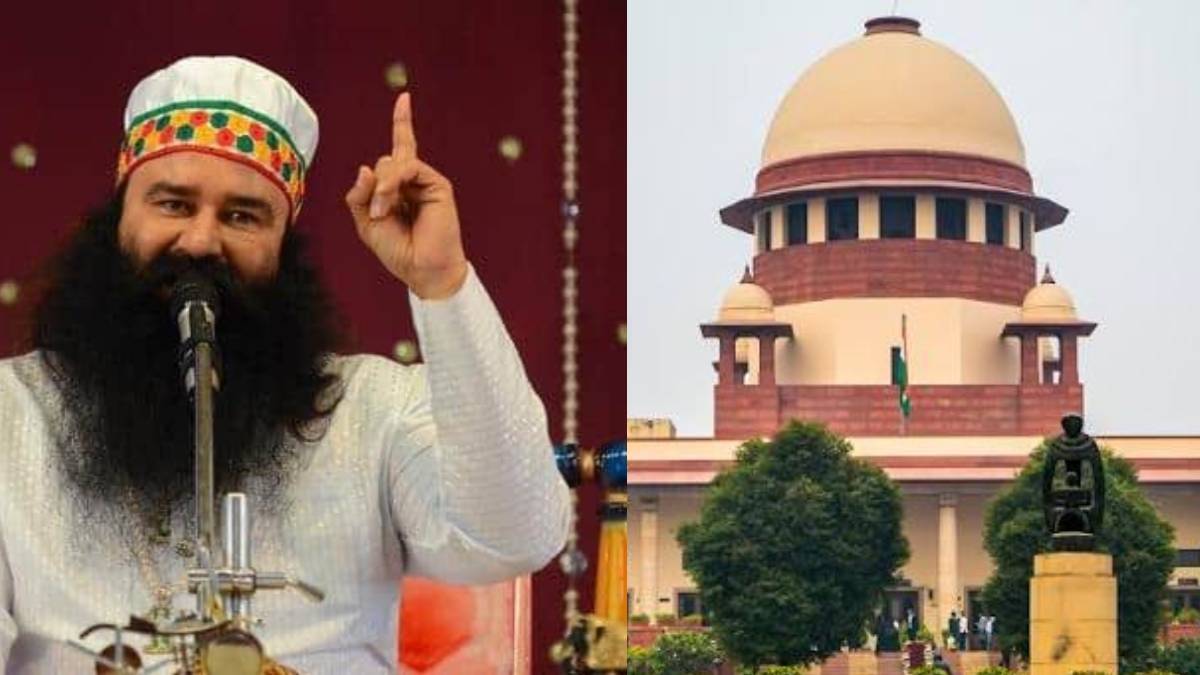
The latest parole is another temporary release of the Dera chief, who is expected to go to the Dera Sacha Sauda headquarters in Sirsa during the parole period, according to reports. This release has reignited debate about parole and furlough for prisoners with serious sentences.
Ram Rahim has been on temporary release since his incarceration. This is his 17th temporary release since 2020, as detailed in The New York Times report.
Dera chief was convicted in 2017 by a special CBI court of raping two disciples at the institute. He was sentenced to 20 years in prison. It was one of the most serious legal developments for such a powerful religious organisation and its head, whose massive following has been huge despite his prison sentence.
The latest parole has raised a bigger question: What message does the repeated temporary release of a high-profile convicted criminal send about the justice system?
At the same time, parole is a legal process, and the grant of parole is not a replacement for conviction or sentence cancellation. Temporary release can occur under given conditions and, if so, is set upon conditions defined by law. The decision to grant parole should be seen as distinct from the judicial conviction that resulted in the prison sentence.
But the repeated nature of Ram Rahim’s temporary releases has led to more than one controversy. The frequent parole periods can result in a perception of unequal treatment, at a time when other prisoners may not be given the same public attention or opportunity. Supporters of parole, on the other hand, say temporary release is governed by legal and administrative protocols, as it is not a pardon or reduction of the sentence in question.
The challenge for authorities is to ensure that every parole decision is transparent, consistent and based on clearly defined legal criteria. High-profile cases need to be investigated because decisions of influential prisoners will influence public confidence in institutions in a more general way.
The release of the new prisoner also comes with restrictions during the parole period. Such conditions are designed to keep the prisoner from breaking the terms of his temporary release and returning to custody once that part of the release is finished.
Ram Rahim’s long-running temporary releases and his very frequent releases have previously been the subject of political and public debate, especially when they have coincided with significant events. His large following also makes his movements and public appearances very visible.
The 21-day parole will therefore be closely watched, especially considering that he is expected to spend the period at the Dera headquarters in Sirsa.
The debate about the latest release turns out not to be about whether parole is a legal provision but about how such provisions are implemented consistently and transparently. The justice system’s credibility relies not only on convictions and sentences but also on temporary-release systems being regarded as fair, rule-based and not as being given preference.
As Gurmeet Ram Rahim Singh begins another temporary period outside prison, the debate over parole, equality before law and public confidence in the criminal justice system is likely to re-emerge once again.