Hindustan Aeronautics Limited (HAL) expects to complete the delivery of its entire 70-aircraft order within the next four to five years, said HAL Chairman and Managing Director Ravi Kumar.
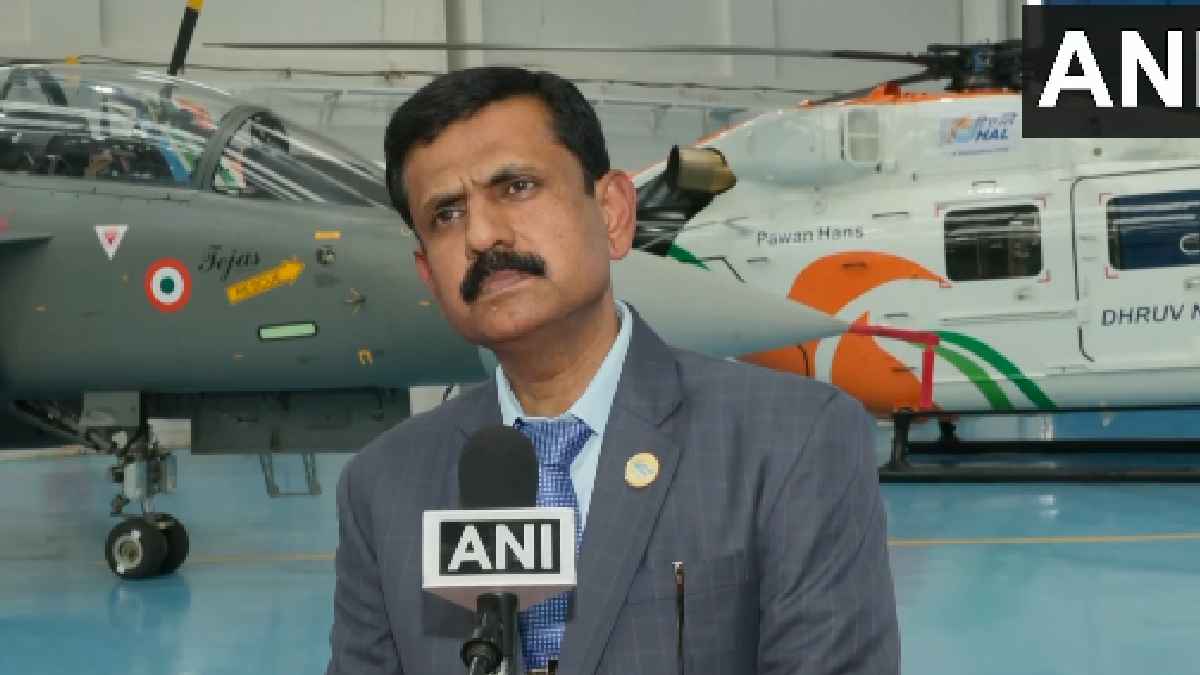
Kumar said the company is optimistic of meeting the delivery timeline with aircraft production in two major regions, Bengaluru and Nashik.
HAL will be able to utilize the dual-location manufacturing system to maintain production capacity and complete the large order in the target time frame.
Kumar said: “We should be able to complete the deliveries in another four to five years,” he said, speaking about the company’s production plans.
HAL has an important role in India’s aerospace and defence sector in the production and integration of multiple indigenous aircraft and helicopter programs.
The new comments accentuate the company’s focus on improving production efficiency and the need for a wider industrial ecosystem to support manufacturing activities.
Kumar also mentioned growing private sector companies' involvement in HAL's programmes. Private industry partners are employed in programmes like the Light Combat Aircraft (LCA), helicopters and Hindustan Turbo Trainer-40 (HTT-40).
HAL continues to carry out key integration responsibilities and private companies are engaged in non-core activities.
This model enables HAL to focus on key integration and aerospace manufacturing functions while also bringing in private companies from the sector into the production chain.
#WATCH | Bengaluru | On delivery of the entire 70-aircraft order, Hindustan Aeronautics Limited Chairman and MD Ravi Kumar says, "We should be able to complete the deliveries in another four to five years. Production is being carried out in two divisions—one in Bengaluru and the… https://t.co/mJldJEjZjv pic.twitter.com/S0sXciYjRA
— ANI (@ANI) September 18, 2026
The increasing participation of private industry is part of the larger evolution of India's defence manufacturing ecosystem.
In recent years, Indian aerospace companies and engineering companies have become increasingly engaged in providing components, assemblies and other services for major defence programmes.
HAL is confident that this production model will help the company complete the 70-aircraft deliveries within the planned four-to-five-year period, Kumar said.
The statement comes at a time when India is in the process of expanding defence manufacturing and reducing dependency on foreign suppliers.
Indigenous aircraft programmes such as the LCA as well as trainer aircraft such as the HTT-40 are a major part of the country’s efforts to build up domestic aerospace capabilities.
Using two HAL production divisions, along with private sector involvement, could help to distribute manufacturing responsibilities across a wider industrial network.
For HAL, completing the order within the specified amount of time will depend on the production schedule, supply chain and availability of components and systems.
The chairman's remarks therefore give an indication of HAL's current delivery expectations and its strategy of combining its own integration capabilities with private-sector manufacturing support.
With production ongoing in Bengaluru and Nashik, HAL estimates the 70-aircraft order to be completed within the next four to five years with private industry partners to assist in the company's broader aerospace manufacturing.