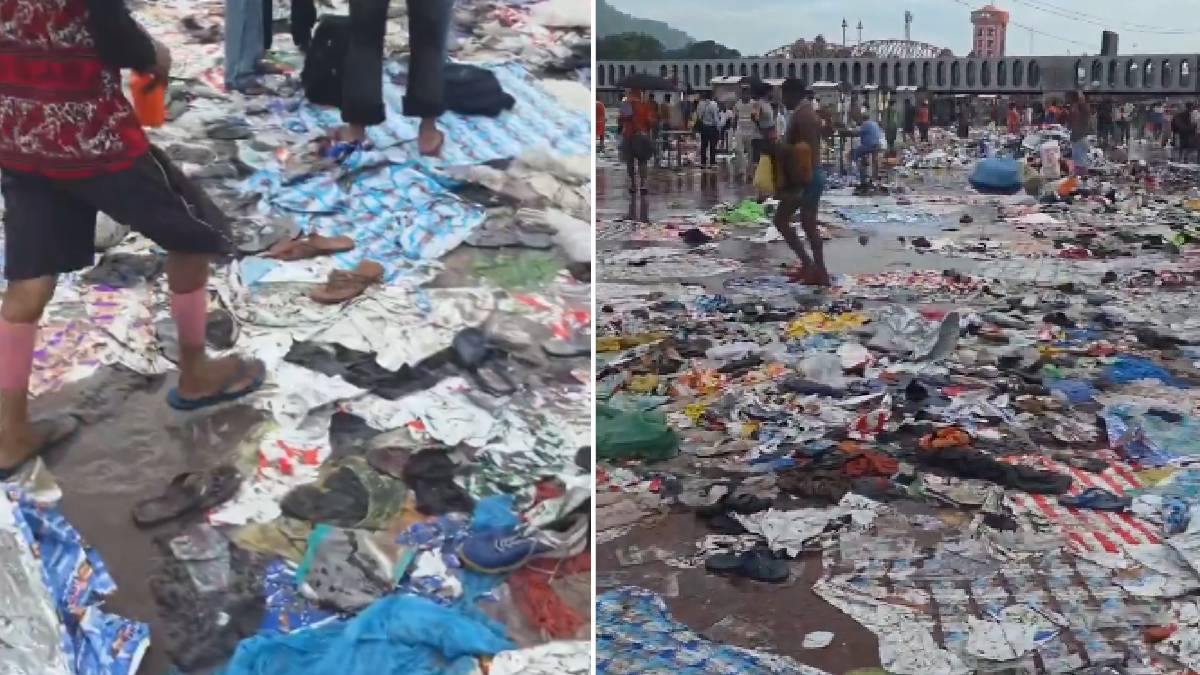
Haridwar has launched a major cleanliness and waste-removal operation after the recently concluded Kanwar Yatra left behind an estimated 7,000 tonnes of garbage across the holy city.
The two-week pilgrimage attracted almost 48 million devotees this year, making it the biggest Kanwar Yatra in terms of participation. Millions of pilgrims travelled through Haridwar and visited the Ganga ghats, roads, markets and parking areas. With such a huge movement of people, the waste accumulation was also a big problem.
So for the second week now, there is a week-long mega cleanliness campaign to clear the garbage and restore the affected areas.
7,000 tonnes of waste generated
According to the civic authorities, over 7,000 tonnes of waste accrued during the Kanwar Yatra. Plastic bottles, polythene, clothing, bamboo structures, packing material and abandoned Kanwars are among the waste.
Some locations within Haridwar have been affected, such as Har-ki-Pauri, the major markets, parking areas, roads and routes connecting the city to national highways.
After the pilgrimage and Shravan Shivratri Ganga Aarti, sanitation teams started to clear up the waste after Kanwariyas started returning to their destinations.
Municipal authorities have deployed sanitation workers in various groups, especially around Har-ki-Pauri and the Mela area, which saw heavy footfall during the pilgrimage.
Mega cleanliness campaign from August 12 to 18
The district administration has also announced an effort to clean the district from August 12 to August 18.
More than 1,000 sanitation workers and around 100 outsourced staff have been mobilised for the operation. Around 80 vehicles are also being used to collect and transport the accumulated waste.
They are monitoring the clean-up operation both on the ground and via digital systems to ensure that the targeted areas are cleared within the stipulated period.
The administration has also appealed to residents, traders, religious organisations, educational institutions, volunteers and members of the saint community to participate in the cleanliness campaign.
The scale of the operation reflects the enormous amount of waste generated during one of India's largest religious pilgrimages.
Discarded clothes to be recycled
In all the waste collected after the pilgrimage, discarded clothing is reported to account for several tonnes.
As such, the collected clothes will be sent to recycling agencies instead of being dumped in landfills or water bodies.
The initiative could help minimize the environmental impact of the pilgrimage and demonstrate the need for waste segregation and recycling to be done during large public gatherings.
Civic officials are also looking at removing plastic and other non-degradable material from areas close to the Ganga.
Condition of Haridwar due to Kanwar yatris 🤦🏻♂️ pic.twitter.com/pR7x63f4gm
— radha (@radhaa147) August 12, 2026
Environmental concerns for Ganga pollution
Environmental experts have raised concerns about the effect of the accumulated waste on the Ganga.
With the monsoon in the area continuing, heavy rainfall could wash plastic, sewage, polythene and other waste into drains and eventually into the river.
Experts have particularly warned about microplastic pollution. Plastic sheets, bottles, cans and other disposable items can break down into smaller particles and potentially enter the river ecosystem.
Environmental experts have therefore called for stricter controls on the use and disposal of plastic during major religious gatherings.
The disposal of clothes, bamboo and other materials directly into the Ganga has also been highlighted as an environmental concern.
Religious organisations join clean-up
Religious organisations and volunteers have also backed the cleanliness campaign.
The Akhil Bharatiya Akhara Parishad has stated its support for the initiative, and members will participate in the clean-up.
Ganga Sabha volunteers have already started cleaning areas around Har-ki-Pauri before the evening Ganga Aarti. The effort is to keep the main pilgrimage site clean and ensure that devotees continue to have access to a cleaner environment.
The participation of religious groups is considered significant because of their influence among pilgrims and the wider community.
Difficulties of handling huge pilgrim crowds
The post-Kanwar clean-up has once again highlighted the challenge of managing waste during large religious gatherings.
While local authorities will be more involved in sanitising people and vehicles during the pilgrimage, the sheer number of visitors can put enormous pressure on local infrastructure.
With nearly 48 million pilgrims reportedly visiting Haridwar, even a small amount of waste per person can result in thousands of tonnes of garbage.
The administration now has to get rid of the accumulated waste quickly and prevent it from entering the Ganga.
The week-long campaign will focus not only on clearing up the trash on the ground but also on the restoration of public spaces, ghats, roads and other places affected by the pilgrimage.
Officials and environmental experts have stressed that long-term solutions will require greater public participation, better waste segregation, reduced use of single-use plastic and stronger awareness among pilgrims.
As Haridwar gets back to normal after the massive Kanwar Yatra, the clean-up operation has become an important test of how well the city can manage the environmental impact of large-scale religious tourism.