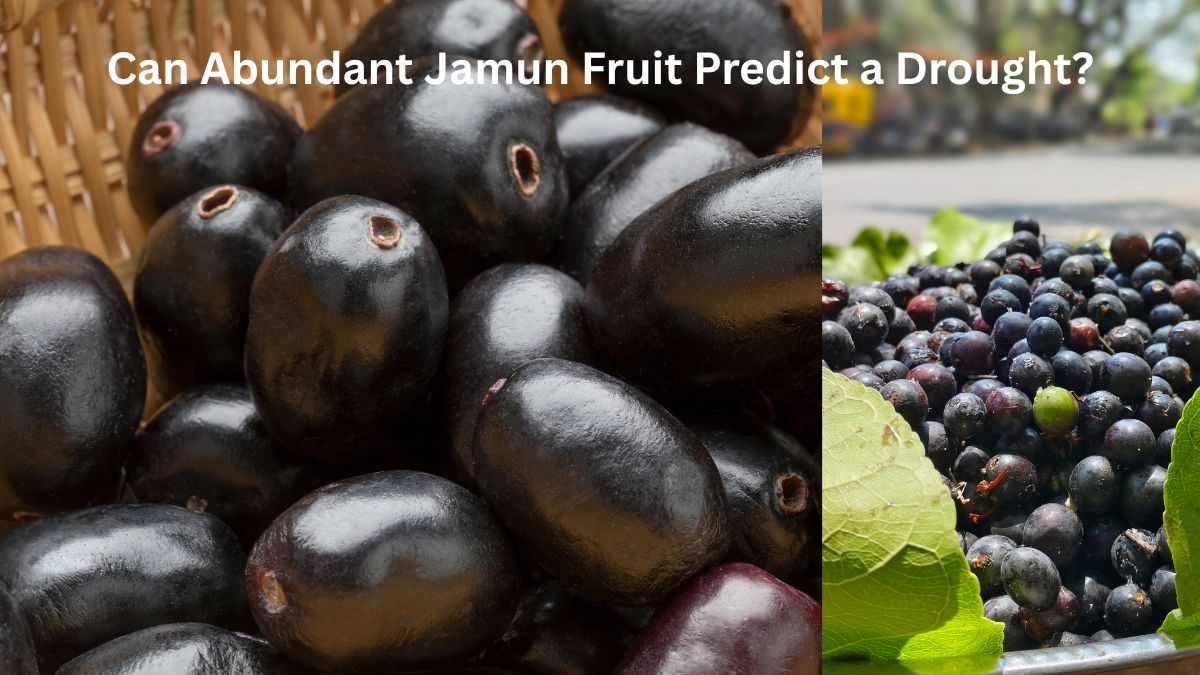
Many parts of India, people have reported an exceptionally plentiful jamun fruit harvest this year. Trees that usually produce moderate quantities of deep purple fruit are now laden with clusters of ripe jamuns, and they are drawing the attention of farmers, fruit sellers, and local communities. As the harvest continues to grow, the old question has come to mind: does a bumper jamun crop mean we are heading toward drought?
The notion is not new. In many rural communities, people have passed down weather forecasting methods over generations. Some folk say that before drought, some trees produce more flowers and fruits because they are under environmental stress. And so a heavy jamun harvest in some cases is seen as a warning sign of a dry season ahead.
But scientists say to be careful in interpreting such observations.
What causes heavy fruiting in Jamun Trees?
Experts in agriculture say fruit production in jamun trees is influenced by a number of factors (rainy weather, temperature, soil health, sunlight exposure, and tree health are also important factors in fruit production, as well as how the tree is grown).
A good season for flowering can lead to increased fruit set and yield. Mild temperatures, good moisture, and fewer pest activities can produce a larger harvest. Trees may also demonstrate cyclical fruiting patterns, in which years of high production are followed by years of low production.

Researchers say that a bumper crop is more likely to be related to the environmental conditions during the previous growing season than future weather events.
Is there a scientific connection between Heavy Jamun Crops and Drought?
At present, there is no strong scientific evidence that abundant jamun production can be seen as predicting an upcoming drought. Meteorologists and climate scientists use atmospheric data, ocean temperature patterns, monsoon circulation models, and satellite observations to forecast rainfall and drought conditions.
While traditional ecological knowledge can sometimes predict environmental patterns, for instance, fruit abundance alone cannot predict future weather.
Some scientists suggest that stress-related responses in plants may occasionally influence flowering and fruiting. Some species produce more seeds or fruits when exposed to environmental pressures, increasing their chances of reproduction. But this phenomenon varies greatly among species and ecosystems and does not necessarily indicate that a drought is imminent.
Why this year’s harvest may be larger?
Many agricultural researchers believe that favorable pre-monsoon weather, increased moisture availability in many regions, and flowering conditions may have contributed to the exceptional jamun crop this year.
Moreover, mature jamun trees produce larger harvests as they age, especially if they receive sufficient nutrition and have low disease pressure. Good pollination conditions can also dramatically increase fruit production.
Nutritional and Economic Benefits
The bounty of crops is good news for consumers and farmers. Jamun has a rich nutritional profile with antioxidants, vitamin C, iron, potassium, and dietary fiber and is very popular for juices, dessert recipes, herbal preparations, and traditional medicine.
A bigger harvest also creates opportunities for markets and fruit sellers to make more money, and prices are more affordable for consumers.
The Bottom Line
Though folklore often associates a heavy jamun harvest with the possibility of drought, modern scientific evidence does not support such a direct cause-and-effect relationship. Experts say it’s likely that the bumper crop is simply due to good growing conditions rather than a reliable indication of future rainfall shortages.
But the discussion does illustrate the interesting link between traditional knowledge and modern science. As scientists discover plant behavior and climate patterns, they can find some useful information from nature, and the data in nature are not always reliable forecasting tools.
For now, consumers can just enjoy the plentiful supply of jamun this season while meteorologists continue to rely on scientific data to predict the course of the monsoon and future weather conditions.