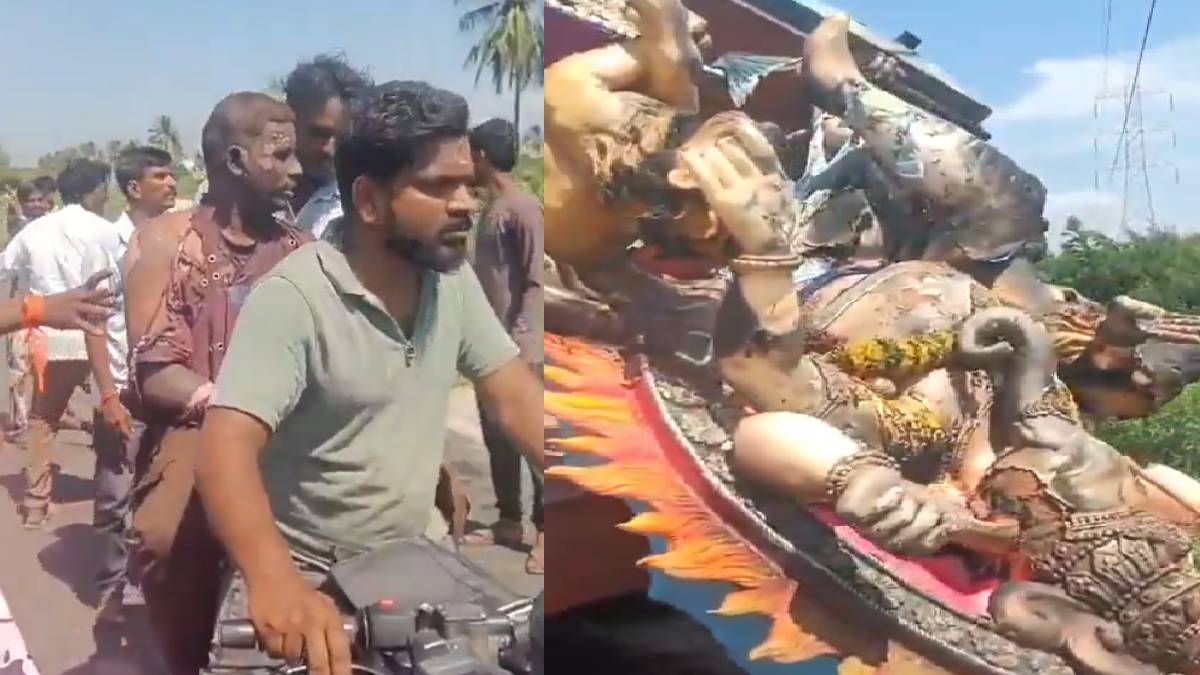
A tragic incident in Hosapete, Karnataka, has raised new fears about Ganesh Chaturthi safety measures after people carrying a Ganesha idol were electrocuted when the idol came into contact with a live electric wire.
The incident has brought fresh attention to the safety warnings issued by Karnataka Police before the ceremonies. Organisers and devotees should have been warned to take care of idols (especially near electricity lines) and have been told to coordinate with local authorities to get permissions to make the procession or to follow the protocol.
The tragedy has reignited debate on the necessity of safety protocols for religious processions. The large Ganesha idols are often carried through crowded streets, where overhead electricity lines, narrow roads, traffic and other obstacles can pose dangerous hazards. Thus, ensuring that the route is safe before a procession begins is the most important thing to do to prevent accidents.
According to the information available, the idol came into contact with a live electric wire while it was being carried, resulting in an electric shock to people involved in the procession. The incident has shocked the local community and raised questions about whether there were sufficient precautions made along the procession route.
The incident will also revive the debate about the Karnataka Police’s earlier appeals to organisers in the past to seek permission and obey safety requirements before processions take place. Such permissions and route checks can help authorities identify potential hazards, including low-hanging electrical cables, before huge gatherings and idol processions take place.
⚠️ Trigger Warning ⚠️
— 👑Che_ಕೃಷ್ಣ🇮🇳💛❤️ (@ChekrishnaCk) September 15, 2026
A tragic incident has happened in Hosapete Karnataka.
People carrying Ganesha Idol got electrocuted when the idol came in contact with live electric wire.
This is why Karnataka Police had advised people to be cautious and seek permission from cops.… pic.twitter.com/EPSBHv9uPx
Police safety advisories are usually designed to reduce the possibility of accidents in large crowds and moving structures at festivals. But they may also become a source of complaint when the organisers or the public feel that restrictions are too strict or are hard to follow.
Following the Hosapete incident, attention has returned to the need for cooperation between organisers, electricity authorities, police and local administrations. A procession route should ideally be surveyed in advance, especially where big idols are involved. Electrical wires and other overhead infrastructure should be identified, and appropriate precautions should be taken before the procession is allowed to proceed.
The tragedy serves as a reminder that electrical safety is one of the things you can’t ignore during a festival celebration. Even brief contact between a large idol or its supporting structure and a live power line can have fatal consequences. Organisers and participants must be alert and idols, vehicles, decorations and other equipment should be kept a safe distance from the power line.
Some people feel that the police warnings before the celebrations were justified. But responsibility for the accident should be established by an official investigation, not through public claims or assumptions. The circumstances around the electrocution will need to be worked out: how strong and high the electrical wire was, the stage of the procession, and whether safety measures and permissions were in place.
The Hosapete incident points to the need for devotees and organisers across Karnataka to take electrical hazards seriously. Accurate safety plans, road safety procedures ahead, and coordination of the police and electricity authorities will prevent similar tragedies in the future.
What happened in Hosapete is a stark reminder that festival celebrations must be accompanied by careful planning and safety precautions. No religious procession should put people’s lives at risk, and every possible measure must be taken to ensure devotees can celebrate safely.