India has made another step towards self-reliance in defence manufacturing with the Maiden Factory Acceptance Trials (FATs) of indigenously developed Marine Jet Power (MJP) waterjet propulsion systems for the Indian Coast Guard completed. The trials in Goa are an important step towards the country’s efforts to develop indigenous maritime technology and reduce dependency on imported defence equipment in the maritime domain.
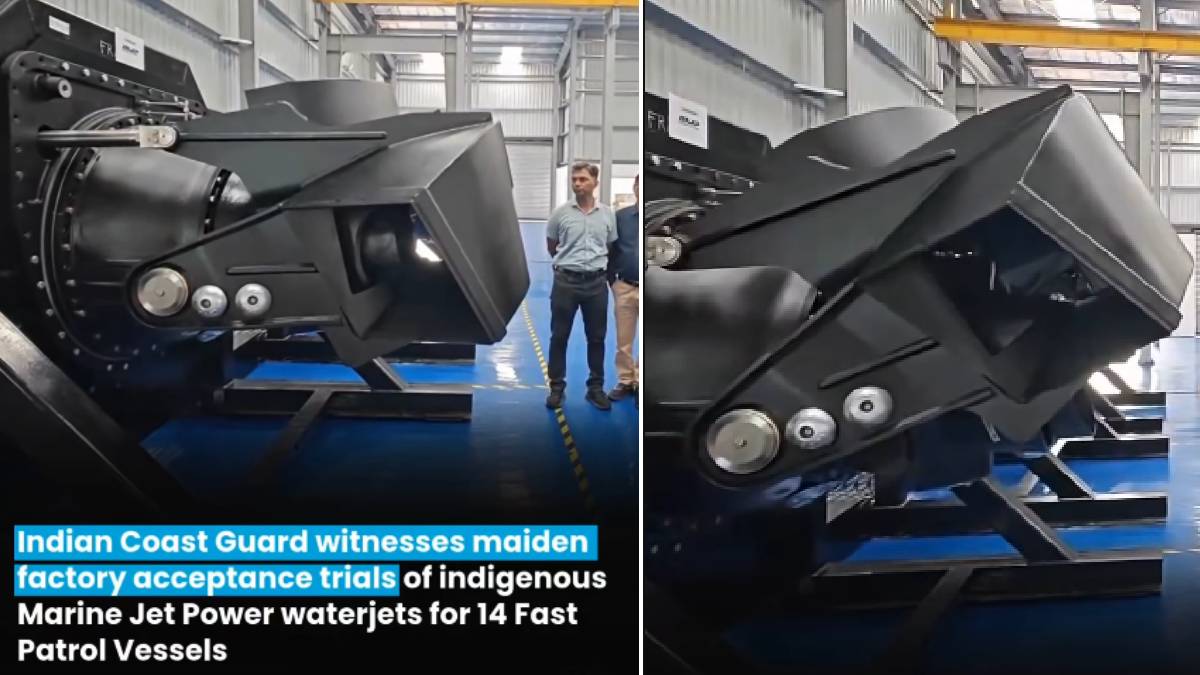
The Factory Acceptance Trials were conducted by the Indian Coast Guard to validate the performance of the advanced propulsion systems, which are to be incorporated into 14 Fast Patrol Vessels (FPVs) currently being built by Mazagon Dock Shipbuilders Limited (MDL). These are expected to play a crucial role in the enhancement of India's coastal security, maritime law enforcement, search and rescue, and protection of the country's long coastline.
🚨 India Clears Major Indigenous Marine Propulsion Milestone for Coast Guard Fleet
— Resonant News🌍 (@Resonant_News) July 16, 2026
India Achieves Major Milestone in Indigenous Naval Propulsion
🔹 Indian Coast Guard successfully witnessed the Maiden Factory Acceptance Trials (FATs) of indigenously developed Marine Jet Power… pic.twitter.com/Zez4X1YzIh
Marine jet propulsion systems are one of the most advanced technologies used in high-speed patrol vessels. Waterjet systems, unlike propeller-based propulsion, draw in water, accelerate it through an internal impeller (water jet propulsion), and expel it at high speed to generate thrust. This design provides several operational advantages, such as high speed, acceleration, shallow water capability, safety, and low underwater noise.
These are especially important to the Indian Coast Guard. Fast Patrol Vessels operate in the coastal environment, estuaries, and shallow waters where quick response time and speed of moving vessels are extremely important. From responding to maritime emergencies to searching for suspicious boats, anti-smuggling operations, and disaster relief work, advanced propulsion systems have great value for operational efficiency.
The successful completion of the Factory Acceptance Trials proves that indigenous propulsion systems are capable of delivering the technical and performance requirements to be installed on operational vessels. Factory Acceptance Trials are an essential part of the defence manufacturing process to ensure that the complex equipment is working to the design specifications and that all necessary technical and performance checks are done before delivery.
The project is also a significant achievement under the Government of India's Aatmanirbhar Bharat initiative, which is aimed at domestic design, development, and production of strategic defence technologies. In the past several years, India has expanded indigenous capabilities in the form of naval shipbuilding, missile systems, aerospace, electronics, and maritime equipment.
Short-term benefits from reducing reliance on imported marine propulsion systems are numerous. Indigenous manufacturing contributes to supply chain security, less maintenance of lifecycle systems, faster upgrades, and the development of highly specialized marine engineering skills for Indian industries. It also bolsters the country’s defence industrial base while creating jobs and promoting innovation amongst domestic manufacturers.
Mazagon Dock Shipbuilders Limited, one of India’s top defence shipyards, is still active in indigenous naval construction. There is a growing number of destroyers, frigates, submarines, and patrol vessels delivered by the company to the Indian Navy and Coast Guard, and India is rapidly developing in the maritime domain.
With India expanding its strategic engagement in the Indian Ocean Region, modern fast patrol vessels with indigenous propulsion technology will assist in coastal security, maritime trade routes, the protection of ships from criminal activities on the water, and quick response to emergencies. These capabilities are becoming increasingly important as the maritime security challenges evolve.
But the Maiden Factory Acceptance Trials of the Marine Jet Power waterjets are more than just a technical achievement; they are an indication of India’s growing confidence in developing and manufacturing advanced defence systems domestically. With more indigenous technology coming into service, we are closer to having more strategic autonomy in order to strengthen India’s position as a leading defence manufacturing hub in the world.
This is another step in the direction of India’s vision of a strong, technologically advanced, and self-sufficient maritime force capable of defending national interests and, in the long term, of securing a more secure maritime future.