India has officially launched its campaign for election as a non-permanent member of the United Nations Security Council (UNSC) for the 2028–2029 term, marking another step in its expanding diplomatic engagement on the global stage. And it is the latest sign of New Delhi's continued commitment to strengthening multilateral institutions, promoting international peace and security, and advocating for meaningful reforms in the United Nations system.
As one of the world’s largest democracies and fastest-growing major economies, India has always been a responsible global stakeholder. When India started to formally launch its campaign for the UNSC seat, it was a signal to others that it wants to go one step further and do so by being a bigger force not only in solving the world’s problems, but also in solving these problems and also in the world’s problems of conflict resolution, climate change, terrorism, sustainable development and global health security.
India has been a non-permanent member of the Security Council for eight years, most recently for the period from 2021 to 2022. In that time, New Delhi highlighted maritime security, counter-terrorism, peacekeeping, technology for development, and equitable access to vaccines during the COVID-19 pandemic. The country’s presidency of the Council in August 2021 was widely regarded as a great example of maritime security and international cooperation.
The proposed campaign would be built on India’s long-standing foreign policy of dialogue, diplomacy and respect for international law. Indian diplomats are likely to engage member states in all regional groups to reach consensus and build the broad support required during the UN General Assembly elections.
India’s candidacy also reflects the country’s larger push for reform of the United Nations, particularly the Security Council. New Delhi has consistently claimed that the present Security Council membership does not reflect today’s situation. The permanent membership of the UNSC has been kept the same since 1945 in spite of the huge shifts in population, economy, and political power.
India has repeatedly called for more permanent and non-permanent membership in the Security Council to make it more effective and representative. In the G4 group of countries, like Germany and Japan, as well as Brazil and so many others, India also wants permanent membership in the reformed Security Council.
The support for India’s aspirations has been increasing steadily in recent years. China, France, the United States, and Russia are among the countries that have publicly supported India in its bid for permanent membership in the Security Council. And many developing countries have also recognised India’s role in peacekeeping, humanitarian assistance, disaster relief and development partnership.
India still has the largest contributions to UN peacekeeping missions, with more than 250,000 peacekeepers in the last few decades. Indian personnel have deployed to the conflicts in Africa, Asia, and the Middle East and have received international acclaim for their professionalism and dedication.
Besides peacekeeping, India's diplomatic profile has been expanded considerably in recent years through the G20 Presidency, the Voice of Global South Summit and its active participation in BRICS, the Quad, the Shanghai Cooperation Organisation and the G77. These engagements have promoted India to a middle ground between developed and developing nations.
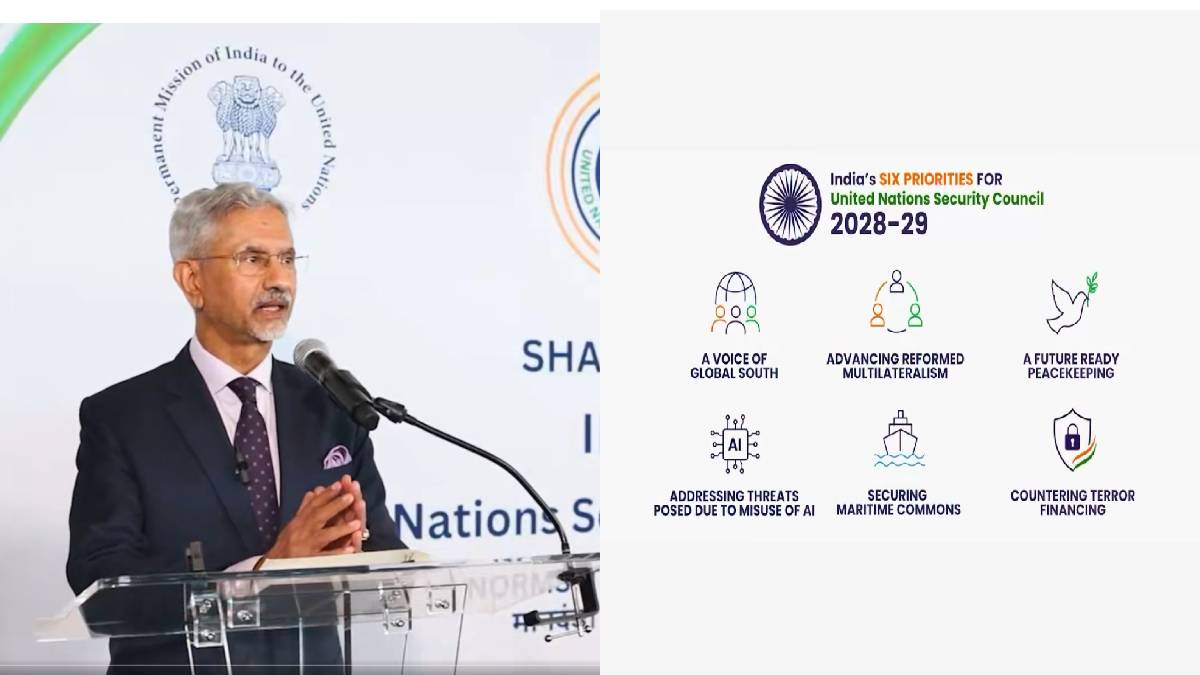
The campaign for the 2028–2029 UNSC seat is expected to highlight India's commitment to inclusive multilateralism, sustainable development, counter-terrorism cooperation, digital public infrastructure, climate resilience, and equitable global governance. We are sure officials will also intend to stress India's track record in balancing economic development and development priorities and how this is all about the concerns of the Global South.
If elected, India would again be involved directly in some of the world’s most critical issues and discussions of international peace and security, sanctions, peacekeeping mandates and responses to emerging global crises. Membership would also give New Delhi another opportunity to advocate for reforms to make the United Nations more responsive to twenty-first-century problems.
Hence, as geopolitical conflicts continue to shape global politics, India's campaign is about collaboration, dialogue, rules-based international engagement, and its bid in itself is a sign of commitment to the way in which India will play a constructive role in the world's decision-making. Its bid will start the formalization of what is expected to be a diplomatic campaign ahead of the United Nations election.