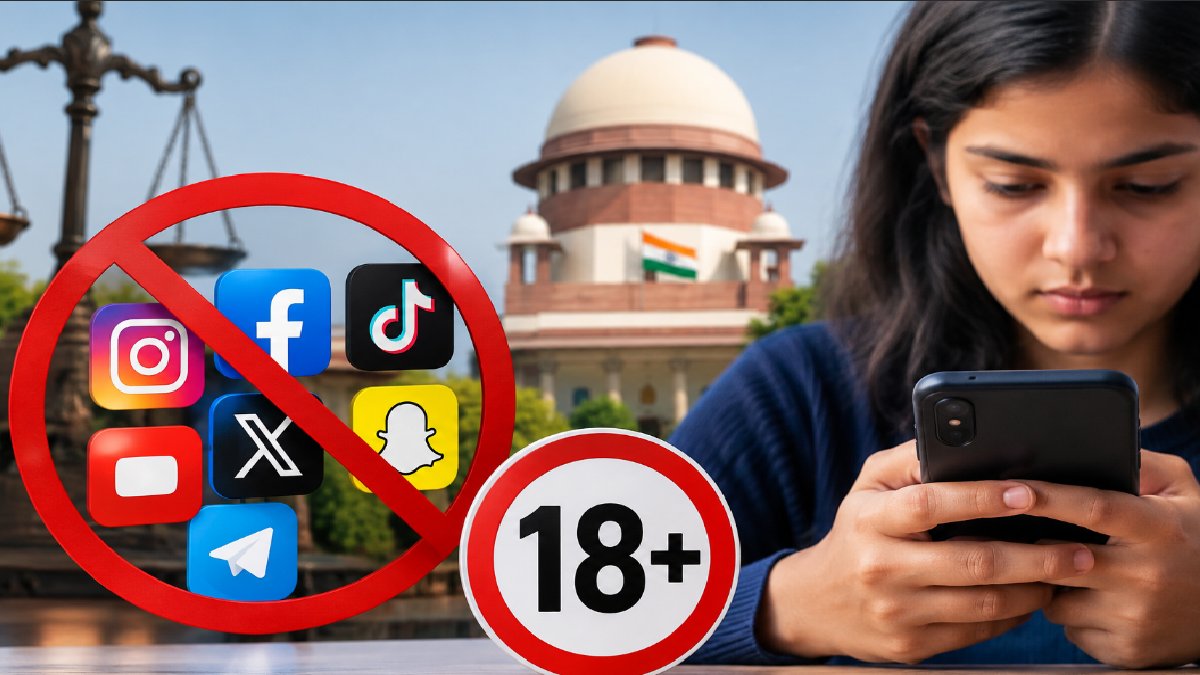
More changes are on the way in Indian social media rules that could prevent the young, or minors age 18 or younger, from signing up for social media accounts alone. The proposed action comes as the Supreme Court is taking up the issue of safeguards for minors online.
The development comes as children are increasingly exposed to risks on social media that include online grooming, cyberbullying, sexual exploitation, inappropriate material and misuse of personal information. The Supreme Court has asked the Centre to examine a statutory framework that would require the social media platforms to comply with Indian laws governing minors.
The Centre has said it will work to amend the Information Technology (Intermediary Guidelines and Digital Media Ethics Code) Rules to prevent people below 18 from creating social media accounts. The proposed change would place a greater responsibility on platforms to decide if a prospective user is a sufficient age to get into the website.
Why is the government considering an Under-18 Social media rule?
The issue has reached the Supreme Court through a petition filed by the Just Rights for Children Alliance. The petition has sought stronger safeguards for minors using social media and other digital platforms. It has raised questions about how children can independently create accounts and agree to the terms and conditions of online services.
A key issue before the court is Indian contract law. Section 11 of the Indian Contract Act provides that a person must have reached the age of majority in order to enter a contract. The petition says social media registration is the acceptance of the platform’s terms of service and so how such contracts apply to users below 18 years of age?
The petition also has flagged some potential dangers for children online. These are grooming, sexual exploitation, trafficking, sextortion, cyberbullying, exposure to age-inappropriate material and misuse of personal data. Additional protection is likely to be needed, the Supreme Court has said, to protect minors in digital platforms.
What did the Supreme Court say?
The Supreme Court has not itself ordered an immediate nationwide social media ban on users below 18. It has instead asked that the Centre put appropriate safeguards in a statutory framework.
The court studied whether the current legal framework could be applied to ensure that social media platforms follow Indian law when allowing minors to create accounts. The court also indicated that having guidelines may not be sufficient and asked the government to consider a statutory approach.
The issue is therefore at the stage of regulatory and legal consideration. The government's proposed amendment would need to be formally framed and notified before it becomes a legal requirement.
How could Social Media Platforms Verify Age?
One of the major challenges of an under-18 restriction would be age verification. Most of the major platforms have their own minimum age requirements, often from 13 years old, and these require users from 13 years old (if not older) and must be in compliance with their terms and local laws.
The petition before the Supreme Court has called for mechanisms that can establish a user's age and verify the identity and authority of a parent or legal guardian. India could therefore see greater use of age-verification systems if the proposed rules are formally introduced.
But the exact technology or verification mechanism has not yet been finalized. Privacy, data collection, security and the possibility of users bypassing age checks will be key issues in the policy debate.
What would the proposed rule mean for teenagers?
If the proposed framework is implemented in its reported form, people below 18 could be prevented from independently opening accounts on covered social media platforms. This would be a fundamental change from the current model where many platforms allow teenagers above their own minimum age threshold to register.
The extent of the proposed restrictions will depend on final amendments. It is not clear whether all kinds of social media services would be treated in the same manner or if there are categories of platforms and services that would be treated differently.
The petition also suggests that children can access educational or other useful digital content through parents or guardians’ accounts. Such provisions could be in future discussions as the government works on the regulatory framework.
Child Safety At The Centre Of Debate.
The proposed change comes just as governments around the world are considering tighter controls on children’s access to social media. Australia, for example, has already introduced restrictions on social media access for children under 16, and European policymakers have also been considering age-based safeguards.
India’s approach would go much further by setting the age at 18 for independently opening social media accounts, if the reported plan becomes law. So the government will need to weigh child-safety concerns with privacy, access to information, parental rights and the practical enforcement of age restrictions.
For now, the proposed under-18 restriction is not in place. The Centre will work on amendments to the IT rules following the Supreme Court's decision. Until any changes are formally announced and implemented, existing platform policies and applicable laws continue to govern social media access for minors.
The issue will be kept under close watch as the government attempts to translate the proposed age restriction into enforceable rules. And the final framework could determine how social media companies verify users' ages, what role parents or guardians may have and whether platforms will be held responsible for allowing minors to create accounts.