Work culture has long been a subject of debate among professionals in India, where long hours, rigid expectations, and limited flexibility are often seen as the norm. Recently, an Indian man named Aman, now employed in Singapore, shared his experiences in a viral Instagram video. His candid reflections have resonated with thousands, sparking conversations about how workplace attitudes differ across countries.
The Viral Post:
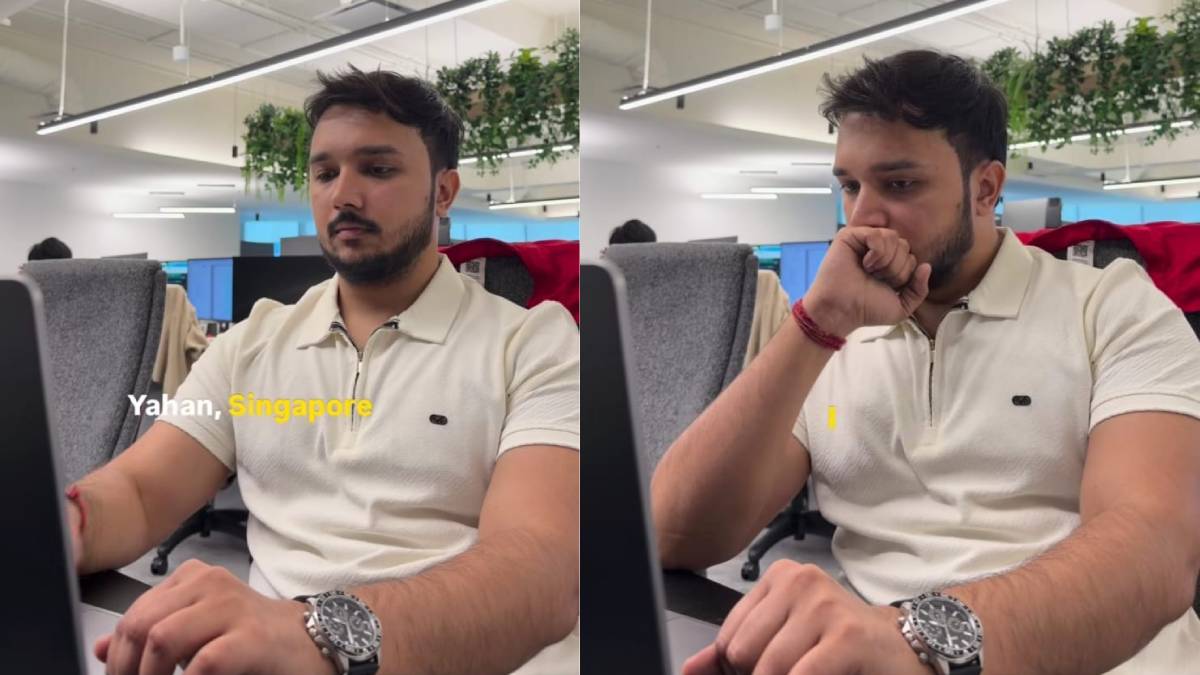
In his video, Aman contrasted his past experiences in India with his current life in Singapore. He explained that in India, requesting leave often felt like “begging,” requiring employees to invent excuses such as illness or family emergencies just to secure a day off. By contrast, in Singapore, he simply informs his manager when he needs time away, without guilt or elaborate justification.
He also emphasized the importance of work‑life boundaries. In Singapore, once office hours end, employees are free to disconnect. “Shaam 6 baje baad mera phone mera hai, boss ka nahi,” Aman said, highlighting that after 6 PM, his personal time is respected. He added that staying late in the office is not seen as dedication but as exploitation.
Key Differences in Work Culture:
- Leave policies: In India, employees often feel pressured to justify leave requests, while in Singapore, informing is sufficient.
- Work‑life boundaries: Singaporean workplaces respect personal time after office hours, unlike many Indian offices where calls and emails continue late into the night.
- Perception of overtime: In India, staying late is often equated with hard work, whereas in Singapore it is viewed as poor management or exploitation.
- Employee well‑being: Singapore’s culture emphasizes mental health and balance, reducing burnout compared to India’s high‑pressure environment.
Online Reactions:
The video quickly gained traction, with many young professionals echoing Aman’s sentiments. Some shared their own struggles with rigid expectations in India, while others debated whether cultural and economic differences make such comparisons unfair. Still, the overwhelming response highlighted a growing desire among Indian employees for healthier workplace norms.
Broader Implications:
Aman’s reflections underscore the global conversation about burnout and work‑life balance. As more Indian professionals migrate abroad, they bring back insights into how different systems handle employee well‑being. His post has become part of a larger movement questioning traditional notions of “hard work” and advocating for boundaries that protect personal life.

The story of Aman, the Indian man in Singapore, is more than just a viral video - it is a mirror reflecting the challenges faced by millions of professionals in India. By contrasting the cultures of two countries, he has sparked a dialogue about what true productivity means and how respect for personal time can transform workplace dynamics. His message resonates deeply: working late does not always mean working hard - it can mean being exploited.