Divers in Indonesia have recovered 52 bodies from the wreckage of a passenger ferry that capsized in the Java Sea earlier this month, authorities said today.
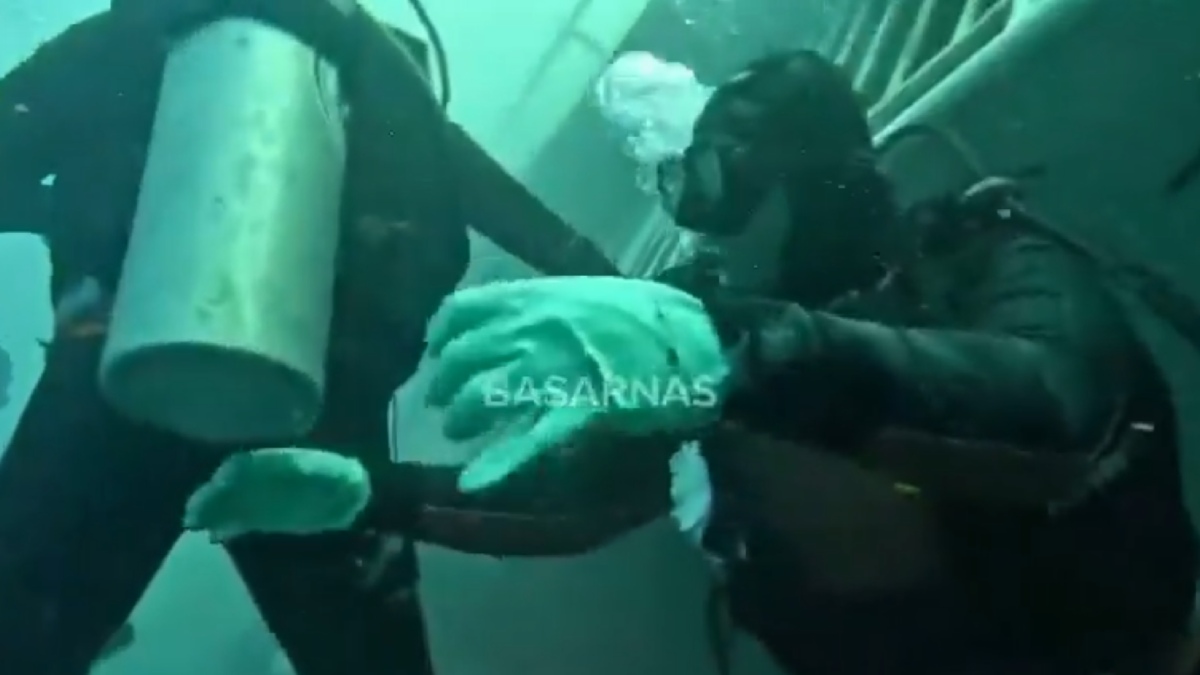
The recovery operation has gone on for days in water that’s difficult to navigate underwater, and rescue teams are still searching for passengers who are not accounted for.
According to the latest reports, 108 people have been rescued, and 83 people are still missing. The ship, Virgo Transport 8, had 243 people on board when it sent a distress call on September 13 after it ran into rough seas.
The ferry was traveling from Surabaya in East Java to Banjarmasin in South Kalimantan, on the island of Borneo, when it ran into trouble.
The captain reported that the vessel was listing in rough seas, with waves around three metres. The ferry capsized in waters around the Masalembo archipelago in the Java Sea, authorities later found.
Divers enter wreck to search for victims.
The underwater operation has been especially challenging since many victims are thought to remain inside the overturned vessel.
Divers have entered the ferry through its windows to visit areas inside the wreck. Search teams have been working in difficult underwater conditions - currents and low visibility.
Earlier in the operation, rescuers had been unable to enter certain parts of the ship due to strong currents and murky water. A joint team of divers from the National Search and Rescue Agency (Basarnas) and the Indonesian Navy had recovered nine bodies from the wreckage during the 11th day of the search operation, Indonesian officials said in a statement on September 23.
The recovery continues, and a total of 52 bodies have been recovered today.
Memasuki Hari ke-12, Kamis Sore
— jktlife (@joneshop) September 24, 2026
Pencarian korban maseh berlanjut.
Meskipun arus bawah laut kian deras,
Tim berhasil menemukan lg 14 korban
Mari doakan semua petugas yg bertugas diberikan keselamatan dan kesehatan selalu 🙏🏻
🎥 SC: cjunaedy https://t.co/r1qNkD0N1B pic.twitter.com/xcBKYKDIHF
Mr. Mohammad Syafii, the head of Indonesia’s National Search and Rescue Agency, said the priority remained finding people who were still missing and bringing closure to their families.
The recovered bodies were taken to a police hospital in Banjarmasin, where authorities were working to identify the victims before handing them over to their families.
Ferry resting about 30 meters underwater
The capsized vessel lies underwater at a depth of about 30 metres, or 98 feet, in the latest reports.
Authorities are preparing a bigger salvage operation to eventually recover and pull the ferry from the seabed.
The wreck itself has now been the primary focus of the search as authorities believe that there are still people in the ship.
The recovery has been conducted by many agencies, including Indonesia’s search and rescue service as well as Indonesia’s national search and rescue organisation and the Navy. Divers have been working in difficult conditions to check the vessel, access it, and to enter the enclosed areas.
In previous reports, the dangers faced by divers due to the unstable underwater environment and the possibility of vehicles and other objects inside the ferry shifting or obstructing access.
So the operation has involved not only finding bodies, but also finding out which parts of the wreck can be entered safely.
Search for 83 missing people continues.
Despite the recovery of 52 bodies and the rescue of 108 people, 83 people are still missing, the most recent figures indicate.
The numbers have changed as the operation goes on. On September 23, authorities reported 26 deaths, 108 survivors, and 109 people still missing. From the wreck, rescue teams then recovered more victims from the wreck in continued underwater missions.
Recovery figures show that the search has now turned to the wreck.
Authorities still have not finished the search, and the final number of casualties might vary as rescue teams continue to search for and find victims.
The operation has been closely watched by relatives of the passengers who have been missing for eight days and who are waiting for information about their family members.
What caused the ferry to capsize?
The ferry's captain issued a distress call on September 13, reporting that the vessel was listing while travelling through rough seas.
Waves were three metres high at the time. The ship then capsized in the Java Sea.
But the latest reports do not provide a final official cause for the disaster. Investigation of the circumstances surrounding the accident is separate from the search and recovery operation.
The condition of the vessel, weather conditions, navigation, and other operational factors are among the issues that authorities might investigate to determine what happened.
At this stage, the reported rough weather is a central aspect of the accident, but it should not be taken as a final determination of the cause.
Ferry safety in Indonesia is under scrutiny.
The disaster has also put maritime safety in Indonesia in a state of fire in the world that ferries are one of the most important means of transportation between islands.
Indonesia has more than 17,000 islands, and passenger ferries are a big part of the country’s transport system. Ferry accidents have happened in the past several decades, and the safety, inspections, and enforcement of vessels have been questioned.
Indonesia has recently taken steps to tighten ferry safety measures after a series of deadly passenger-ship accidents. There have also been stepped-up inspections and emergency plans taken by the government to make sure ferry safety measures are up to date, the government said in a recent report.
The Virgo Transport 8 disaster is therefore likely to put further scrutiny on safety practices governing passenger vessels.
But rescue and recovery are the first and foremost priority at this time.
Authorities continue recovery operation
The recovery of 52 bodies represents a major step forward for the search after days of searching, but there are still hundreds of people missing.
The wreck site authorities are continuing to operate at the wreck site, and it is well organized, and resources are being used to salvage the vessel from the seabed.
The bodies so far recovered were taken to Banjarmasin for identification, and forensic teams were working to match victims with information provided by families. Indonesian police had already begun to collect family DNA samples to assist in the identification of remains recovered.
With 83 people missing, the underwater search will remain focused on the ferry and its surrounding area.
The final toll is going to depend on the recovery effort and how many bodies come out of the wreckage.