A Jharkhand court has ordered Indian Railways to pay ₹35,000 as compensation to a passenger after a train was delayed by more than eight hours. Transport service providers have the responsibility to address inconvenience caused to passengers, the court has said.
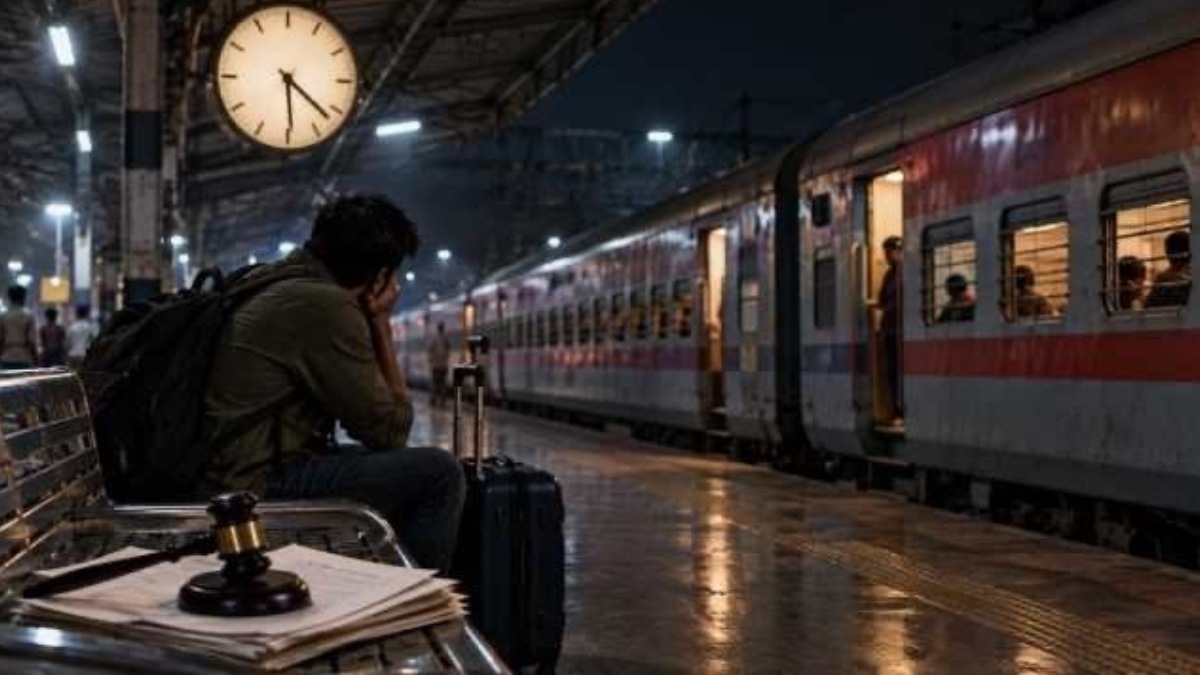
Delays in trains can be very difficult for passengers when it comes to connecting transportation, hotel bookings, examinations, medical appointments, professional commitments or other time-sensitive plans. Even when trains are disrupted because of operational requirements, weather conditions, technical issues, congestion and so forth, there are additional costs and inconveniences for travellers.
In the Jharkhand case, the passenger approached the consumer forum after experiencing a delay of more than eight hours. The delay in travel plans disrupted the passenger's travel plans and caused inconvenience. After the court considered the matter, Indian Railways was directed to pay compensation of ₹35,000.
The case is important because it brings up the wider question of accountability in public transportation services. Rail passengers expect trains to run on time and, although this is not an immediate problem for the railway systems, the railway network can be affected by things outside of the control of the railway authorities. Courts and consumer forums can judge people’s complaints on the basis of the facts.
The compensation ordered in this case does not necessarily mean that every passenger whose train is delayed will automatically receive ₹35,000. Compensation claims are generally dependent on the circumstances of the particular case, the evidence submitted by the complainant and findings of the relevant authority. Passengers should therefore distinguish between a court order and a general compensation policy for all train delays.
The ruling also highlights the importance of keeping records when a major delay causes financial loss or other measurable inconvenience. Passengers who experience significant disruption may need documents such as tickets, travel records, receipts for additional expenses and evidence showing the consequences of the delay when pursuing a complaint.
For Indian Railways, such passenger compensation cases could bring the issue of service standards and grievance redressal to the forefront. The railway network is one of the world's largest passenger transportation systems, sending millions of people across the country. In the face of such a large network, punctuality is always an issue: high-volume routes, which are heavily used, tend to have trains sharing infrastructure with multiple services.
And yet from the passenger’s point of view, a very long delay can have far-reaching effects beyond arriving late. Missed connections, higher accommodation costs, lost work or other commitments can also have an impact on passengers if an unexpected disruption occurs. Consumer complaints can therefore be used as a mechanism for passengers to seek out some relief in appropriate cases.
The Jharkhand court’s order will likely be of interest to railway passengers because it demonstrates that long delays can become the subject of formal consumer disputes. But passengers also need to realize that courts assess complaints individually and that compensation should be based on the facts of each case.
🚨 A Jharkhand court had ordered Indian Railways to pay Rs 35,000 compensation to passenger as train delayed by more than 8 hours. pic.twitter.com/IH8lnRJuTJ
— Indian Tech & Infra (@IndianTechGuide) September 22, 2026
The findings also reinforce the need for train status to be checked before travel and for relevant documents to be kept in case of a major disruption. Passengers who have suffered a specific financial loss or service-related grievance can appeal through the appropriate railway grievance or consumer complaint mechanisms depending on the situation.
The ₹35,000 compensation order is a reminder that passenger concerns can be taken into account by legal and consumer authorities when a service failure causes significant inconvenience. It also puts Indian Railways in a difficult position at the same time as the passengers who depend on the national railway network for timely and reliable transportation.