The Central Board of Secondary Education (CBSE) has released sample question papers (SQPs) and Marking Schemes (MS) for Class 10 and Class 12 board exam preparation in the 2026-27 academic year. The sample papers are available on the CBSE Academic website, and students are supposed to see the design of the question paper and prepare for the board exams.
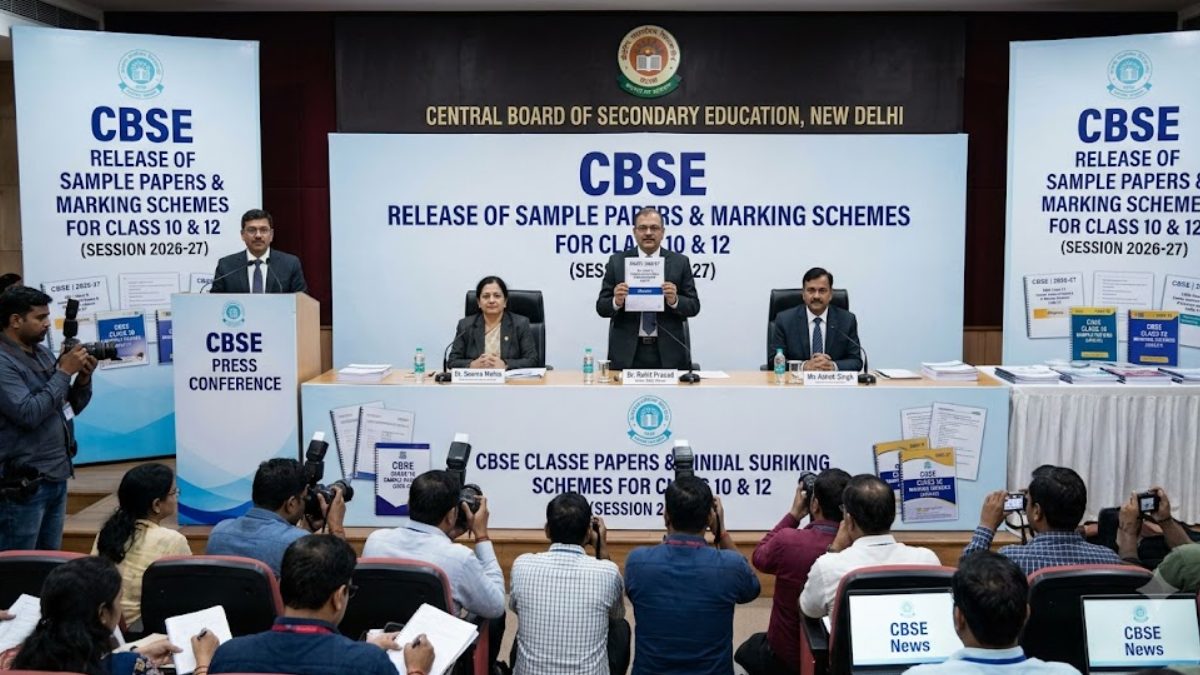
The sample papers are a major academic update for students preparing for CBSE board exams. The SQPs give students an idea of how questions might be structured and what types of questions they can expect to be asked based on the curriculum. The marking schemes should help students to know what the expected value points are and how answers will be evaluated.
For Class 10, CBSE has published sample question papers and marking schemes for a wide range of subjects. These include Science, Social Science, English Language and Literature, English Communicative, Hindi A, Hindi B, Mathematics Basic, Mathematics Standard, Home Science and Computer Applications, among others. In the Class 10 section, sample papers for many Indian and foreign languages are also included.
Students in Class 10 exams can use the sample papers as practice material while preparing for their board exams. While working through the examination, students would come to understand the format of the questions, how the marks are distributed and what areas they might need to work on in the paper. The marking schemes can also be used after a sample paper is finished to review answers and what is expected in response in terms of the key points.
For Class 12, the CBSE has released sample papers and marking schemes covering a variety of academic and language subjects. These include Accountancy, Biology, Business Studies, Chemistry, Economics, English Core, Geography, History, Mathematics, Physics, Political Science, Psychology, Sociology, Computer Science, Informatics Practices and Physical Education, among others. Many Indian and foreign language subjects are also included.
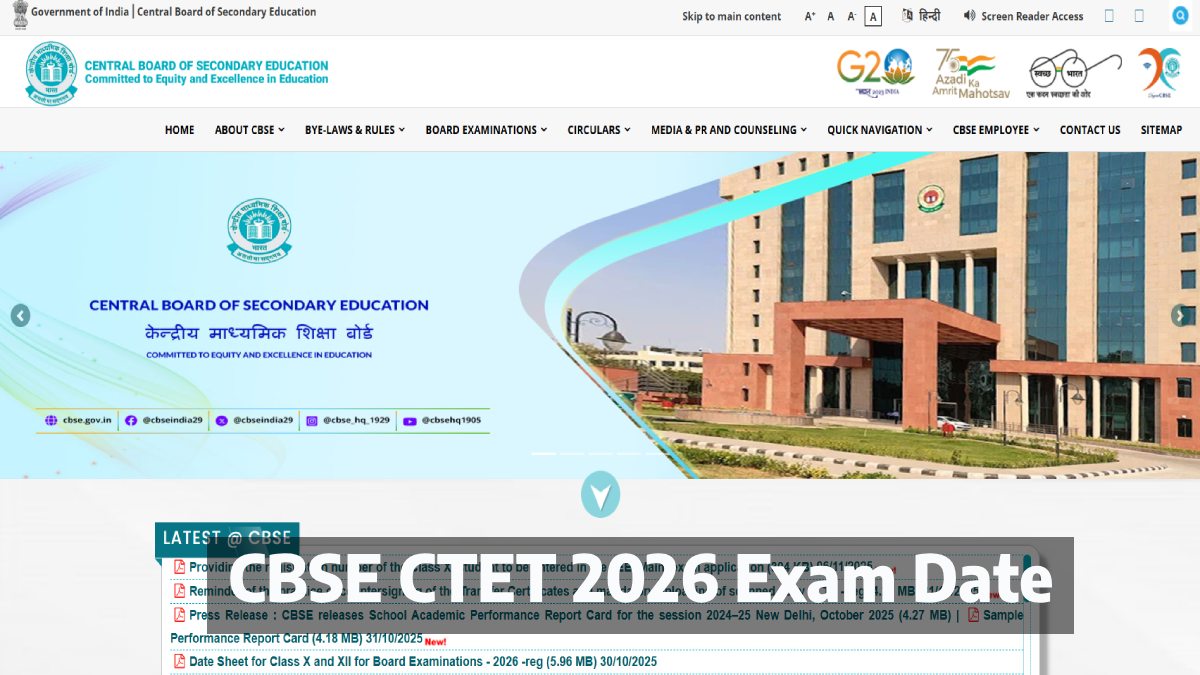
The CBSE Academic website provides separate pages for Class 10 and Class 12 sample papers. Students can select their subject and access the corresponding Sample Question Paper and Marking Scheme. The official pages also enable students and teachers to refer to subject-wise material rather than using unofficial versions circulating online.
Sample Question Papers are useful not only for students but also for teachers and schools. They can be incorporated into classroom activities, revision sessions and mock tests. Using the official material, teachers can design practice exercises that are aligned with the board's prescribed academic framework for the 2026-27 session.
Students need to first revise their syllabus and textbooks before attempting to work with the sample papers. They then work through the papers under examination-like conditions and keep track of the time taken for each section. As soon as the paper is complete, they can refer to the official marking scheme for self-assessment.
It also allows students to start preparing for the board examination in advance. Students can use the sample papers periodically as part of their preparation strategy. If the students solve multiple practice papers, they’ll get better at the different types of questions and be more confident going into the examination.
The CBSE Academic website currently lists the 2026-27 Sample Question Papers and Marking Schemes for Class 10 and Class 12. Students must use the official CBSE resources for the latest subject-wise material and avoid using unofficial sample papers or social media posts.
Now that the sample papers are available, Class 10 and Class 12 students can start preparing themselves for their upcoming board exams. The official SQPs and marking schemes will be useful reference material throughout the academic year and help students understand the exam and practice answering questions according to the expected assessment method.