Justice B.V. Nagarathna has become the first judge of the nine-member Supreme Court Constitution Bench to start writing the judgment in the long-pending Sabarimala reference case. The development was reported by Hindustan Times on 1 October 2026 and comes months after the Supreme Court reserved its verdict after an extensive hearing.
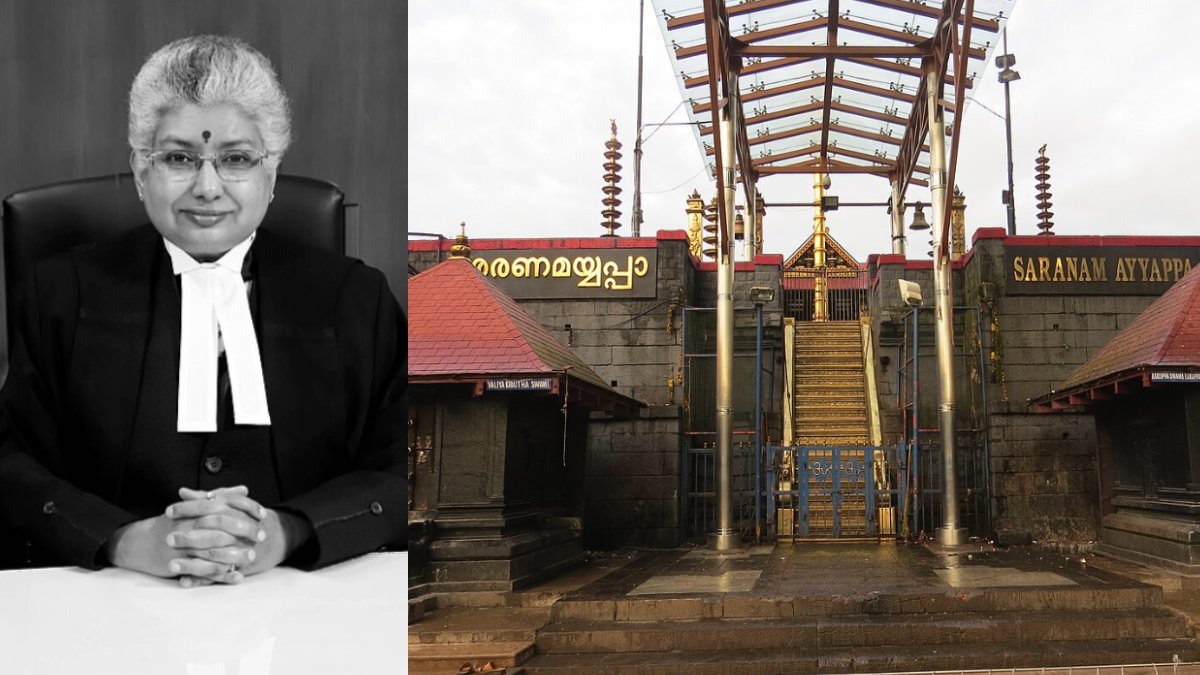
Justice Nagarathna Starts Judgment Writing
Justice Nagarathna has started preparing her judgment in the case, while the other nine judges on the court remain free to write separate opinions. The nine-judge bench is headed by Chief Justice of India Surya Kant.
The development is significant because the case is about more fundamental constitutional questions: religious freedom, judicial review and the Supreme Court’s approach to religious practice.
Justice Nagarathna was the only woman judge on the nine-member bench that heard the 16-day proceedings. During the hearings, she participated in discussions of the scope of constitutional scrutiny of religious practices and the essential religious practices doctrine.
Supreme Court Reserved Verdict In May
The nine-judge Constitution Bench reserved its judgment on May 14, 2026, after hearing arguments for 16 days. The proceedings addressed denominational autonomy, temple entry, constitutional morality and the scope of the essential religious practices doctrine.
The bench includes CJI Surya Kant and Justices B.V. Nagarathna, M.M. Sundresh, Ahsanuddin Amanullah, Aravind Kumar, Augustine George Masih, Prasanna B. Varale, R. Mahadevan and Joymalya Bagchi.
What is the Sabarimala reference case?
The case dates back to the Supreme Court's Sabarimala ruling of September 2018. The five-judge Constitution Bench had ruled by a 4:1 majority that the exclusion of women between the ages of 10 and 50 from the Sabarimala temple could not withstand constitutional scrutiny. Justice Indu Malhotra was the only dissenter.
More than 50 review petitions were filed. In November 2019, a five-judge review bench referred larger constitutional questions to a larger bench. That reference was upheld in February 2020 by a nine-judge bench.
Key Constitutional Questions
The larger bench has been looking at issues around the scope of judicial review of religious practices, the meaning of religious denomination, the relationship between Articles 25 and 26, and the role of constitutional morality.
One more important matter is the essential religious practices (ERP) doctrine, which has been used by courts to determine whether certain practices are in fact constitutional.
In the 2026 hearings, Justice Nagarathna said that the ERP doctrine could be used as an aid in determining whether a practice has a genuine relation with religion, rather than to automatically determine whether constitutional protection exists.
Verdict could have larger constitutional implications
The Sabarimala reference goes beyond the issue of temple entry. The Supreme Court is considering principles that could influence how future disputes on religious freedom, denominational rights and judicial review will be decided.
Now that Justice Nagarathna is starting to write her judgment, most of our attention turns to the next batch of opinions of the nine-judge bench. The court hasn’t set a date for the final verdict.