A Lok Sabha-backed inquiry committee has found former judge Justice Yashwant Varma guilty in the cash-at-home case, and its report raises serious questions about the unexplained currency found at his official residence and how the property was taken care of after a fire.
The report was tabled in both Houses of Parliament on Wednesday, August 12, bringing the high-profile controversy back into the spotlight. The Judges Inquiry Committee submitted its report to Lok Sabha Speaker Om Birla in May after investigating allegations of huge amounts of currency found at Justice Varma's official residence.
One of the most striking aspects of the report is the storeroom where the currency is reported to have been found. The room was not immediately sealed after the first responders had left, said the committee. Cleaning was also taking place before the building was well secured, which raised concerns about the possibility of evidence being preserved.
The currency was subsequently unavailable, the report stated. This presented a significant evidentiary difficulty, since investigators could not have thoroughly examined the cash they were supposedly found at the premises.
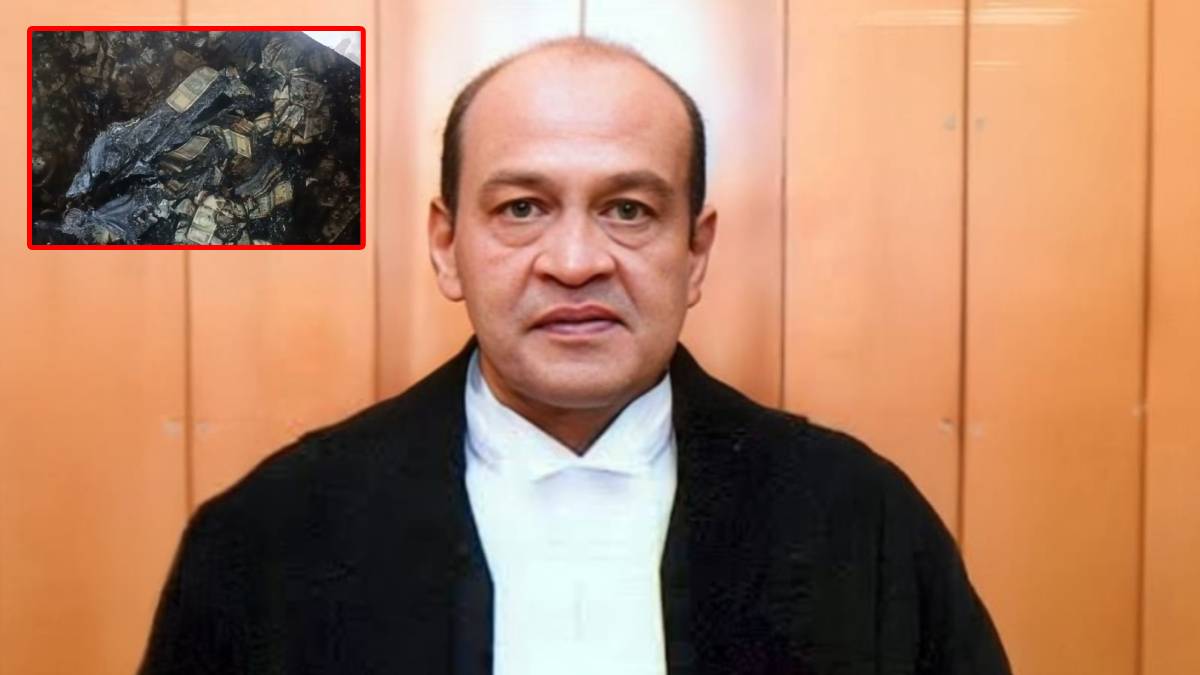
According to the findings, a large amount of unexplained ₹500 denomination currency notes were found in the storeroom in Justice Varma's official house at 30, Tughlaq Crescent, New Delhi. The committee concluded that Justice Varma failed to provide a satisfactory explanation about the presence, source, or ownership of the money.
But the committee did not find direct personal ownership of the cash by Justice Varma. The reason was that unexplained currency was found in his premises and that his explanations of it were not satisfactory.
This distinction is significant. The committee’s conclusion was not simply that the money was personally owned by the judge. It was to consider the situation on the currency, the judge’s control over the premises, the immediate aftermath of the fire and the judge’s explanations of how the cash came into his possession.
The controversy started after a fire broke out in Justice Varma’s official residence on March 14, 2025. Firefighters who arrived on the scene found burnt currency in a storeroom. The discovery triggered a thorough in-house investigation and judicial and parliamentary inquiry.
Justice Varma has always disputed allegations that the cash belonged to him or his family. He had earlier argued that there was no proof establishing that the currency belonged to him and questioned the evidentiary basis of the allegations.
Nonetheless, the inquiry committee concluded that his explanations did not address the issue of the currency’s existence, source or ownership, nor did they resolve questions related to what happened in the wake of the fire.
Another major concern is the storeroom’s handling. The committee’s observation that the room was not immediately sealed, followed by cleaning after first responders had left, has raised questions about whether the scene was properly preserved. The disappearance of the currency further complicated the situation.
The parliamentary report is the result of a long process. The Judges Inquiry Committee was formed on August 12, 2025, by the Lok Sabha Speaker under the Judges (Inquiry) Act, 1968. It was headed by Supreme Court Justice Aravind Kumar, Bombay High Court Chief Justice Shree Chandrashekhar, and senior advocate B.V. Acharya as its members. The committee submitted its report to Speaker Om Birla on May 18, 2026.
Justice Varma had also faced an earlier in-house inquiry initiated by the judiciary. That exercise concluded that he had “active or tacit control” over the storeroom where the cash was found.
So the latest report is a critical aspect of one of India’s most closely watched judicial accountability cases. It has renewed discourse on judicial integrity, evidence preservation and institutional accountability.
Justice Varma has since resigned, so the parliamentary removal process has effectively become infructuous, although the formal notification of his resignation was still awaited at the time of the report.
The case is particularly interesting because the circumstances surrounding the alleged discovery of the cash were so strange. A fire led emergency personnel to the premises, currency was found in a storeroom, the room was not immediately closed, cleaning followed, and the currency was then no longer available.
The committee's conclusion is based on the totality of the circumstances and Justice Varma's failure, in its view, to provide a satisfactory explanation for the unexplained currency.
Now that the findings have been acknowledged, the report will be put for parliamentary debate on the standards of accountability in the higher judiciary.
At the heart of this debate is a crucial distinction: the committee did not establish direct personal ownership of the cash by Justice Yashwant Varma, but it found unexplained currency in premises under his control and concluded that his explanations of its presence, source and ownership were unsatisfactory.
The findings are likely to remain a major point of discussion in Parliament and in the wider debate over judicial accountability and institutional transparency.