Thrissur, Kerala: Senior Muslim cleric Kanthapuram AP Aboobacker Musliyar has replied to earlier comments about women's position and has rejected any notion that Islam or institutions associated with Samastha place women in a secondary position.
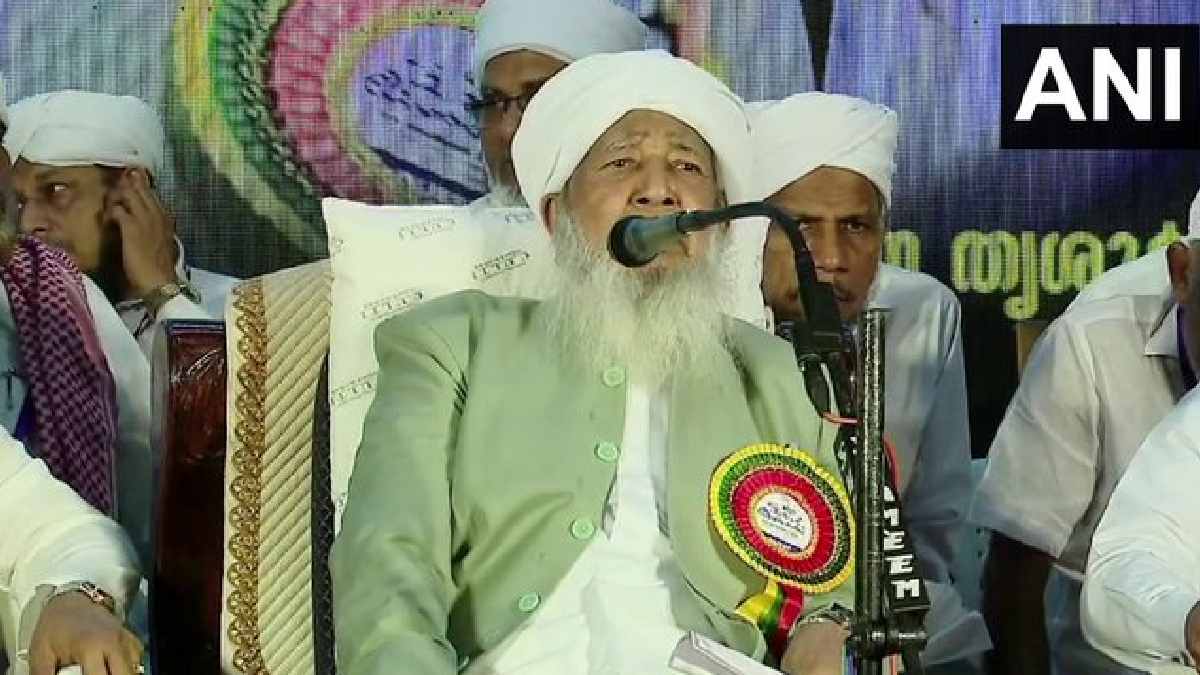
Kanthapuram said it would be incorrect to say that women have been given a lesser status in the community. By Samastha, he mentioned, education programs are in place for girls and women.
“It is not correct to say that we have given women a secondary position,” Kanthapuram emphasized, pointing out the facilities women students have for study at institutions run by Samastha.
According to the cleric, girls studying in such institutions are provided with free education and accommodation and other facilities.
All of this is a sign that the organization is committed to providing education for women, he said.
Kanthapuram also dismissed the notion that Islam promotes keeping women in their homes and treating them as socially inferior. But he said that the religion doesn’t say that women should be buried, confined or excluded from society.
“We are not people who say that women should be buried or confined. Islam does not teach anything of that sort,” he said.
All the while, the role and status of women in religious and social institutions are still debated. Statements by prominent religious leaders on issues about women often attract great attention, particularly when they concern education, social participation, and gender equality.
Kanthapuram was trying to convey the importance of community institutions for women’s education by mentioning the educational facilities provided to girls.
To girls’ education, he said, free education and accommodation are among the facilities provided to them through Samastha-run institutions which female students are offered free of charge.
The comments also seem to be aimed at clarifying the organisation’s position on women following his earlier comments and debate on the topic.
And he stresses again that Islam can’t be interpreted as advocating the physical or social confinement of women.
Women’s rights and participation is still an important topic in Kerala’s social and political discourse.
Religious organisations, community leaders, and activists have expressed differing views on how religious principles need to be reflected in the present debate on education, employment, and women’s public participation.
Kanthapuram’s latest comments are especially focused on education as an area where women and girls should receive institutional help.
He cited the facilities provided through Samastha to dispel the idea that religious institutions necessarily restrict opportunities for women.
It is certain to continue the discussion on how women’s roles are interpreted in Islamic institutions and the confluence of religious beliefs and social expectations.