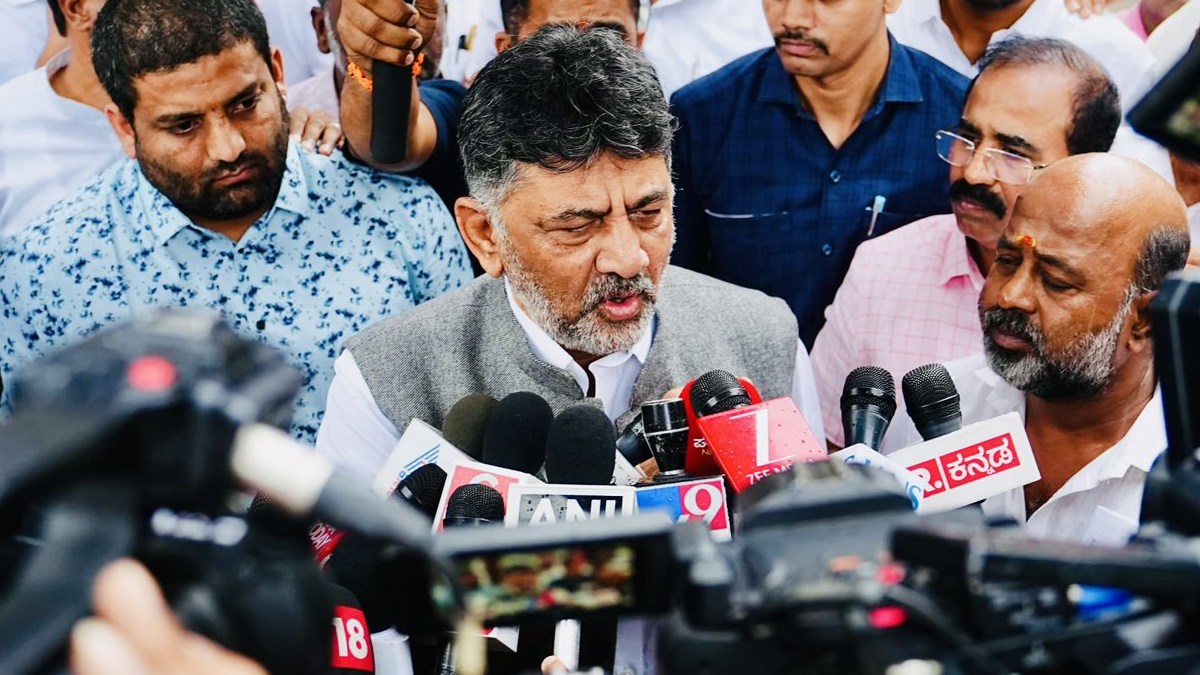
Karnataka deputy chief minister Dr G. Parameshwara has strongly opposed the Centre’s proposed Mines and Minerals (Development and Regulation) Amendment Bill, 2026, arguing that some of its provisions could affect the constitutional powers and financial autonomy of states.
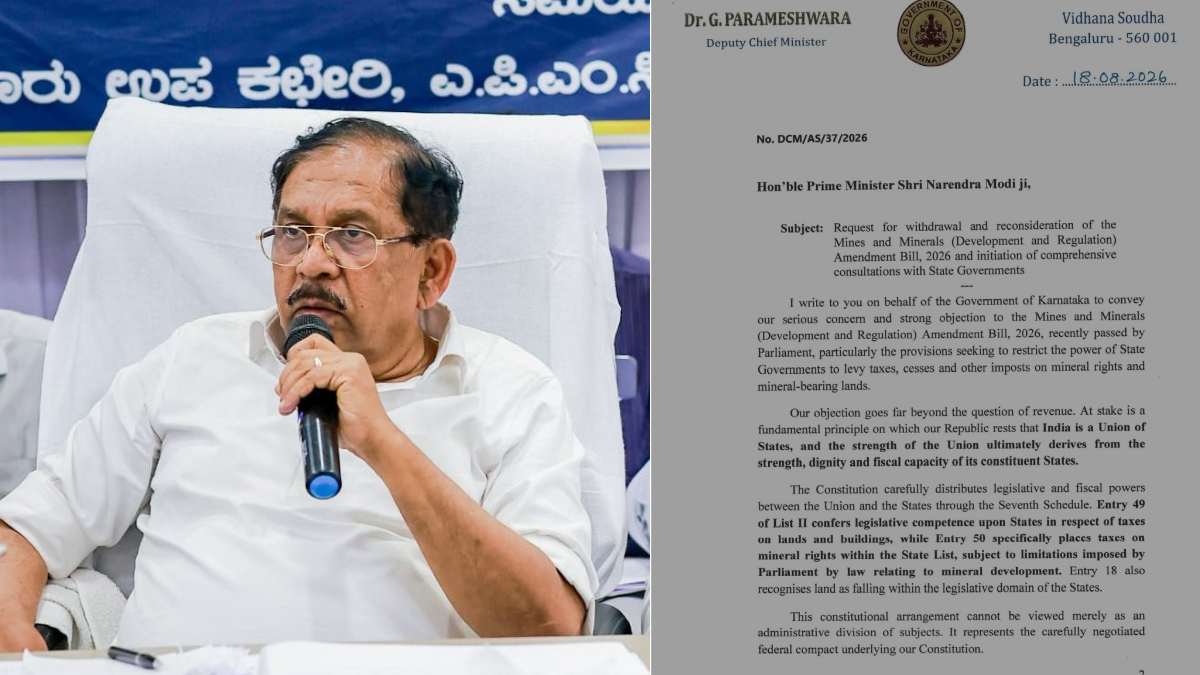
Parameshwara has written to Prime Minister Narendra Modi and Union Coal and Mines Minister G. Kishan Reddy, asking them to immediately withdraw the proposed legislation and consider the amendments following the advice of state governments.
Karnataka Raises Constitutional Concerns
The Karnataka government’s primary concern is the division of powers between the Centre and states concerning mineral resources.
Parameshwara said the Constitution recognizes states’ authority in the mineral rights and taxation of mineral-bearing land. It has been suggested that the proposed amendment could restrict these powers and could affect the states' legislative and financial power.
As the Deputy Chief Minister has also pointed out, mineral resources in states are very important for the state and economic development are very much of a major economic importance. Mining revenue generated through mining-related activities (such as taxes, royalties and other receipts) contributes to the state’s budget and development programmes.
If states lost their control over these revenue sources, he said, that would have implications for their fiscal autonomy.
Supreme Court’s 2024 Judgment Cited
Parameshwara has also referred to a 2024 Supreme Court judgment when explaining Karnataka’s position.
The judgment dealt with the powers of states on taxation of mineral resources. Parameshwara said this ruling has clarified the Constitution on the powers of the states.
He has thus called on the Centre to study whether the proposed amendments are consistent with the principles established by the Supreme Court.
Karnataka government believes that any legislative measures that do not respect the constitutional powers of states to the extent of weakening the powers of states could have wider implications for India's federal system.
Concern Over Cooperative Federalism
The other major issue Parameshwara raised is that before taking forward such an important legislative proposal, not enough consultation has been made with state governments.
He has said that mineral resources can have a direct effect on states and their economies and so should be discussed thoroughly with state governments.
Definitely, cooperative federalism is very important, the Deputy Chief Minister said, and in this case the Centre and the states are expected to work together on issues that have overlapping responsibilities and national interests.
Karnataka would argue that there should not be a major change in the regulatory system of mineral resources if the concerns and suggestions of the affected states are taken into account.
Mineral Resources Important to State Revenues
Mining remains a significant economic activity in many Indian states, including Karnataka. Mineral resources also bring in government revenues, but also support industries, infrastructure development and employment.
For resource-rich states, changes in the taxation or regulatory framework can therefore have a direct impact on their finances.
Parameshwara has held that while national interests in the mining sector have to be protected, they should not come at the expense of the constitutional and financial rights of states.
He has called for a framework that balances the Centre’s role in regulating the mineral sector with the states’ authority over resources located within their territories.
Karnataka Seeks Wider Consultation
Instead of going forward with the proposed amendment as it is, Parameshwara has called for discussions with all state governments.
He has argued that different states have different mineral resources, economic conditions, and administrative requirements. A uniform policy without adequate consultation could therefore make it difficult for individual states.
Karnataka government said that the Centre should consider these differences before the implementation of any changes to the current legal framework.
A consensus-based approach, Parameshwara said, would help to ensure that mineral resources are managed efficiently while also safeguarding the financial interests of states.
Calls for Immediate Withdrawal
Parameshwara has made a clear demand for the withdrawal of the Mines and Minerals (Development and Regulation) Amendment Bill, 2026.
He has asked Prime Minister Narendra Modi and Minister G. Kishan Reddy to review the amendments and consult state governments before taking the legislation forward.
The issue will, of course, remain politically and constitutionally important when the debate over the distribution of powers between the Centre and states continues.
At the heart of Karnataka’s objection is the argument that mineral resources are not merely an economic asset but are also connected with the constitutional authority and fiscal independence of states.
The state government therefore has said a balanced approach would be required to balance national mineral interests with the federal structure and the rights of state governments.