Karnataka government has appointed ministers as District In-Charge Ministers across the state, and assigned individual ministers responsibility for the administration of and development-related issues in different districts.
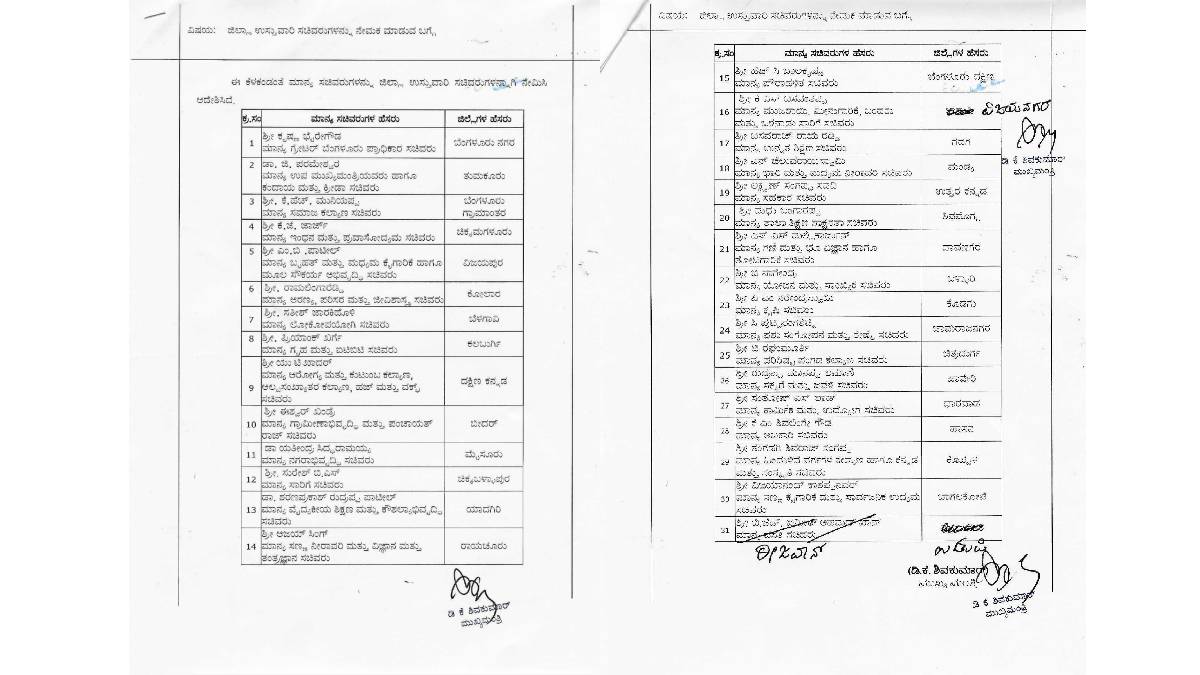
The government order lists the districts assigned to ministers and also the new distribution of district-level duties. But a single detail in the order has caught attention: Housing Minister B.Z. Zameer Ahmed Khan is named among the ministers, but no district has been allotted to him.
District In-Charge Ministers are part of Karnataka’s administrative and political system. Ministers responsible for specific districts would be in touch with local officials to review development plans, monitor implementation of government schemes and respond to local issues raised by elected representatives and residents.
The arrangement also provides the state government with a mechanism to maintain closer oversight of district-level administration. District In-Charge Ministers regularly attend official meetings to review development work and coordinate with district officials on infrastructure, welfare programmes and public services.
The new order has divided district duties among Karnataka Cabinet members. Ministers will now have the task of monitoring the affairs in their respective districts and coordinating with local authorities.
However, the absence of a district against Zameer Ahmed Khan’s name stands out in the government order. The Housing Minister has been listed among the ministers, but unlike the other names in the order, his entry does not specify a district.
The development could lead to questions about whether a district will be assigned to the minister or if the government is keeping the position open for a while longer. There was no specific reason for the lack of district allocation mentioned in the information given about the order.
District In-Charge Ministers are key to linking the state government with district administrations. Their responsibilities can be to monitor progress on major government projects, follow up on infrastructure projects, examine delivery of welfare schemes and address administrative issues.
They also engage with district officials and local political representatives frequently to assess residents’ needs. In natural disasters or other emergencies, District In-Charge Ministers are also involved in coordinating relief and response efforts with the local administration.
These new appointments therefore have wider implications beyond the political roles. They provide a direct ministerial connection between the state Cabinet and district governments, which could help monitor the implementation of government programmes and keep an eye on them.
The Karnataka government’s latest order is consistent with the government’s focus on development and governance across the state. Ministers are assigned to local districts to keep track of problems and government action at a local level is expected to be held accountable at the local level.
For ministers with district responsibilities, the assignments will be frequent visits, meetings with officials, and review of current development projects. They can be especially important in districts with specific challenges in infrastructure, agriculture, water resources, urban development, public health or welfare delivery.
Moreover, one of the notable characteristics of the order is the absence of a district for Zameer Ahmed Khan. His name appearing without a corresponding district distinguishes him from the other ministers listed in the government notification.
The government can clarify the matter through a subsequent order or communication if a district is assigned to him later. Until then, the minister is not listed with a District In-Charge responsibility in the current order.
The appointments are a new picture of district-level functions at the Karnataka government’s level and will influence ministerial interactions with governments throughout the state. The efficacy of this arrangement will ultimately depend on ministers’ supervision of development and public service delivery, how closely ministers work with district officials, and how they monitor development.