The Karnataka government has decided to introduce Artificial Intelligence (AI) education as a mandatory subject from Class 6 in all schools in the state.
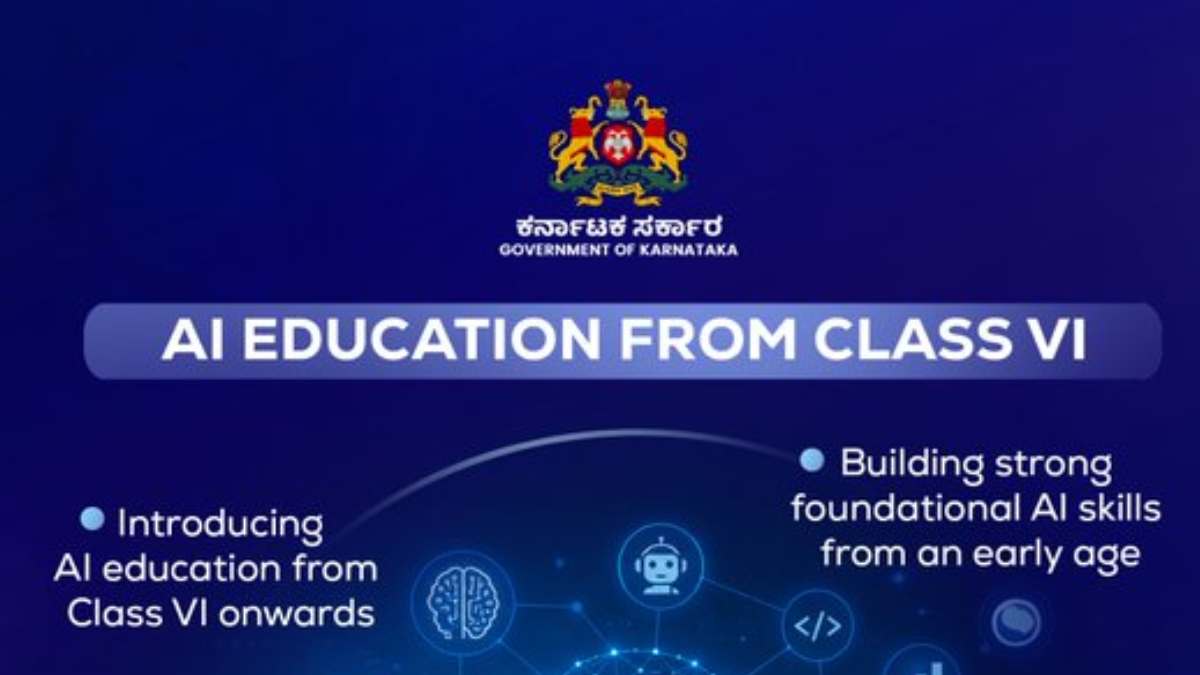
The move was made by Deputy Chief Minister and Bengaluru Development Minister D.K. Shivakumar, who said it was to create better future technology skills for the students from an early age. The move is emblematic of Karnataka’s desire to make itself a technology center to develop the next generation of engineers for careers in artificial intelligence and emerging technologies.
Shivakumar said AI is transforming industries across the world, and students need to get to know about the technology in their school years. He said introducing AI education at the middle school level would be a great way to foster innovation, creativity, and problem-solving among young people.
According to the government, the proposed curriculum will focus on teaching students basic knowledge of artificial intelligence rather than advanced programming. Students will be introduced to machine learning, data, automation, robotics, ethical use of AI, and practical applications of artificial intelligence in everyday life.
Education experts say that early exposure to AI can help students develop computational thinking, logical reasoning, and digital literacy skills that are becoming increasingly important in all fields of work.
The initiative will connect school education with AI-related skills in areas such as information technology, healthcare, finance, manufacturing, agriculture, education, and research.
Karnataka has always been considered India's leading technology and innovation center, and Bengaluru hosts thousands of startups, global technology companies, and research institutions. By establishing AI education at the school level, the state hopes to create a pipeline of future innovators, entrepreneurs, engineers, and researchers.
The government will work with education professionals, technology professionals, and academic institutions to develop age-appropriate learning materials and teacher training programs. Successful implementation will require a well-designed curriculum framework, teacher capacity building, and adequate digital infrastructure in schools, officials said.
AI education should therefore go beyond coding, experts say, and help students appreciate the impact of artificial intelligence in daily life and its benefits, limitations, ethical concerns, privacy issues, and responsible use. Such knowledge will help young people become informed users and creators of AI-based technologies.
Parents and educators have welcomed the idea, describing it as a forward-looking plan that is in line with global educational trends. In fact, in many countries, AI concepts are already being integrated into school curricula to prepare students for the changing nature of work and technological advancements.
But education professionals say successful implementation will rely on providing equal access to quality digital resources for students in urban and rural schools. Training of all teachers, internet connectivity, and classroom infrastructure will be key to the success of the program.
If implemented as announced, Karnataka would be one of the first Indian states to introduce mandatory AI education from Class 6. This is a step towards innovation-led education and future-ready learning.
This is an important step in modernizing the education system and could serve as a model for other states to incorporate these technologies into their academic curriculum. By introducing AI concepts at an early age, Karnataka will equip students with the tools to thrive in an increasingly technology-driven world.