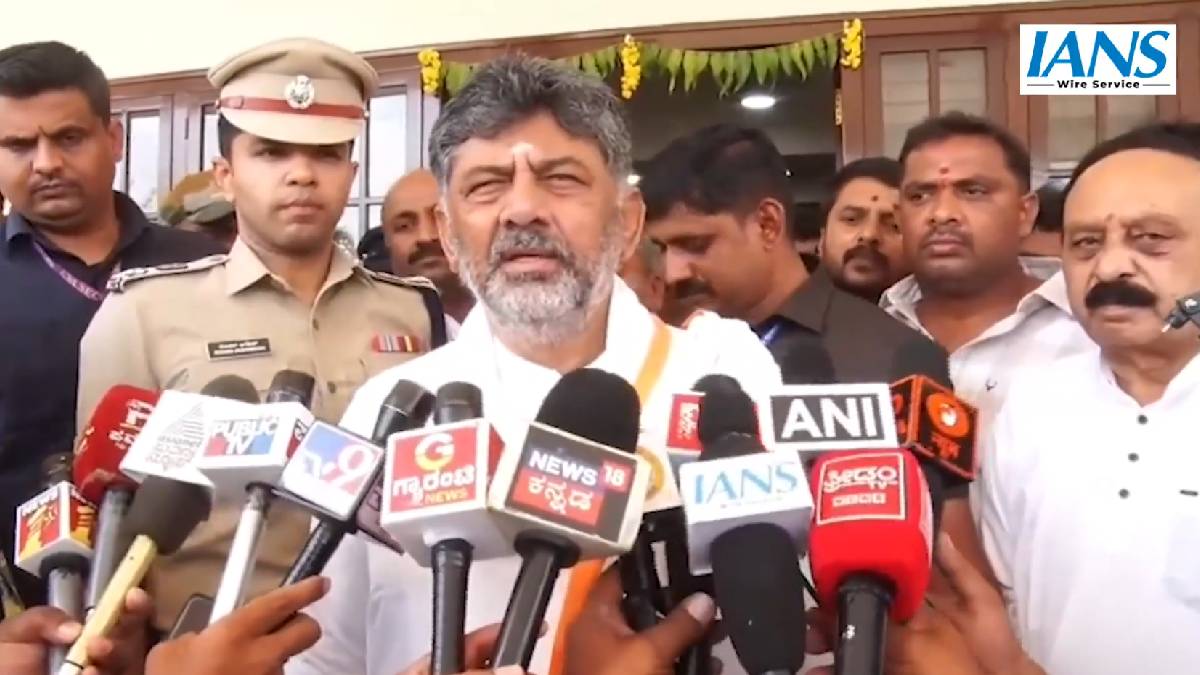
Karnataka Chief Minister D. K. Shivakumar has warned that the state is facing an increasingly difficult power situation as monsoon rains are becoming weak and electricity demand is rising, and drought conditions are getting worse. Last week, the Chief Minister in Ramanagara district said that there was a very acute power shortage and reported that Karnataka is purchasing electricity at rates as high as ₹11, ₹12 and ₹13 per unit during peak demand periods.
The warning comes at a time when Karnataka is already in a severe rainfall deficit and has drinking water problems. Shivakumar said the government is reviewing various options to have sufficient electricity supply and the Energy Minister, K. J. George, had asked the neighbouring states to talk about getting more power.
The immediate concern is the high electricity demand. Karnataka’s peak power demand rose to 19,000 MW last week, the Chief Minister said. This is especially evident at evening and night hours, and the state’s power supply system is under even greater pressure. In order to meet the gap between demand and available supply, the government has to purchase electricity from the market at extremely high prices.
Shivakumar’s remarks underscore the financial pressure that this is putting on the state. Buying electricity for ₹11-₹13 per unit is much more expensive than buying electricity at the normal level of power and may drive up the cost of the state’s electricity needs if there continues to be high demand.
The power struggle is closely linked to the worsening drought situation in Karnataka. The state has seen much less rainfall than usual, with implications for groundwater levels, agriculture and hydropower generation. Some 200 of Karnataka’s 239 taluks are reported to be drought-like, and 101 taluks have already been declared drought-hit by the state government.
Ramanagara, Karnataka: Chief Minister D. K. Shivakumar says, "Additionally, a situation of acute power shortage is emerging... We are compelled to purchase electricity at rates as high as ₹11, ₹12, or ₹13 per unit... I have instructed ministers to hold discussions with… pic.twitter.com/Eo9WVyFjbI
— IANS (@ians_india) September 14, 2026
The rainfall deficit is particularly important for Karnataka's power sector because low water availability can affect hydropower generation. At the same time, higher temperatures and changing consumption patterns can cause higher electricity demand, most notably at night when households and businesses depend on electricity.
Karnataka's government is therefore investigating multiple ways to improve supply. Shivakumar has indicated that the state could increase thermal power generation and source electricity from coal-producing regions. The government is also looking to obtain more power from other states through the national grid.
Under the One Nation, One Grid framework, electricity generated in another part of India can be transmitted to Karnataka, but the state would have to pay for transmission and supply costs. Shivakumar has said talks with neighbouring states will be important in determining how additional power can be arranged.
Karnataka’s weak monsoon also underscores the larger picture. The poor groundwater levels and crop loss have already been serious concerns for farmers and rural communities. The situation could create water and electricity shortages simultaneously at home and in industry and agriculture.
Karnataka power authorities are still monitoring the situation. Karnataka State Load Dispatch Centre data showed state electricity demand at 18,510 MW on September 15, suggesting that demand remains high even after the peak last week.
The government is also planning to discuss the drought situation during a special session of the Karnataka legislature from September 21 to 23. The farmers’ problems and the bigger picture of rainfall deficit are expected to be discussed in the session.
For Karnataka residents, the main concern right now is whether the government can keep electricity supply uninterrupted while cutting the cost of power procurement on the rise. Shivakumar’s warning does not necessarily mean immediate statewide power cuts, but it reflects the pressure on the state’s electricity system.
With rainfall below normal, demand high and power procurement costs rising, Karnataka could be facing a difficult period. The government talks with neighbouring states, efforts to increase thermal generation and use of the national grid will be crucial to deal with the emerging power shortage.