A video of someone else’s Athapookkalam being deliberately disturbed while in Palarivattom in Kerala has attracted criticism. A video of an Athapookkalam being disturbed at Palarivattom in Kerala has caused much talk on social media about an Athapookkalam being deliberately disturbed in Palarivattom (Palarivattom, Kerala has triggered a heated debate on social media and a debate about cultural sensitivity, respect for traditional customs, and limits to the values of individual behaviour on public celebrations.
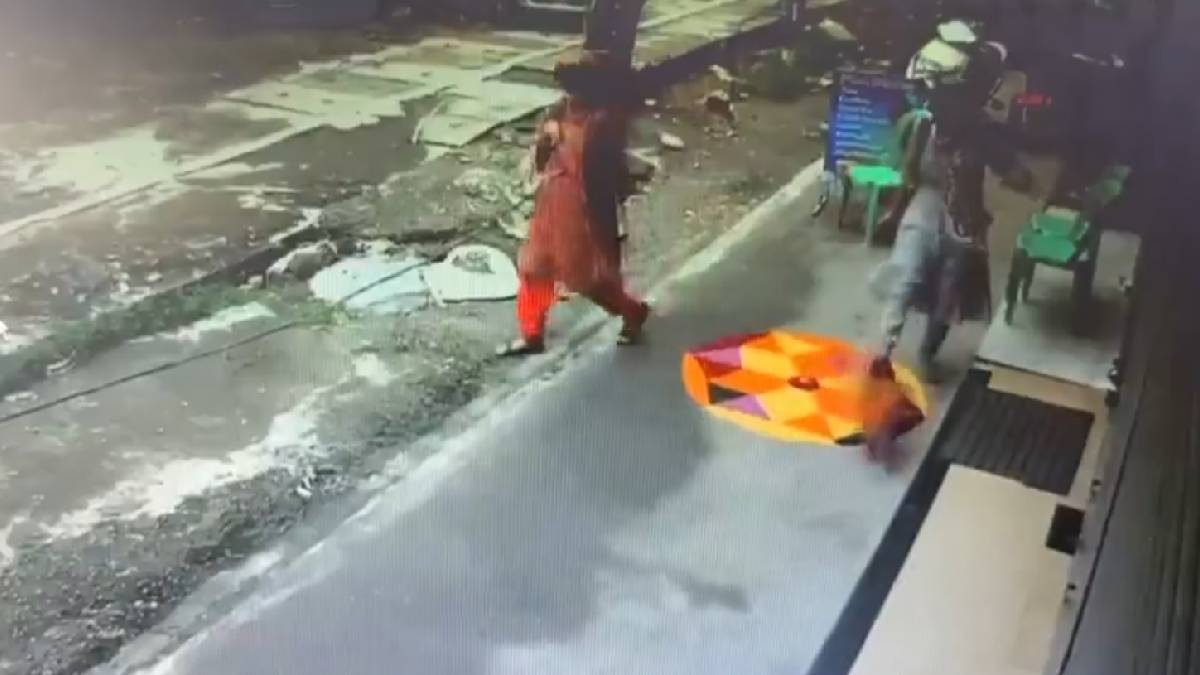
The footage being seen online has led to heated reactions as the Athapookkalam, or floral carpet that is produced during the Onam season, is much more than a decorative arrangement for many Malayali families. It is a focal point of the festival and is usually made with flowers arranged in intricate designs over successive days.
Kerala Tourism describes the pookkalam as one of the main traditions associated with Onam, and households create floral carpets at the festival. This is linked to the belief that King Mahabali returns to Kerala on Onam.
That incident at Palarivattom has led people to say that deliberately damaging a pookkalam is disrespectful to the effort and cultural significance of the tradition.
This is not acceptable. 🚨
— MAHARATHI (@MahaRathii) August 26, 2026
A shocking video from Palarivattom, Kerala — A Muslim girl deliberately wiping off an Athapookkalam with her legs.
Athapookkalam is not just a decoration.
It is Kerala’s soul. It is Onam’s heartbeat. It is every Hindu family’s labour of love. 🌸… pic.twitter.com/nCUB7WoHa1
At the same time, the full situation surrounding the video is not clear. Short clips circulating on social media often give little background, and the identity, intentions and circumstances of the person involved should not be assumed solely from a viral video. No independently verified report confirming all of the claims accompanying the footage was found in the available search results.
But at the same time, the debate has brought into question how festivals are treated differently in a wider range of public spaces.
Onam has become a celebration beyond individual homes. And schools, colleges, offices, residential communities, government institutions and public organisations across Kerala regularly organise Onam programmes with pookkalams, traditional clothing, music, dance and Onasadya.
Kerala’s recent reports also illustrated the scale of this year’s celebrations and how the people of Kerala are preparing elaborate pookkalams, and there are public events being held at home.
One of the most striking examples was from Thrissur, where volunteers constructed a 62-foot-wide Athapookkalam with about 2,000 kilograms of flowers. About 150 volunteers were involved in creating the installation, and this shows the kind of collective effort that can go into large-scale pookkalam celebrations.
As families and communities spend long hours decorating and assembling floral carpets, deliberately stepping on or destroying one can understandably be seen as disrespectful, regardless of the person’s religious or cultural background.
It has also opened a familiar social-media debate about the degree to which cultural criticism is done consistently. Some users have wondered if a similar thing would happen, a similar act to the big cultural symbol of another community or religion.
But such comparisons can quickly turn a conversation about one person’s conduct into a larger communal confrontation. Respect for cultural traditions can be discussed without assigning collective responsibility to an entire religious or social community.
And that distinction is particularly important in Kerala, where Onam is celebrated across communities and has become a shared cultural festival. Public celebrations often involve people from different religious and cultural backgrounds in the same room.
So the issue is not so much about the identity of the person in the video but about respect for another person’s cultural expression and property. That kind of damage to a floral arrangement done by someone else can be criticized on these grounds without making a general judgement about the community.
The viral nature of the video also illustrates how quickly isolated incidents can turn into polarising during festival periods. Social media users often see a short clip without knowing what happened immediately before or after it, and accompanying captions can add claims that have not been independently established.
When Kerala celebrates Onam 2026, the controversy is yet another reminder that cultural traditions are so much more than an exercise in aesthetics, to outsiders and others, even if their beauty or beauty seems to be superficial.
An Athapookkalam might be just flowers on the ground, but for many families it represents time, creativity, community participation and generations of tradition. Kerala Tourism itself sets pookkalam as a defining feature of the state’s Onam celebrations.
And the Palarivattom video will keep showing up in discussion as more information is discovered. But until such circumstances are established, the incident should be seen more as an allegation based on a viral video rather than evidence of a wider communal pattern.
The bigger message here is this: festivals are best when people celebrate cultural traditions with respect and in line with a culture that is similar regardless of the individuals’ religious or social background.