Kerala’s Motor Vehicles Department (MVD) is planning a new technology-based facility to make processing physical driving licences (DL) and vehicle registration certificate (RC) cards much quicker. The department wants to install Dubai-style high-tech self-service kiosks at public places for people with such documents to print them and not have to rely on traditional delivery or repeatedly go to Regional Transport Offices (RTOs). The first kiosk will be introduced as part of a pilot program later this month.
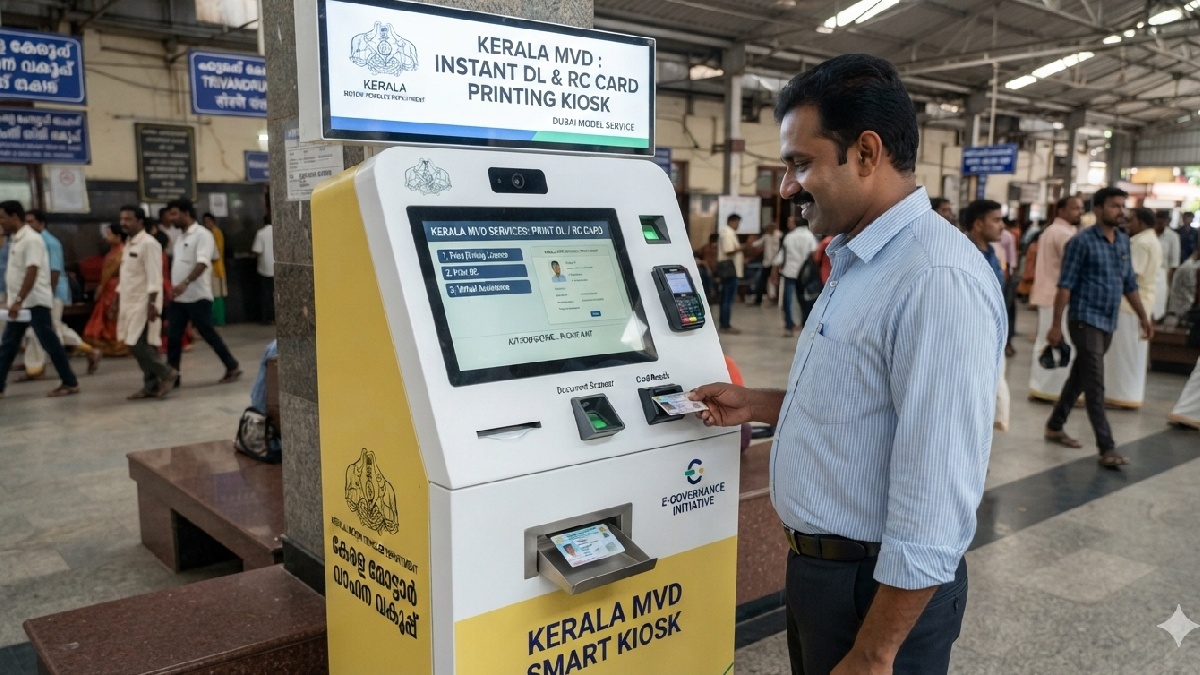
The proposed system is aimed at bringing government vehicle-related services closer to citizens. Rather than digital downloads through online platforms, the planned kiosks are expected to provide a physical card printing facility. According to reports, the machines could enable users to get their DL or RC card in a very short period of time (some reports say a turnaround time of about one minute once the required process is completed).
Kerala MVD plans Dubai-Model Self-Service Kiosks
The concept is inspired by the self-service infrastructure used in Dubai, where smart kiosks in a series of public areas are located to provide government and transport services. Dubai’s Roads and Transport Authority (RTA), for example, has installed smart kiosks at several points in Dubai and provides vehicle licensing and driver licensing services through its digital service network.
Kerala’s MVD will undertake a similar approach for DL and RC services. The objective is to reduce reliance on old counters and to make document-related services more accessible to residents. The kiosks may eventually be placed in places that see high public footfall, making it more convenient for people who may not want to travel to an RTO specifically to collect a document.
Physical DL And RC Cards Could Become Easier To Obtain
The proposed kiosks are, of course, at a time when Kerala is rapidly moving towards digital vehicle documentation. Digital access to driving licences and RCs is already available online through DigiLocker and mParivahan, for example. Kerala’s government has also highlighted the use of digital driving licence services, which also reduces the need for physical cards in many situations.
But physical cards can still be important to some users. For example, people travelling abroad may need a physical driving licence in connection with overseas licensing procedures. Problems had also been highlighted in previous reports of applicants waiting for printed licences and RCs after physical printing was reduced as part of the department’s digitalisation processes.
Thus, the proposed kiosks may help bridge the gap between digital services and the demand for physical documents. Rather than waiting for a card to arrive through conventional channels, eligible applicants might be able to authenticate themselves and print the required card directly at a kiosk.
Driving Licence Renewal May Also Be Available
The planned system is not expected to be restricted to first-time card printing. Driving licence renewal could also be incorporated into the kiosk-based service. This will be especially useful for motorists who need an updated physical licence after completing the required renewal process.
The precise services and eligibility conditions will be decided by the final implementation guidelines issued by the Motor Vehicles Department. Users may also need to apply for or renew an application online and print the approved document at the kiosk.
How would the new Kiosk system work?
While the details of the operating process have not been provided publicly, the Dubai-style model implies a largely automated procedure. Users could verify themselves using application details or other approved verification methods, select the document, pay any applicable fees, and receive the printed card from the machine.
Such a system would certainly reduce queues in RTO offices. It could also help MVD officials concentrate on applications and regulatory work rather than document distribution. Self-service government kiosks are already being used globally to reduce waiting time and provide services outside the walls of an office. Dubai’s RTA, for example, has been experimenting with smart kiosks for transport services at several locations.
When it will be ready to go into service, the first kiosk will be done as a pilot project.
Kerala MVD will start with a pilot kiosk and the expansion plan will be later. The first unit is planned at the Transport Commissionerate, and the department will introduce it in September.
If the pilot proves successful, more kiosks could be installed in other high-footfall public places in Kerala. Such expansion could make physical DL and RC printing possible without citizens having to go to RTO offices for every document-related requirement.
This step is in line with Kerala’s overall digital transformation of transport services. With online applications and automated physical card printing, the MVD can make it easier for drivers to get their vehicle documents and services as well as reduce pressure from government counters.