Silk farmers in Karnataka’s Kolar district are feeling a little more hopeful; silk cocoons are now fetching between ₹900 and ₹1,000 per kg in the market. The rise has provided much-needed relief for thousands of families dependent on sericulture, after years of fluctuating prices, rising production costs, labour shortages and disease-related problems.
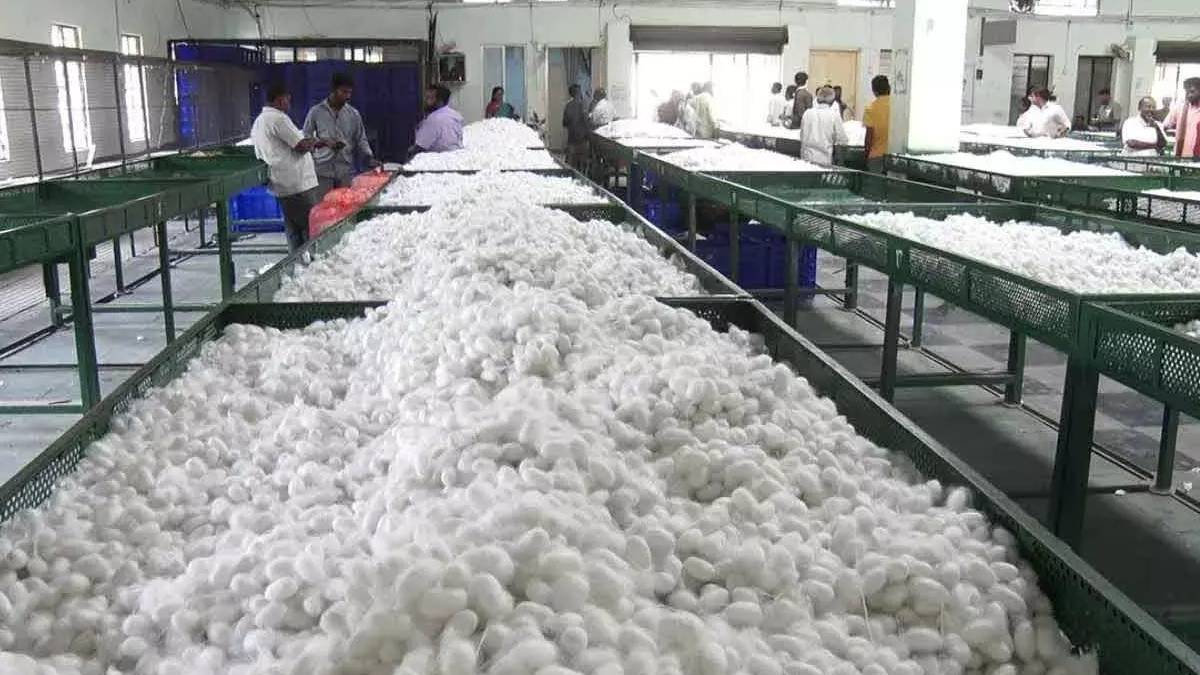
Recent market data also indicates strong demand for higher quality bi-voltine cocoons. At the Kolar government silk cocoon market on September 17, bi-voltine cocoons averaged ₹922 per kg, with the highest price reaching as high as ₹987 per kg. On September 20, the average was ₹870 per kg, and the highest price was ₹951 per kg.
The demand for quality cocoons supports prices
The current price trend is particularly important for farmers who produce good cocoons. Bi-voltine varieties are generally more expensive and have superior silk-reeling properties and are also preferred by reelers to obtain good quality raw materials.
The recent movement is not limited to Kolar. Another major silk-producing region in Karnataka, Ramanagara, witnessed bi-voltine cocoon prices reach a record ₹1,100 per kg in September, while cross-breed cocoons reached ₹881 per kg. The rise was due to falling supply, weather-related issues, and strong demand for raw silk.
Market data from early September also showed bi-voltine cocoons in Kolar reaching a maximum of ₹1,050 per kg on September 13. But the average price was ₹886 per kg.
Supply Shortage Becomes a Major Factor
The main reason for the price increase is the gap between demand and supply. As per the local silk sector information, the Kolar market needs about 25 tonnes of cocoons every day, but there has been a drop in arrivals.
Low production is also attributed to many factors—farmers who have historically been more productive are now finding it tough to produce more than before, due to lack of agricultural labour availability, disease, and bad weather.
This supply constraint has helped to boost pricing for cocoons with quality requirements.
Thousands of families depend on sericulture
Sericulture is a key source of livelihood in Kolar district. Nearly 19,739 farmer families in more than 1,500 villages depend on silk cultivation, according to the local silk sector.
Mulberry cultivation for silkworm rearing is spread across about 20,134 hectares in the district. The sector also contributes to the region’s agricultural economy through cocoon production, market trading, silk reeling, and related activities.
The increase in cocoon prices for these families can provide some relief from rising cultivation and rearing expenses. But higher market prices alone do not eliminate the challenges of maintaining production.
Labour Shortage and Diseases Still Concerns
In the meantime, labour availability is still one of the biggest challenges for silk farmers. Silkworm rearing is a matter of regular attention and the management of feeding, cleaning, disease, and harvesting. So when there is a shortage of workers, then production does come off.
Diseases and weather-related problems can also decrease cocoon yields. Farmers will pay more for production declines, further putting financial pressure on them.
The price increase is therefore being seen as an opportunity for farmers to recover some of their losses and continue with sericulture.
International Demand Contributes to the Outlook
The silk industry has also stressed the importance of demand for quality silk in domestic and international markets. According to the department, continued demand for good-quality cocoons could boost farmers’ incomes if the market is good and farmers are able to keep the price of good silk if it is still in demand.
However, cocoon prices are affected by arrivals and quality, raw silk demand, weather, and production. So the current ₹900–₹1,000 range should not be interpreted as the reference price for all types and all kinds of production and every trading day.
For instance, recent Kolar market data suggest that cross-breed cocoons have been trading at much lower average prices than premium bi-voltine types. On September 15, cross-breed cocoons averaged ₹738 per kg and bi-voltine cocoons averaged ₹893 per kg.
A New Ray of Hope for Silk Farmers
The return of high cocoon prices has provided fresh confidence to farmers who have faced uncertainty for the past few years. During the COVID-19 period, silk imports and domestic demand had a big impact on the market. Since then, prices have fluctuated depending on production and demand conditions.
The recent surge is some relief, but farmers will be keeping an eye on market arrivals and demand in the coming weeks.
If production is constrained and demand for quality silk continues, prices will remain supportive. If cocoon arrivals are considerably higher or market demand changes, prices might go lower.
For now, the ₹900–₹1,000-per-kg range for quality cocoons is an important opportunity for Kolar’s sericulture community and has renewed hopes of better returns from silk farming.