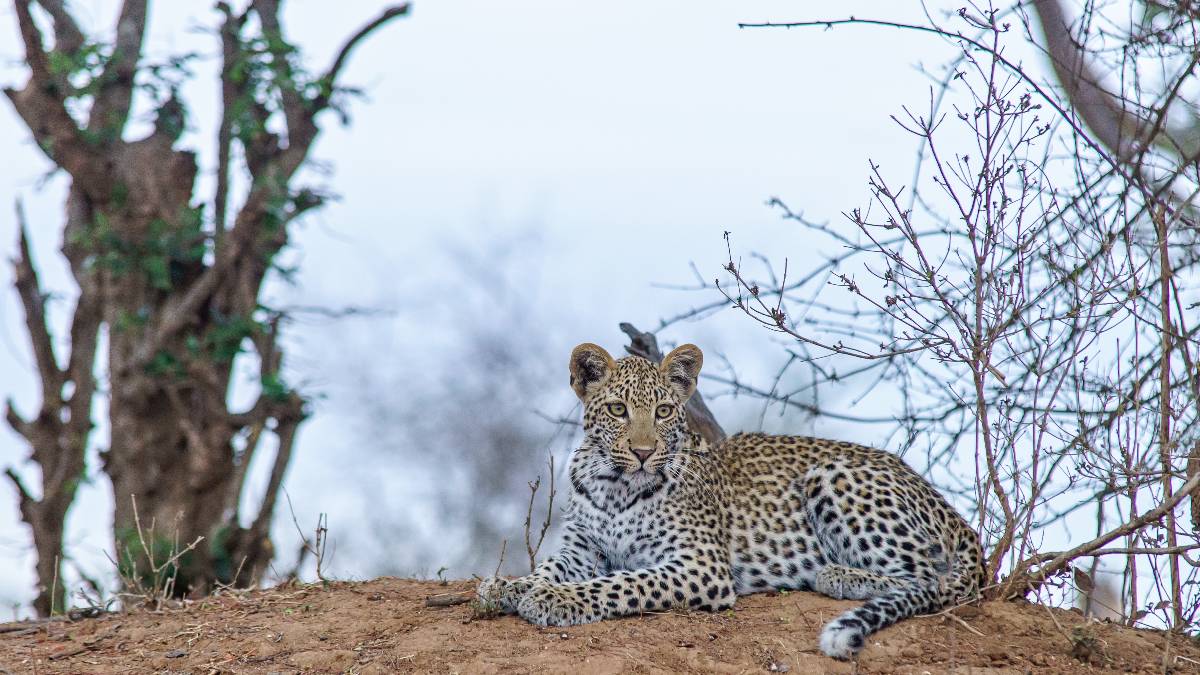
A leopard entered a residential property in Rajgarh in Himachal Pradesh’s Sirmaur district three times in the early hours, causing panic among the residents and reigniting the fears of wildlife-people encounters. The incident took place at Ashirwad Kunj on Tikkar Road and was observed by CCTV cameras installed there.
According to the homeowner Dinesh Sharma, the leopard entered the house from the rooftop and moved down the staircase and into the corridor. The unexpected movement of the big wild animal in a residential property made the family members worried. The leopard moved towards the area where the family’s pet dog and its puppies were on the property, he said.
The first visit was reported at 3:40 a.m., when the leopard came to the door and was confronted with the barking of the dog. The noise evidently startled the animal and it left the house. But the family's relief was short-lived as the leopard appeared half an hour later.
At 4:10 a.m., the leopard reportedly came back and went into the house. The animal allegedly grabbed one of the puppies and took it away. This was a quick situation that the family could not take the initiative to protect the puppies.
The leopard came back around 4:40 a.m. for the third visit to the residential property within a couple of hours. During that visit, it was seen with another puppy in its mouth before leaving the property. The repeated visits have caused much anxiety among the family members and others who live in the house.
CCTV footage will provide crucial evidence of the leopard’s movements and how it entered the house in the footage. But the incident has also highlighted the risk to householders living near areas with wild animals.
The leopard did not just pass through the neighbourhood once, residents say. Its repeated visits to the same property in the early morning hours have raised fears that the animal will come back again -- especially if it has seen that the area is a potential source of prey.
Dinesh Sharma has appealed to the Forest Department to intervene promptly and take appropriate preventive measures. Leopard sightings and similar incidents have been reported in and around Rajgarh from time to time. The recent incident has revived calls for monitoring of leopard movement in residential areas.
Residents have asked wildlife agencies to check the area around the home and to locate the leopard’s routes to reach the area. They have also asked for measures that could lower the probability of wild animals approaching homes at night and in the early morning.
The incident has raised particular concern for children and other vulnerable residents. The leopard is able to enter a house from the rooftop and move down inside, residents say, and people are afraid of a next encounter involving a person rather than a domestic animal.
Experts and wildlife authorities generally tell residents of leopard-prone areas to avoid approaching or cornering a leopard and to immediately inform forest and wildlife officials if a leopard is seen. Keeping pets secured, reducing potential attractants around homes, and ensuring access points are properly protected can also help reduce the possibility of such encounters.
For Ashirwad Kunj residents, the three visits have turned an otherwise calm early morning into a frightening experience. The family is now waiting for urgent help from the authorities and so are citizens of Tikkar Road, anxious that the leopard’s movements will be closely monitored.
The incident is yet another reminder of the difficulties faced by communities living close to wildlife habitats. As human settlements expand into areas frequented by wild animals, people and leopards are likely to encounter one another more and more often. It will take careful monitoring, community awareness, and coordination of wildlife authorities for the safety of the people and the animal to be ensured.