The Indian Government, inaugurating Lieutenant General N S Raja Subramani (Retd.) as the nation’s new Chief of Defence Staff (CDS), is transitioning in the Indian Armed Forces. He replaces General Anil Chauhan, whose term expires later this month. The appointment was formalised on Saturday by the Ministry of Defence officials.
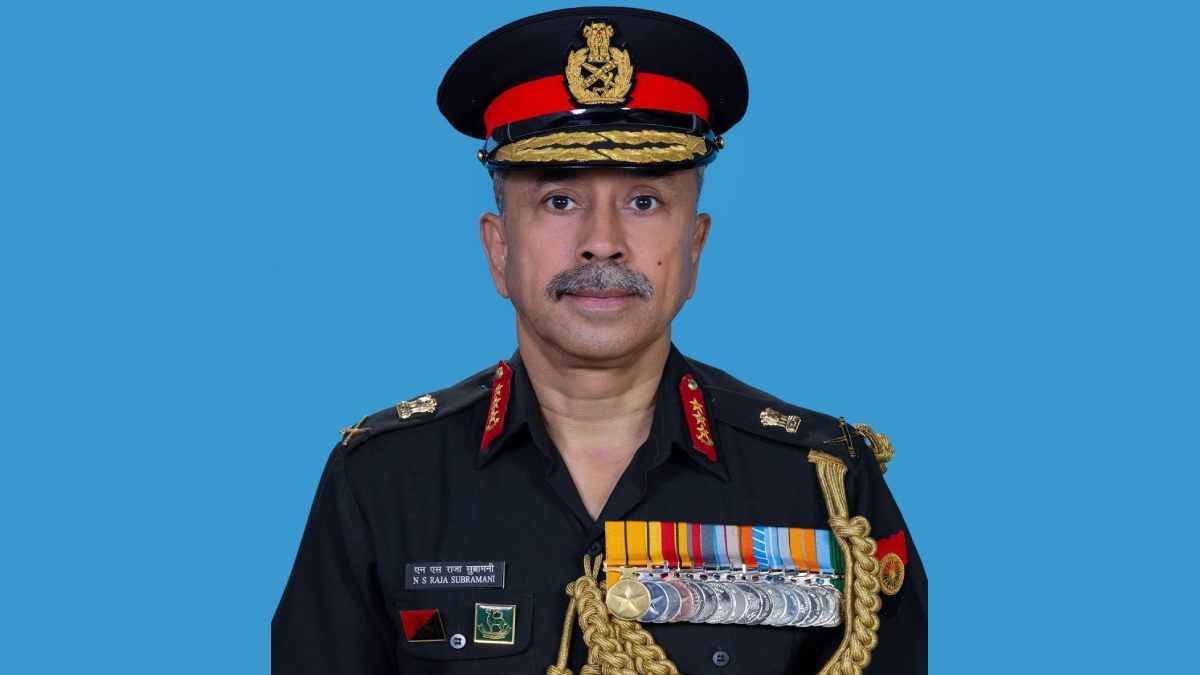
In addition to CDS, Lt. Gen Raja Subramani is at the same time the Secretary to the Government of India, Department of Military Affairs in India, which is responsible for the integration of the Army, Navy and Air Force and the promotion of the jointness of the army with the military.
Lt Gen N S Raja Subramani is a very decorated officer with decades of operational and commanding experience in the Indian Army. He was commissioned into the Garhwal Rifles in 1985 and has served in a number of strategic and sensitive areas, including Jammu and Kashmir and the Northeast.
He served with notable ranks in his lengthy military service, from serving as Vice Chief of the Army Staff, General Officer Commanding-in-Chief of Central Command, to Commander of the II Corps. He has been awarded multiple honours, such as the Param Vishisht Seva Medal (PVSM), Ati Vishisht Seva Medal (AVSM), Sena Medal (SM), and Vishisht Seva Medal (VSM), as he has proven himself as a warrior in his country.
The Chief of Defence Staff is an Indian executive and high-ranking service-level military officer in the Indian Defence Division who is responsible for defence planning and military policy formulation, as well as for military planning and defence planning. It was established in 2020 to enhance cooperation among the three armed forces and bolster India’s military readiness.
Defence scholars argue that Lt Gen Raja Subramani’s experience with the operational and high-level military planning arenas of war would, in such a context, have a significant impact on the speed of theatre command reforms and the effectiveness of India’s national security architecture.
The appointment comes where India’s focus continues to be on military modernisation, border security, and enhancing indigenous defence capability in light of evolving regional security issues.