In a major crackdown on food adulteration and counterfeit consumer products, authorities have arrested a man accused of manufacturing and selling fake Tata Salt allegedly mixed with chalk powder. The accused operated an illegal business that distributed counterfeit salt worth crores of rupees before law enforcement agencies uncovered the operation. The case has raised serious concerns about food safety, consumer protection and the growing challenge of counterfeit branded products entering the market.
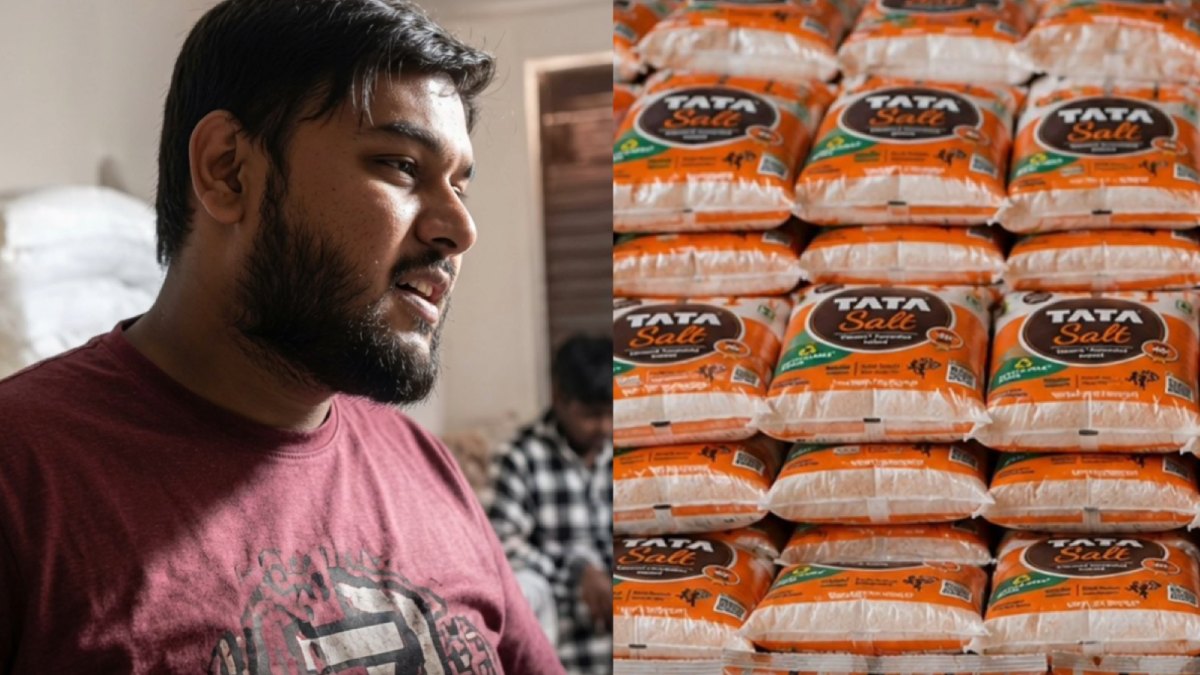
According to officials, the accused purchased ordinary salt and mixed it with chalk powder and other materials before packaging it in fake Tata Salt packets that were supposed to be the original. The counterfeit products were then sent to retailers and distributors to mislead them into believing they were buying real branded salt.
The alleged operation was reported to authorities after local markets were alerted of suspicious food products being sold. Based on the tip-off, law enforcement officers conducted searches at the premises of the accused. They found large quantities of counterfeit Tata Salt packaging, raw materials, adulterated salt, sealing equipment, packaging machinery and other materials used in the illegal operation, investigators said.
Officials estimate counterfeit products worth crores had already made it into the market before the racket was exposed. The investigation is still in the process of establishing the full extent of the operation and how long it had been in place, the number of distributors involved, and the locations where the fake goods were sold. Also, the government is investigating if a number of others were involved in the production, packaging, transportation, or distribution of counterfeit goods.
Food safety authorities have stated that adulteration of edible products represents a serious threat to human health. Although the exact composition of the seized counterfeit salt will be determined in laboratory tests, non-compliant ingredients in food products may have the potential to affect quality and hence the health of consumers in different ways according to how they are made and how much. They have therefore recommended that consumers be vigilant while buying packaged food products.
The seized materials will be sent to laboratories for analysis and the findings will have a big impact on how the counterfeit products would be affected and if they contain ingredients not fit to be used in a human body. What happens now will determine the specific legal arrangements that have taken place and the implications for the current case.
Counterfeit branded products are also a growing concern in various industries such as food, beverages, medicines, cosmetics, and household products. Fraudsters often attempt to imitate well-known brands by copying packaging designs, trademarks, logos and labeling to deceive customers. Such activity is not only a violation of intellectual property rights but also undermines consumer confidence and creates unfair competition between legitimate manufacturers.
Consumers should only buy products from certified and reputable retailers, the consumer protection experts say. Packaging should also be examined for spelling errors, poor print quality, damaged seals, unusual pricing, incorrect batch numbers, missing manufacturing details, or other irregularities that may suggest counterfeit products, they say. If consumers suspect a product is fake, they are advised to report the matter to food safety authorities or local law enforcement agencies.
Food regulators continue to monitor firms’ supply chains and markets and also to take enforcement actions on adulteration and counterfeit. Public awareness campaigns are also being launched to educate consumers about the production details, expiry dates, and certification labels in order to be in control of the product.
Individuals found guilty of selling or manufacturing counterfeit food products can be prosecuted under food safety laws, trademark laws, cheating laws and other criminal laws. But the accusations against the accused will not be dismissed until proven by a court, and the guilty party will be held accountable.
A man sold fake Tata Salt mixed with chalk worth crores before getting caught: Report. pic.twitter.com/OBKvjmIhNL
— 🚨Indian Gems (@IndianGems_) July 17, 2026
Authorities said the investigation is ongoing and further arrests can be made if evidence shows additional individuals or distribution networks were involved. Supply chains are being traced, financial records are being examined and retailers who may have been in the dark about the counterfeit products have been identified.
The case is a reminder of the necessity of robust food safety enforcement and consumer vigilance. As counterfeit goods become more sophisticated, cooperation between manufacturers, regulators, retailers and consumers is also essential to prevent food adulteration and protect public health. The authorities have said they will take strong action against anyone who is found to be responsible for damaging food quality and misleading consumers with counterfeit products.