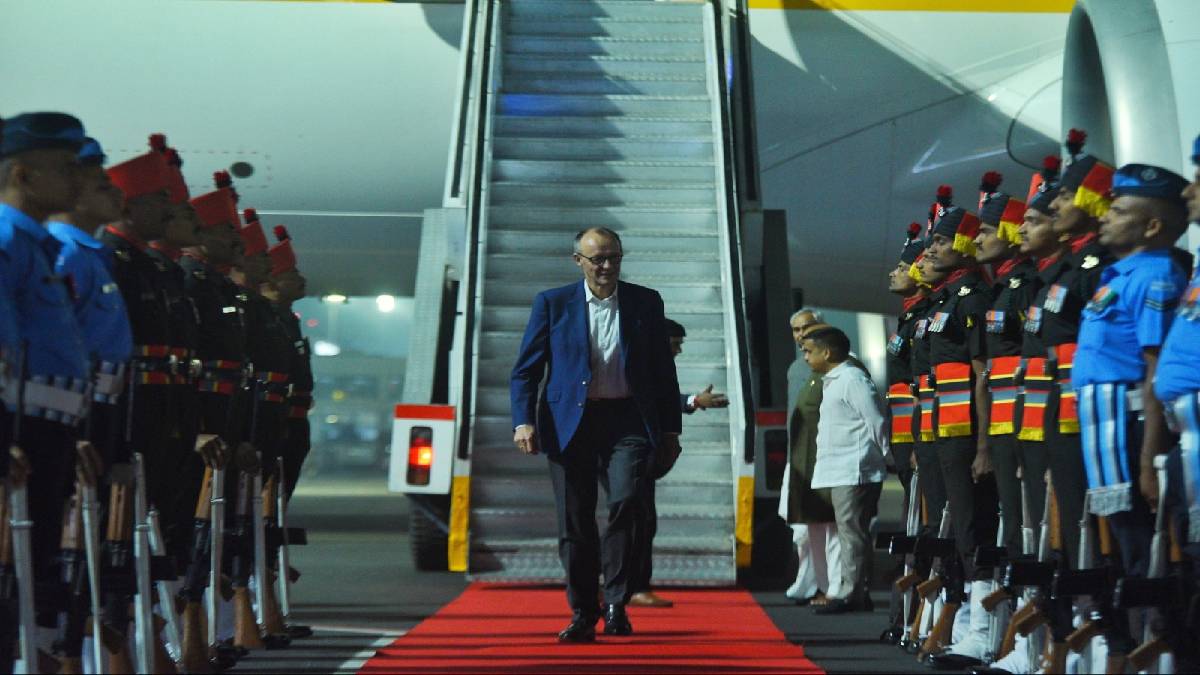
German Chancellor Friedrich Merz first officially visited India on January 12, 2026. This two‑day visit is one of his biggest meetings with India since he was sworn in in May 2025, concentrating on defense, trade and technology. It is also at a time when India and Germany are celebrating 75 years of diplomatic relations, and that makes the visit a moment of symbolism as well as strategic gesture.
Honoring Gandhi:
Chancellor Merz began his visit by addressing Mahatma Gandhi; he went to a monument to recognize him. This act of gesture established the tone for the visit, and combined diplomacy and cultural respect. By paying tribute to Gandhi, Merz acknowledged India’s legacy of peace and non‑violence, and it also reflected Germany’s ambition to foster relations based upon mutual recognition and shared values.
Defense Talks and Submarine Plan:
One of the central points of the visit is defense cooperation. Talks are ongoing to conclude an $8 billion deal between ThyssenKrupp Marine Systems, from Germany, and Mazagon Dock Shipbuilders of India on a new submarine deal. The deal would enhance India’s naval prowess as well as enhance ties for defense between the two. It also addresses larger efforts in technological cross-border cooperation, and joint production and maritime security. For Germany, this partnership represents an opening to expand its defense industry in Asia. For India, it is an opportunity to modernize its navy and cement its role in the Indo‑Pacific.
Diplomacy Meets Culture:
Merz’s visit was not confined to official meetings. He accompanied Indian leaders to Gujarat’s International Kite Festival at the Sabarmati Riverfront. This colorful occasion highlighted the rich tapestry of Indian cultures, and provided an informal opportunity for the German Chancellor to connect with the public. Those cultural exchanges underscore the importance of people‑to‑people ties in diplomacy, a lesson both countries need to learn again and again that we do not build relationships only based on commerce and defense, but based on experiences we share.
Bilateral Discussions in Gandhinagar:
Official meetings at Gandhinagar focused on expanding cooperation in trade, tech and renewable energy. Germany, one of India’s biggest trading partners in Europe, is eager to invest in green technology, digital innovation and manufacturing on both sides. The conviviality included discussion of the world's challenges such as the role of climate change, the resilience of the supply chain, and finally, the need for more multilateral cooperation. Through this alignment, India and Germany work together to position themselves to have a more decisive influence in contributing to global challenges.

Innovation Engagements in Bengaluru:
After Gandhinagar, Chancellor Merz will journey to Bengaluru, India’s tech capital. He’s going to be meeting with leaders of innovation, start ups and research institutes here. The emphasis will be on enhancing coordination for artificial intelligence, space technology and digital infrastructure. Bengaluru’s status as the “Silicon Valley of India” offers Germany the perfect opportunity to pursue new ways of doing enterprise with other world-famous science and technology firms.
Why Does This Visit Matters?
Merz’s trip matters for a few reasons:
- It signals 75 years of diplomatic ties, proving the maturity of India‑Germany relations.
- The submarine deal could become one of the largest defense partnerships between the two nations.
- Trade and technology agreements mark the partner as forward‑looking.
- Cultural activities, such as the kite festival, illustrate how important it is that trust and goodwill should transcend political discourse.
Friedrich Merz’s first official visit to India is not just a diplomatic tour, it's a symbol of deepening a partnership between two giants on the global stage. From respecting Gandhi to discussing defense contracts to attending cultural festivals to learning about technology in Bengaluru, the trip mixes tradition with modernity. As India and Germany mark 75 years of diplomatic ties, this visiting event paves the way for strengthened cooperation in areas such as defense, trade and technology. It also serves to remind us that diplomacy is both an obligation and a vision and it is as much a statement of a shared country together with a common vision of a future.