India's major advantage in world trade will be strengthened after trade liberalization under government agreements. After a lengthy phone call between US President Donald Trump and Prime Minister Narendra Modi, Trump said Made‑in‑India exports will now benefit from a reduced tariff of 18% in America. The fact that India benefits from this development brings it a clear pricing advantage over many of its key competitors, particularly the likes of Indonesia, Vietnam, Bangladesh and China. But the tariff relief won’t be the only issue, as doubts surround the fine print of the deal, particularly on oil purchasing restrictions noted by Trump but not mentioned by Modi.
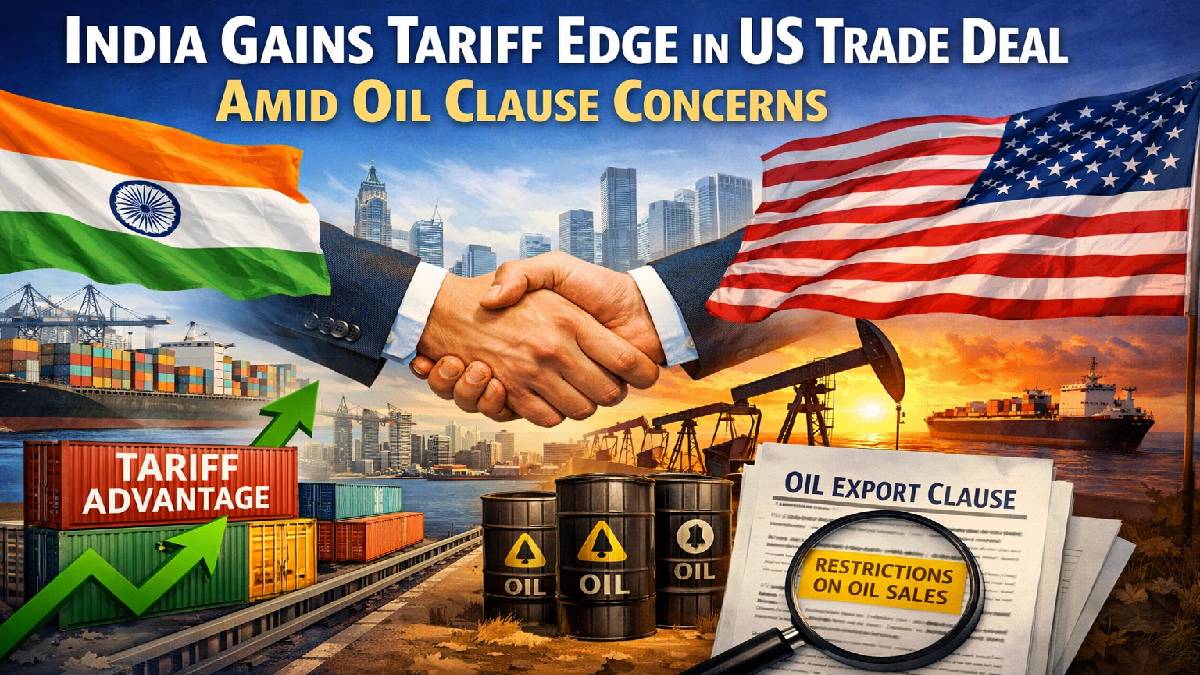
The new tariff structure places India in a favorable position:
🇮🇳 India: 18%
🇮🇩 Indonesia: 19%
🇻🇳 Vietnam: 20%
🇧🇩 Bangladesh: 20%
🇨🇳 China: 34%
In consequence, Indian exporters would now receive lower tariffs than most Asian competitors, making their products more competitive in the US market. For industries like textiles or pharmaceuticals or engineering products, that might mean more demand and higher revenues.
President Trump has made explicit reference to “oil purchasing restrictions” while announcing the deal. This is puzzling, since Modi did not refer to such a condition in his statements. The ambiguities point to two possibilities:
- What the agreement may look like is still being negotiated.
- Trump might be subtly using public pressure to affect India's energy policies.
If oil limits really are part of the deal, they could challenge India’s approach to energy more broadly, particularly since the country relies on imports from so many countries.
Officials in India have lauded a reduction in tariffs although they have been cautious about the terms of the trade agreement. Trade experts say while the tariff edge is a step in the right direction, India needs to closely scrutinize its compliance with potential hidden clauses impacting the country's broader economic interests in order to avoid losing out.
Industrial insiders are upbeat, forecasting that sectors such as textiles, leather, and machinery will benefit today. "Yet they also highlight that the issue of clear limits on energy imports is important, because limits could neutralize benefits elsewhere," the study said.
The new tariff rates lead India to a greater advantage over Indonesia, Vietnam and Bangladesh that face just higher tariffs. China, at a 34% tariff, is clearly at a distinct disadvantage and presents a powerful opportunity for India to capture market share from the US.
The implications of this might alter the nature of trade in Asia, allowing India to become an easier alternative for American shoppers. But competitors would retaliate by searching for deals of their own or adapting pricing strategies.
The deal points to many more widespread issues:
- Trade leverage: India is using diplomacy to get better terms from world competitors.
- Energy politics: Oil restrictions, if enforced, could test India’s ability to balance trade and energy needs.
- Global competition: Cheaper tariffs bolster India's competitiveness vis‑à‑vis non‑India competitors, especially China.
- Worry in talks: Uncertainty in trade deals reflects the reality that negotiations frequently require more subtle negotiations than just headline announcements.
The announcement has drawn much excitement among the exporters and investors behind it, whom it says are hoping that it can breathe new life into India’s economy. Small businesses and manufacturing industries should benefit from new regulations, noted social media conversations.
At the same time, analysts warn to be cautious about being celebratory too soon. They contend: The true test will be in the fine print of the deal and how India executes whatever conditions are put in place behind it.
India's new tariff deal with the US has been a big step forward. Its exports now benefit from these exports to one of the world’s largest markets. India now enjoys much better access to goods than most local rivals thanks to tariffs reducing to 18%. But the mention of restrictions on oil purchases challenges the extent of the agreement. Whether this is a negotiating tactic or a binding condition is uncertain.
For now, the tariff relief is tangible, but the fine print might mean this deal is a long‑term win, or a short‑lived competitive edge. India’s challenge will be to maximize benefits as it carefully negotiates the conditions attached.