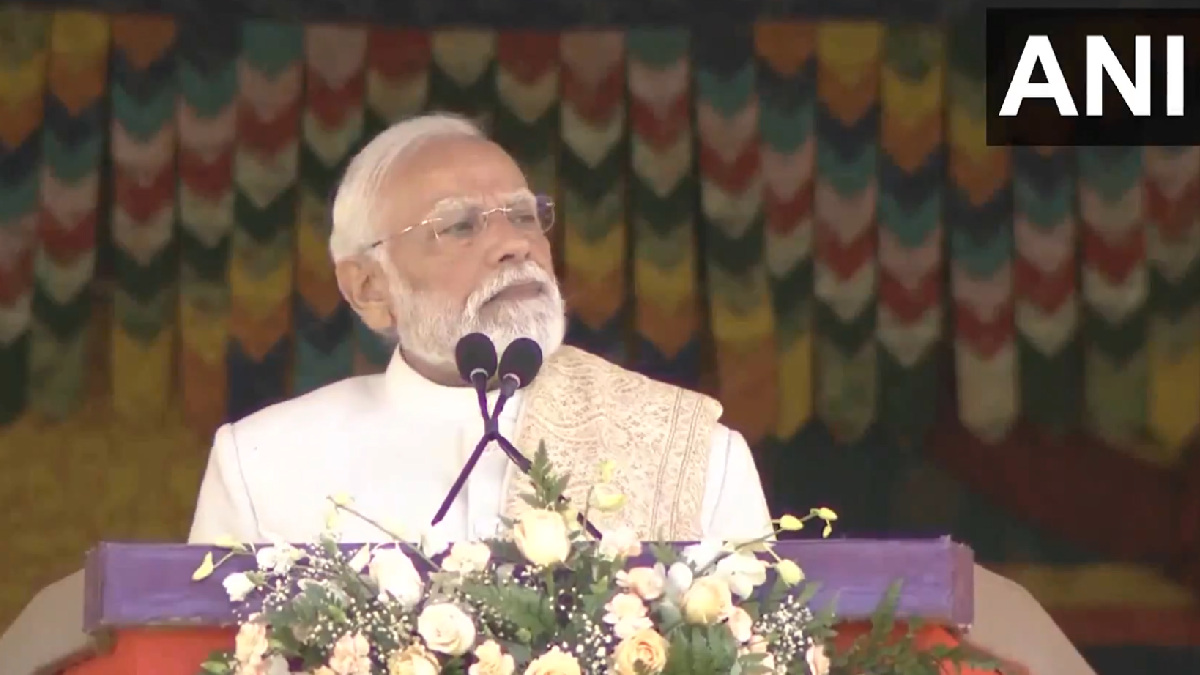
Prime Minister Narendra Modi on Friday announced a landmark reform that will allow private companies to participate in India’s nuclear power sector for the first time since the Atomic Energy Act of 1962. The decision, which will be introduced through legislation in Parliament’s winter session, marks a historic shift in India’s energy policy and is expected to reshape the country’s long-term strategy for clean energy and self-reliance.
The proposed law will enable private firms to build small modular reactors (SMRs) and invest in advanced nuclear technologies, areas that have so far been restricted to government-run enterprises. Officials explained that the reform mirrors India’s earlier liberalization of the space sector, which opened the doors to private participation and led to the creation of more than 300 startups in just a few years. The government hopes that similar momentum can be achieved in nuclear energy, a sector critical to India’s ambitions of achieving net-zero emissions by 2070.
At present, India operates 25 nuclear reactors with a combined output of 8.8 gigawatts, supplying roughly three percent of the nation’s electricity. While this contribution is modest compared to coal and renewable sources, nuclear power has long been seen as a reliable option for base-load energy. The government has set ambitious targets to expand nuclear capacity to 22.5 gigawatts by 2032 and 100 gigawatts by 2047. Officials argue that private participation will be essential to meeting these goals, given the scale of investment and technological innovation required.
The announcement has been met with enthusiasm from industry leaders and energy experts, who view it as a step toward greater self-reliance and modernization. They believe private entry will attract large-scale investment, accelerate the deployment of next-generation reactors, and strengthen India’s position in the global nuclear energy market. Companies in the power and infrastructure sectors, including Tata Power, Reliance, and Adani, are expected to explore opportunities once the legislation is passed.
However, the move has also sparked debate. Critics have raised concerns about safety risks, pointing out that nuclear power requires strict safeguards to prevent accidents and radiation leaks. Waste management remains another unresolved issue, with questions about how spent fuel will be stored and disposed of safely. Regulatory clarity is also being questioned, as details about the role of private firms and their liability under existing laws remain vague. India’s Civil Liability for Nuclear Damage Act has historically discouraged private and foreign participation, and observers are keen to see how the new legislation will address these challenges.

Oversight will remain with the Atomic Energy Regulatory Board (AERB), which will be responsible for ensuring safety and compliance. Lawmakers are expected to begin debating the bill on Monday, with discussions likely to focus on balancing the promise of innovation and investment with the need for public safety and accountability.
If passed, the reform would mark the most significant change in India’s nuclear policy in more than six decades. Analysts say it could open the door to a new era of public-private collaboration in clean energy, positioning nuclear power as a central pillar of India’s energy future. While optimism is high, the success of the initiative will depend on how effectively the government addresses concerns over safety, waste, and regulation.