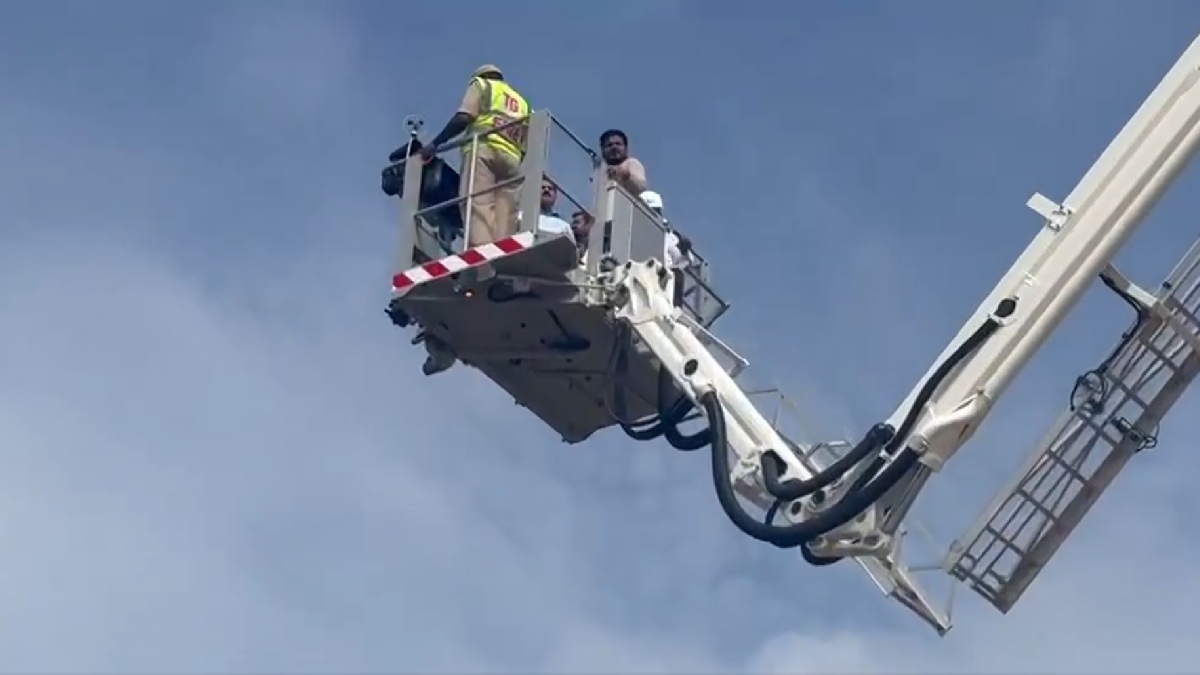
A multi-agency security drill was conducted at the CISF unit of Jio World Centre in Mumbai for a terrorist attack and hostage situation. A multi-agency security-based exercise at the centre was hosted to assess the preparedness, coordination and ability of the security and law enforcement agencies to respond to a complex security emergency.
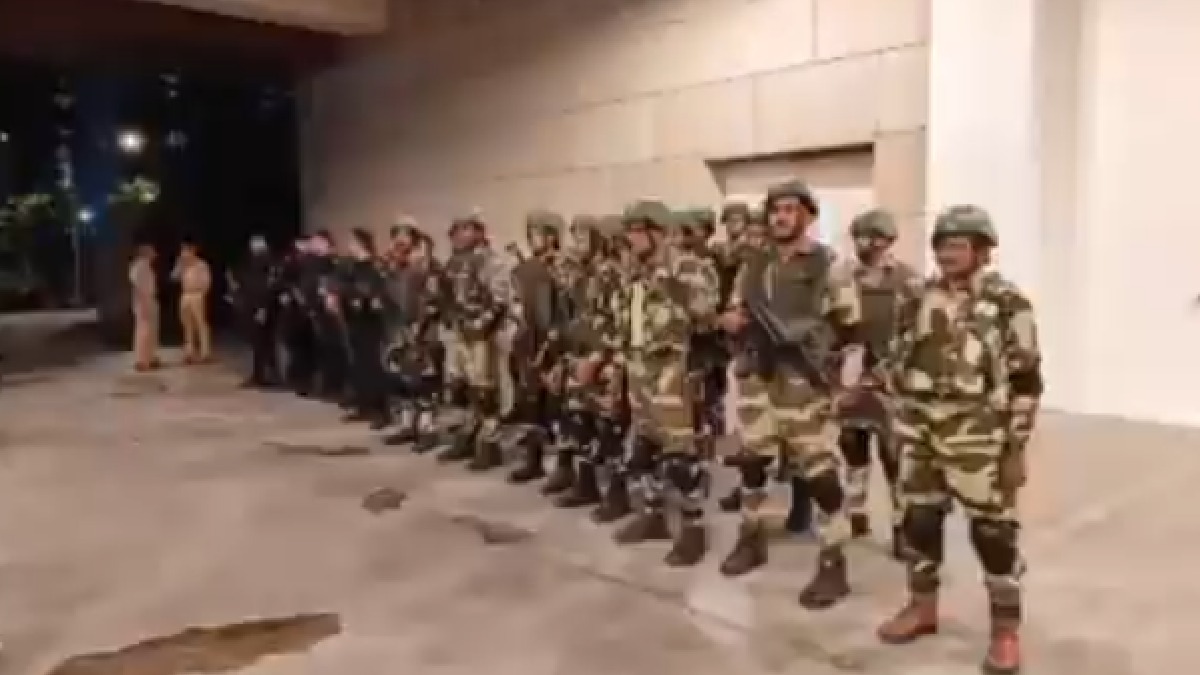
The mock exercise was conducted to simulate a terror attack and a hostage situation. In the scenario, agencies had to respond quickly, organize their actions and work towards neutralising the threat and the safety and evacuation of those in the simulated situation.
Such exercises are meant to test operational preparedness under difficult circumstances. They give security personnel a chance to assess response procedures, communication mechanisms and coordination between different agencies that might be required to work together in an actual emergency.
Simulated Terror Attack and Hostage Situation
The exercise at Jio World Centre was created around a hypothetical terrorist attack that escalated into a hostage situation. The scenario was meant to be analogous to the kind of fast-moving security challenge that would require multiple agencies to act at the same time.
During the exercise, security personnel had to assess the simulated threat, develop an appropriate response and intervene to neutralise the attackers. A key part of the exercise was the safe evacuation of the simulated hostages after the intervention.
The drill then focused on being able to respond to and neutralise a threat and to protect civilians and move them to safety. A hostage situation, in fact, requires collaboration to operate and for a proper reaction to be managed and communication to be good and effective in order to handle it.
CISF, Mumbai Police QRT And ATS Participate
The exercise involved the Central Industrial Security Force (CISF), Mumbai Police Quick Response Team (QRT) and Mumbai Police Anti-Terrorism Squad (ATS).
The involvement of these specialised units proved how important it is for a joint response in a major security incident. Different agencies have different capabilities and roles in this kind of situation and coordination is critical for effective response.
The CISF unit at Jio World Centre played a key role in the exercise, while the Mumbai Police QRT and Anti-Terrorism Squad contributed to the simulated response to the terrorist threat and hostage situation.
The exercise let agencies from the same agency interact in a controlled manner. The drills may help to identify areas of coordination and help to ensure that personnel are well-equipped to respond to a serious security incident.
Focus on Joint Response and Coordination
One of the central objectives of a multi-agency drill is to enhance the coordination between security organisations. In an actual emergency, the first response may be for people from different units to arrive at the same location, assess the situation, and undertake their respective duties.
A coordinated strategy can be used to prevent confusion, as well as to make sure that the response teams are able to communicate in an orderly manner. Communication between agencies is critical for an incident that involves not only an active security threat and civilians who are evacuated but civilians having to be evacuated as well.
The Jio World Centre exercise provided a controlled environment in which these aspects could be evaluated. By simulating a terrorist attack and hostage situation, the participating agencies could practise their response to a scenario requiring rapid intervention and close cooperation.
Strengthening Preparedness for Major Security Emergencies
Mock exercises are key to security preparedness because agencies will have to test their response capacity without having to go through a real event. They could also help personnel get used to the physical environment of which they may have to work.
Preparedness is crucial for large public institutions like Jio World Centre. In such places, large gatherings and high-profile events happen at the same time. A comprehensive security response is needed in case of emergencies and the protection of visitors and staff as well as the employees from the site.
The simulated exercise also highlighted the need for specialized response teams to respond to different aspects of a security emergency. CISF personnel, Mumbai Police QRT and the Anti-Terrorism Squad participated in the drill to test cooperation between agencies with different operational roles.
Multi-Agency Mock Exercise at CISF Unit Jio World Centre, Mumbai
— CISF (@CISFHQrs) August 27, 2026
A Multi-Agency Mock Exercise based on a simulated terrorist attack and hostage situation was conducted at CISF Unit JWC, Mumbai.
The exercise simulated a terrorist attack followed by a hostage situation, with… pic.twitter.com/d19rGfxfFd
Exercise Highlights the Need for Multi-Agency Preparedness
The successful implementation of the mock exercise highlights the benefits of joint preparedness and team-based response. All departments working together and with the help of multiple agencies, security personnel are able to practise responding to such a complex scenario of terrorism and hostages.
The exercise also served to reinforce the need to be prepared for unexpected security situations. The incident was simulated but the response required teams to follow operational procedures, coordinate their actions and put the safety of the individuals involved in the scenario in mind.
Multi-agency exercises like this can help to improve response mechanisms and enhance cooperation between security forces and law enforcement agencies. Training and realistic simulation are still important tools for personnel to be able to respond effectively to a real security emergency.
The drill at Mumbai’s Jio World Centre was thus an exercise in coordination, rapid response and emergency management involving the CISF, Mumbai Police QRT and Mumbai Police ATS to test their preparedness for a simulated terrorist attack and hostage situation.