India and Japan continue to progress on the landmark Mumbai–Ahmedabad High-Speed Rail (MAHSR) project with bilateral discussions moving forward positively. At the time of a breakthrough in 2027, India will have its first bullet train corridor, and the first section of it will be operated by an Indian high-speed train.
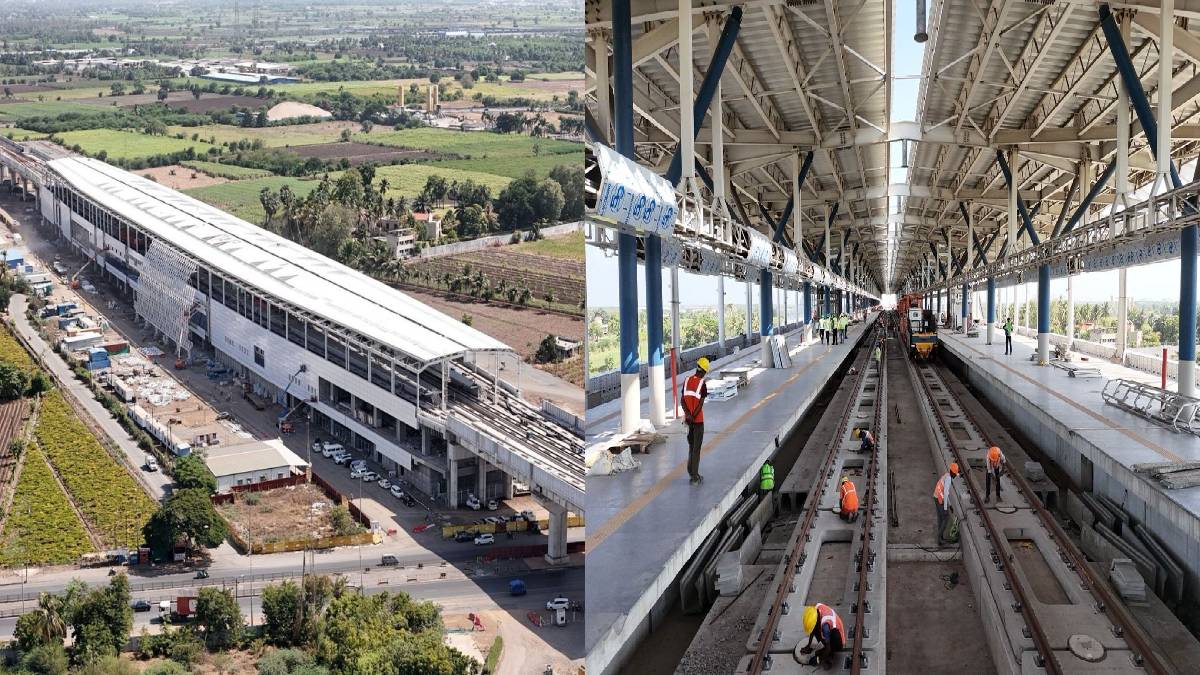
The project is the product of a long-standing strategic partnership between India and Japan that combines Japanese high-speed rail expertise with India’s expanding infrastructure capabilities. The Mumbai–Ahmedabad corridor will change intercity travel by significantly reducing journey times and introducing world-class rail technology to the country.
The next generation of the Shinkansen (Japan’s next-generation) is currently under development and is expected to be part of the project in the early 2030s. The E10 is the successor to the current Shinkansen fleet and will be technologically advanced in speed, passenger comfort, energy efficiency, digital systems, and operational safety.
The decision to start operations with an Indian high-speed train reflects the phased implementation strategy of the project and also supports India’s growing capabilities in railway engineering and indigenous manufacturing. It is aligned with the larger idea of developing Indian expertise in advanced transportation technologies through Make in India and Aatmanirbhar Bharat.
The Mumbai–Ahmedabad High-Speed Rail corridor runs about 508 kilometres, connecting two of India’s most important economic hubs. When fully operational, trains are expected to run at speeds of up to 320 km/h, and the travel time between Mumbai and Ahmedabad would be between two and three hours, depending on the service.
The project has several engineering milestones: elevated viaducts, bridges, tunnels, modern stations, advanced signalling systems, earthquake-resistant infrastructure, and high-speed tracks. The most challenging part is the undersea tunnel section near Mumbai, which shows the scale and complexity of the engineering effort.
Japan has been a key partner with technology, technical knowledge, and financial support in the long-term soft loan program and has been instrumental. The collaboration has also enabled knowledge transfer, workforce training, and the adoption of internationally known safety measures that have made the Shinkansen network one of the safest high-speed rail systems in the world.
In addition to improving passenger mobility, the project can also generate major economic benefits. Construction activities have already created employment opportunities in engineering, manufacturing, construction, logistics, and allied industries. Better connectivity is expected to create a new atmosphere for development in Maharashtra and Gujarat in the long term, and investment and trade will be increased.
The introduction of high-speed rail will also contribute to environmental sustainability, helping to move away from road and short-haul air travel toward energy-efficient rail transportation. The current bullet trains typically produce fewer carbon emissions per passenger than many other modes of transport, which is in line with India’s climate and sustainable mobility objectives.
The E10 Shinkansen that will be introduced in the early 2030s will also boost the corridor by bringing the latest Japanese high-speed rail technology to India. This train will have improved aerodynamics, passenger facilities, digital monitoring systems, and better efficiency.
As construction progresses and India-Japan cooperation continues to strengthen, the Mumbai–Ahmedabad Bullet Train project remains one of the country’s most important infrastructure programs. When the first section is completed in 2027, the Indian rail system will finally be ready to go through high-speed rail corridors all across the country.