Mumbai Metro has launched an unusual but feasible approach to solve the longstanding problem of public spitting in metro stations. To combat the perennial problem, there are now designated spitting spots available in some of the Mumbai Metro stations so that people can spit off the walls, floors and other public spaces in the same place.
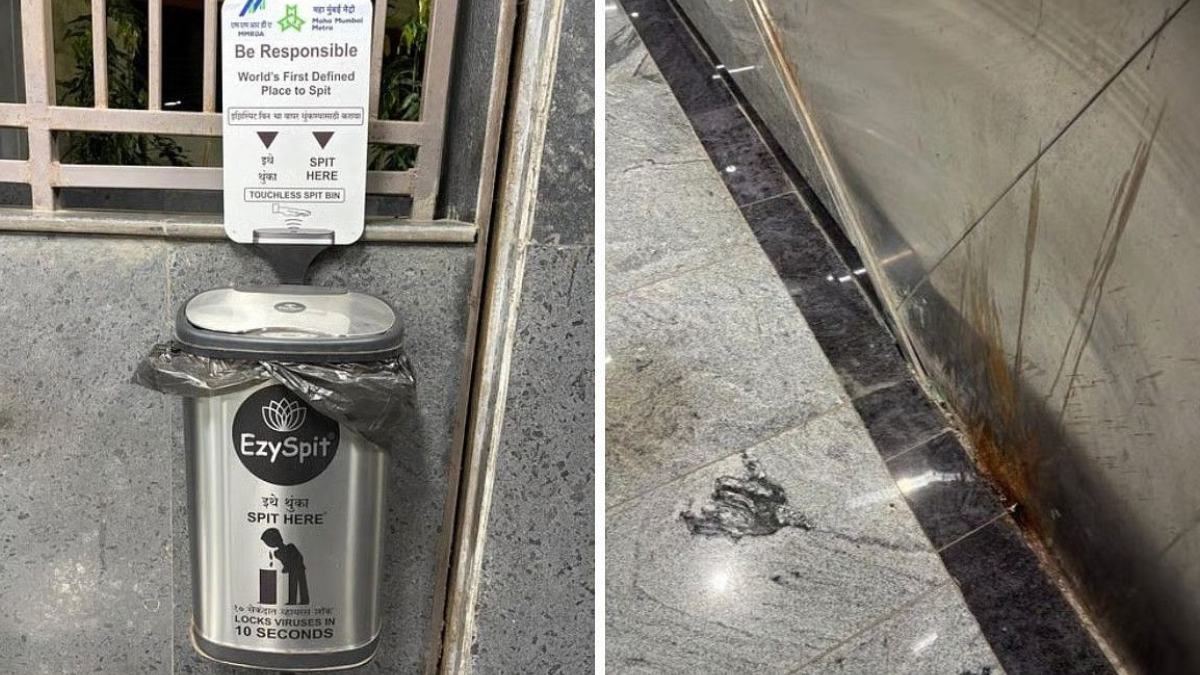
Public spitting is still a common civic concern in many Indian cities, especially areas with heavy pedestrian movement. Mumbai Metro stations are full of passengers on a daily basis, so cleaning up is always a challenge. Station floors, stairways, walls and other surfaces can be very dirty and the work of sanitation workers can be very heavy. The establishment of designated spots may have a recognition of this behavior but is also to prevent commuters from dirtying the same areas where they live and work.
The concept has been equally intriguing because of its unusual nature. Instead of warnings, penalties and repeated appeals for commuters not to spit, it provides a place for those who still need to spit to do so. The idea is to keep the rest of the station clean and potentially make sanitation work at the metro authorities easier.
The reported installation of these designated places is in line with the growing public transport efforts to clean up and promote responsible behavior. Metro stations are high-footfall public spaces where even a thin layer of litter or spitting can be seen very quickly. Clean platforms, passageways, escalators and entrances are part of keeping the whole commuter experience clean.
The initiative has also raised questions on whether an identifiable spitting point can actually change public behaviour. Supporters may regard it as a practical short-term solution to an existing habit while protecting shared public spaces. But the longer-term goal is to stop spitting entirely through awareness campaigns, fines and better enforcement of civic laws.
From a sanitation perspective, focusing an undesirable activity in a controlled location could make cleaning operations easier. Instead of sanitation staff dealing with spit stains in various parts of a station, cleaning resources could be focused on specific points. But the long-term effectiveness of the initiative is likely to depend on commuter participation and whether people actually use the designated spots.
Mumbai’s public transport network is a significant part of the daily lives of millions of commuters, and cleanliness is still an integral part of the passenger experience. Initiatives that address everyday civic habits can attract significant public attention, particularly when they take an unconventional approach.
🚨 Mumbai Metro installs ‘world’s first designated spitting spot’ at stations. pic.twitter.com/pamJWef2wR
— Indian Tech & Infra (@IndianTechGuide) September 29, 2026
The ‘world’s first designated spitting spot’ concept has become a talking point beyond the metro system itself. It speaks to a bigger urban problem: how authorities manage public hygiene when civic behaviour is not always consistent with cleanliness campaigns. If the initiative is successful or remains a novelty, commuters should know how it will be sustained and how it can make the metro cleaner over time.
For Mumbai Metro, this experiment is a novel solution to a classic problem. Instead of punishment or prohibition, the spitting spots are a behavioural-management strategy to keep the station clean. Public opinion may be one of the most interesting things we will have to see as commuters weigh whether such an unconventional solution works and if there is any change.