Mumbai’s new elevated road project has begun delivering shorter travel times on several key routes, but the improvement has also introduced a new traffic challenge: congestion has shifted from connecting roads to junctions.
The 1.4-km Bharat Nagar Road–Vakola Junction Elevated Corridor opened in mid-August and forms a larger 10.3-km signal-free corridor connecting Santa Cruz–Chembur Link Road to the Western Express Highway (WEH). The project is expected to increase regional business and residential connections, and reduce delays caused by multiple traffic signals.
Mumbai Metropolitan Region Development Authority (MMRDA) says that the completed corridor could save commuters as much as 35 minutes in Mumbai for long trip times between the Bandra-Kurla Complex (BKC) and the Western Express Highway. The reduction in travel time is especially significant for commuters travelling during periods when the traffic on Mumbai’s arterial roads is already very heavy.
Some commuters have already reported noticeably quicker journeys. Andheri and BKC routes, which are frequently plagued with heavy traffic in peak hours, have reported a better flow from the elevated section.
The new corridor allows through traffic to pass through a number of surface-level intersections, reducing the amount of stop-and-go movement. The project will allow some traffic above the existing road network to be created to increase the average speed and more continuous movement.
New SCLR connector. Traffic is absolutely AWESOME. Exactly what Mumbai needed. pic.twitter.com/DWe75L7raD
— Mumbai Rains (@rushikesh_agre_) August 26, 2026
But the early experience has also exposed a familiar problem with major urban road projects: removing congestion from one location does not necessarily eliminate it from the wider network.
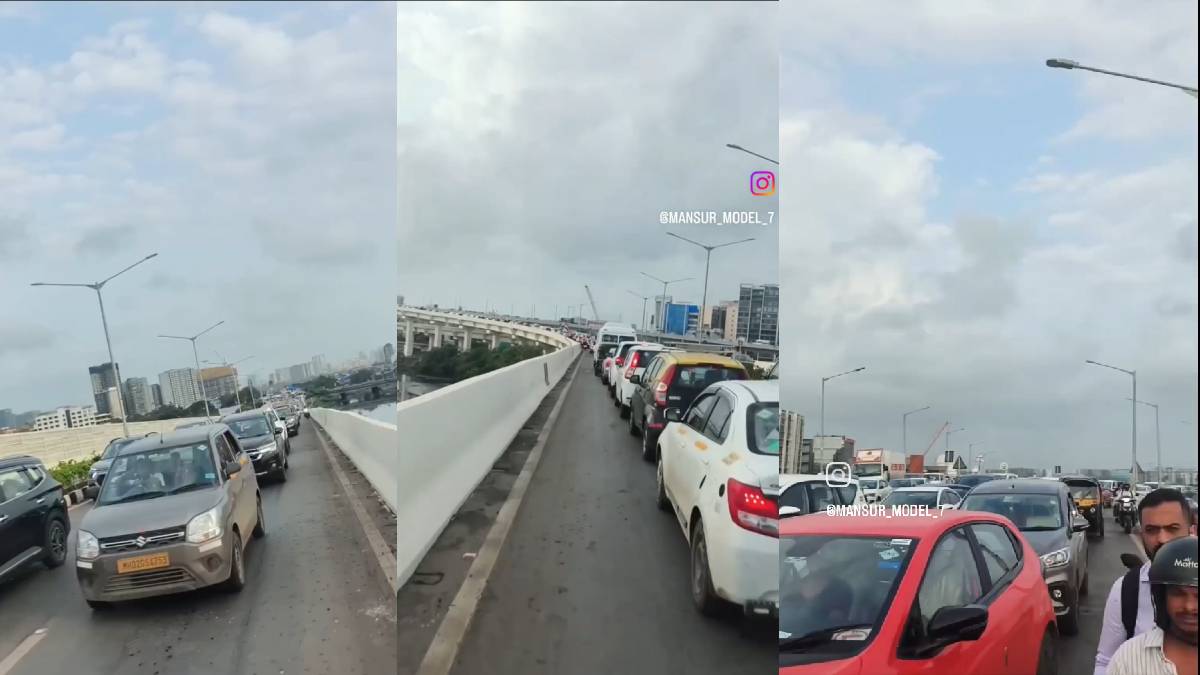
Some commuters have reported delays of up to 45 minutes at connecting points, particularly at peak times. Traffic queues have emerged around NABARD and Valmiki Nagar locations where cars entering or leaving the elevated corridor are joined by traffic on other roads.
This has shifted some of the pressure from the old congestion hotspots, Kalina and the other bottleneck locations, to new bottleneck spots.
It indicates the necessity of treating elevated roads as part of an integrated traffic system rather than as standalone infrastructure. While a higher road can remove traffic signals and increase the movement of traffic on the main road, congestion can build up at entry and exit points if connecting roads cannot handle the additional traffic volume.
For the daily commuter, this can be a mixed experience. A driver may cover a section of the journey much more quickly than anticipated but lose much of that time advantage as one gets to the end of the elevated road at a junction.
The situation is likely to be even more acute in Mumbai’s upcoming festive season when traffic volumes usually increase because of shopping, celebrations, religious events and increased movement across the city.
The festive period could provide authorities with a clearer indication of how the newly completed corridor performs under much higher traffic pressure. If queues are still at certain connectors, traffic-management measures might be required to ensure that the benefits of the elevated route do not get cancelled out by downstream congestion.
So traffic management around the corridor might become just as important as the elevated infrastructure. Signal timing and lane management, junction redesign, enforcement and better coordination between the elevated road and surrounding surface streets could all contribute to the corridor’s overall effectiveness.
But the project is a critical addition to Mumbai’s road network. A constant signal-free route linking the Santa Cruz–Chembur Link Road and Western Express Highway will be an important alternative for commuters who are travelling between the eastern and western areas of the city.
For BKC, one of Mumbai’s central commercial areas, improved road connectivity is essential. Thousands of employees come to the business centre every day, which forces the roads in the morning and evening to be extremely busy.
The early reports indicate that the new corridor is providing real benefits to some routes while creating new challenges elsewhere. That is not unusual for large urban transport projects, where traffic patterns can redistribute congestion on a larger network.
The key question now will be whether it can be managed by those new pressure points with the time saved by the elevated road.
For commuters, these upcoming weeks— and especially the festive season— will be a crucial real-world test. And if traffic flows are much faster across the whole route, this project will be a major player for Mumbai’s road network. If connectors still have slow connections and other traffic management interventions need to be made, then there are still bottlenecks.
So for now, Mumbai’s new elevated corridor seems to be doing exactly what major infrastructure projects often do: making some journeys faster while changing where the traffic queues form.