Mumbai toll rates have increased by 20% at five major entry points into the city from October 1, 2026, making travel more expensive for several categories of commercial and heavy vehicles entering or leaving Mumbai.
The revised charges announced by the Maharashtra State Road Development Corporation (MSRDC) will cover mini buses, light commercial vehicles, trucks, buses and heavy motor vehicles. The latest revision comes three years after the last rate change in October 2023.
The new toll structure is applicable at five entry points: Vashi on the Sion-Panvel Highway, Mulund on LBS Road, Mulund on the Eastern Express Highway, Airoli Bridge and Dahisar on the Western Express Highway. Atal Setu, which is another major entry route into Mumbai, has a separate toll system and is not included in this five-point revision.
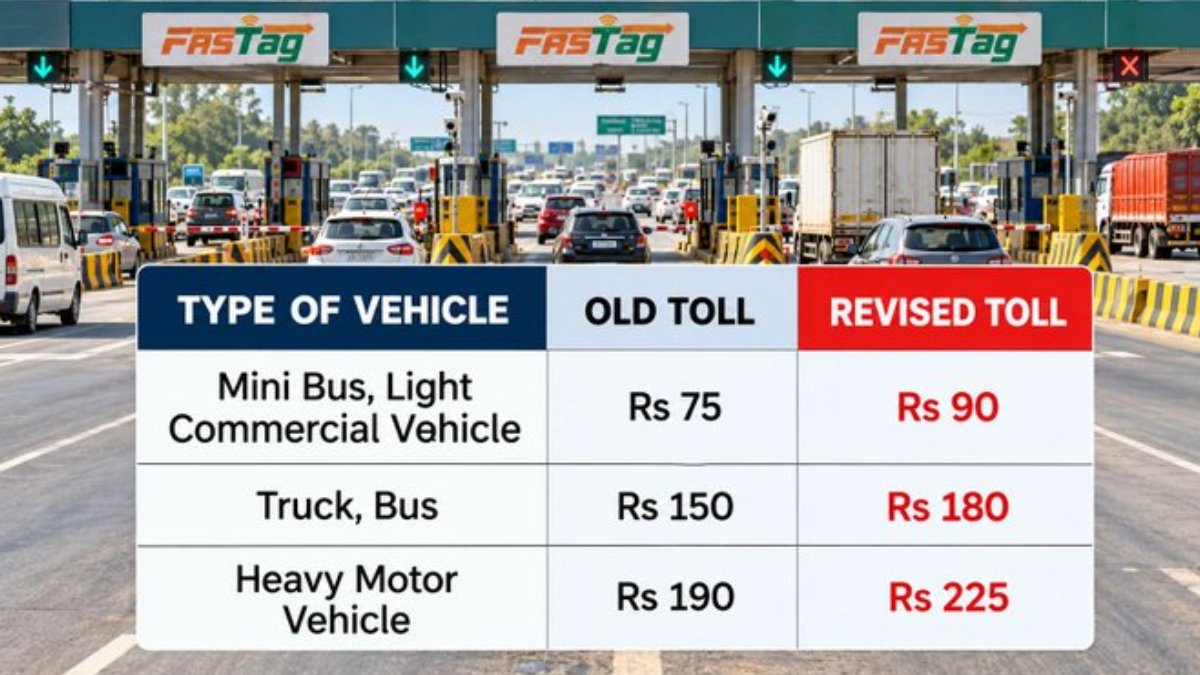
Under the new rates, mini buses and light commercial vehicles will now pay ₹90 per trip, compared to ₹75 earlier. The toll for trucks and buses has been increased from ₹150 to ₹180, while heavy motor vehicles are being charged ₹225 from the previous rate of ₹180, the government said. The new charges represent increases ranging from ₹15 to ₹45 depending on the vehicle type.
Importantly, the toll hike does not apply to every vehicle entering Mumbai. Light motor vehicles, school buses and state transport buses are still exempt from the levy. Private cars and several other smaller passenger vehicles are also not affected by the latest commercial-vehicle toll revision. These exemptions have been in place since October 14, 2024.
The toll collection system at Mumbai’s five entry points has a long history. The toll collection at these places started in September 2002 and the rates have been raised following concession arrangements. Mumbai Entry Points Limited (MEPL) collects tolls on behalf of MSRDC. The last revision took place in October 2023 and the rise follows the three-year revision schedule.
The toll revenue is linked to the recovery of investments and costs associated with infrastructure developed at Mumbai’s entry points, such as flyovers, bridges, subways and road overbridges. MEPL had made an upfront payment of ₹2,100 crore to MSRDC in 2010 to cover infrastructure expenditure, with toll collection intended to help recover investment as well as financing, administration, operation and maintenance costs.
The length of the toll concession has also been extended. The toll collection at the five entry points was supposed to continue until November 2026, but now the concession has been extended until September 17, 2029. The extension was done because of compensation for the waiver of tolls for passenger cars and smaller vehicles in 2024, according to reports.
For transportation operators, the increase is especially important since commercial vehicles often enter and leave Mumbai through the entrance and exit paths for goods and passengers. Transport operators have expressed concern over high toll costs, as well as high freight costs could increase their operating costs.
Some industry representatives have also said that additional transportation costs may eventually be reflected in freight charges and, depending on how businesses absorb or pass on these costs, could affect the price of goods. These are only the thoughts of transport industry groups, not a result of the toll revision and not a real change in toll.
🚨 Toll rates at Mumbai's five entry points will increase by 20% from today. pic.twitter.com/0X78AtUIl7
— Indian Tech & Infra (@IndianTechGuide) October 1, 2026
For businesses operating trucks, buses, mini buses and light commercial vehicles, the increased toll rates will be an additional expense from October 1. The operators who frequently cross Mumbai's entry points will have to pay more when they need to cover transportation and logistics costs.
The recent toll revision is thus a significant update for the commercial vehicle owners, fleet operators, transport companies and businesses dependent on road-based movement into Mumbai. While the exemption categories such as light motor vehicles, school buses and state transport buses will continue without the levy, the commercial and heavy vehicles will now see the new charges from October 1, 2026.