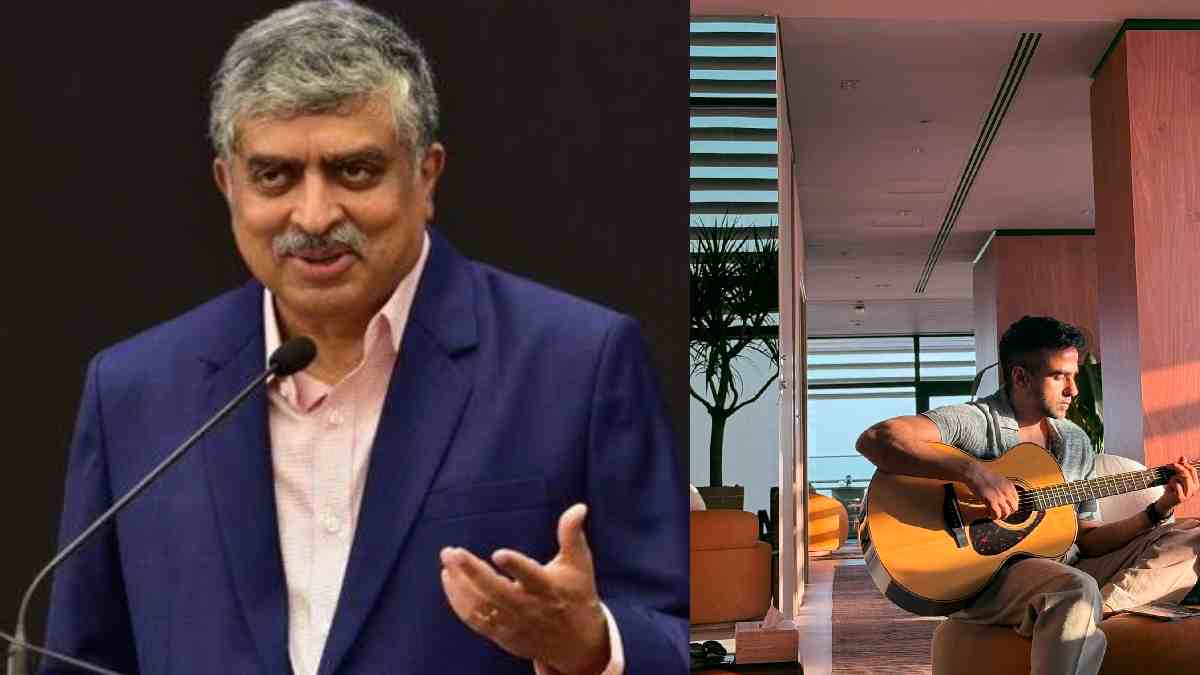
Infosys co-founder Nandan Nilekani and Zerodha co-founder Nikhil Kamath are among the prominent Bengaluru voters who have been flagged in Karnataka’s ongoing Special Intensive Revision (SIR) of electoral rolls.
The exercise aims to verify voter records and resolve discrepancies between current electoral data and older records.
According to reports, notices were issued to several well-known voters after discrepancies were found when matching their details with earlier electoral records.
Nilekani’s name was reported as under the “unmapped in last SIR” category, while Nikhil Kamath and his brother, Zerodha co-founder Nithin Kamath, were flagged due to a parent-name mismatch.
The reports have attracted attention because the individuals were mostly from India's technology, business and entertainment industries. But being flagged on SIR does not expose wrongdoing. The SIR is a tool to find electoral records that need to be confirmed or corrected.
Nandan Nilekani, who helped design Aadhaar and founded Infosys, is registered as a voter in Bengaluru. His family members are also part of the discrepancy-related records being examined as part of the revision process.
The records were “unmapped with last SIR,” meaning none of them could be directly linked to the relevant older electoral database.
Nikhil Kamath, who co-founded Zerodha with Nithin Kamath, was among the prominent Bengaluru voters whose details were flagged. The issue is with the name of a parent not shown in electoral records.
The discrepancies can occur when information in older voter rolls differs from the details in newer databases.
The Election Commission’s voter services portal allows voters to search their names in the last SIR electoral roll and submit documents against notices issued during the process.
The SIR process has also brought other prominent names into focus in Karnataka. Bharat Ratna scientist C.N.R. Rao appeared in a discrepancy report but election officials explained that he was not actually served a notice.
His case involved a difference between his name in the 2002 electoral roll and the current record.
Such developments are evidence of the difficulty of matching decades-old electoral records to existing voter databases.
For voters whose names are flagged, there is an opportunity to submit relevant documents and clarify discrepancies.
The Karnataka SIR exercise is therefore receiving attention not only due to the renowned names involved but also because electoral authorities are attempting to reconcile older voter records with updated databases.