The hope for a second international airport to ease the mounting congestion in Bengaluru has faced a significant regulatory hurdle. The Central Government has clarified that no new airport can become operational within a 150 km radius of the existing Kempegowda International Airport (KIA) until May 2033, citing a long-standing exclusivity agreement.
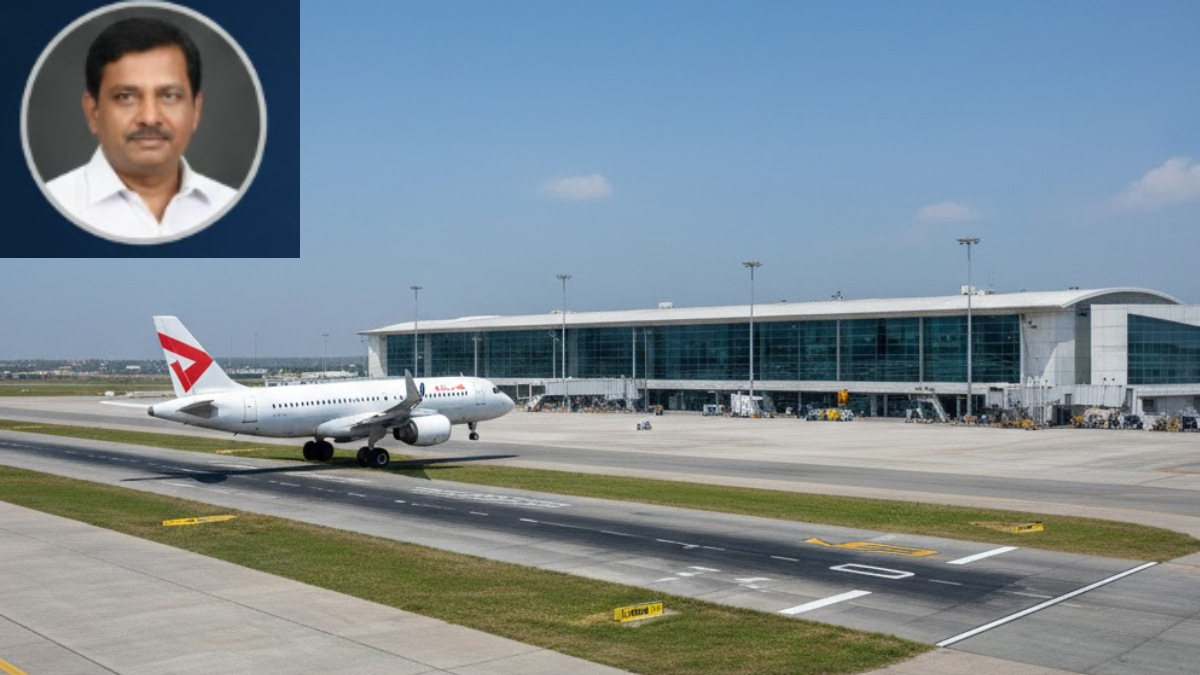
The response came from the Ministry of Civil Aviation in the Lok Sabha today, addressing an unstarred question raised by Bangalore Central MP P.C. Mohan.
The 25-Year Exclusivity Lock-in
The primary obstacle to a second airport is the Concession Agreement signed between the Government of India and Bangalore International Airport Limited (BIAL) in 2004.
- The 150-km Rule: The agreement explicitly prohibits the development or operation of any other commercial airport within an aerial distance of 150 kilometers from KIA for a period of 25 years from its opening date.
- The Countdown: Since Kempegowda International Airport commenced operations on May 24, 2008, this exclusivity period only expires in May 2033.
- Consent Required: Any deviation from this clause, including the reopening of the HAL Airport for commercial use, would require a formal No Objection Certificate (NOC) from BIAL.
AAI Identifies Sites, but Feasibility Concerns Linger
Responding to the Karnataka government's request, the Airports Authority of India (AAI) recently concluded a preliminary study on three potential locations for a second airport.
- Somanahalli (Kanakapura Road)
- Choodahalli (Kanakapura Road)
- Nelamangala (Kunigal Road)
While the AAI submitted its report, it reportedly flagged several challenges, including terrain suitability, restricted airspace (due to proximity to Yelahanka Air Force Base and HAL), and high land acquisition costs. Despite these studies, the Center noted that it has not yet received a formal, finalized proposal from the State Government to move forward with a specific site.

Why Bengaluru Needs a Second Airport
With KIA projected to reach its maximum capacity of 90 million passengers per year by the early 2030s, experts argue that planning must start immediately.
- Global Precedent: Leaders like P.C. Mohan have pointed out that global hubs like London and New York operate multiple airports to manage density.
- Lead Time: Infrastructure Minister M.B. Patil recently noted that a project of this scale requires at least 5 to 7 years for completion. Therefore, even if groundwork starts now, the airport would only be ready by the time the BIAL agreement expires in 2033.