Retired Air Marshal Jeetendra Mishra has made a major claim of Pakistan’s attempts to locate India’s S-400 air defence systems during Operation Sindoor to locate them. Mishra alleged that Pakistan was so worried about the capabilities of Russian-originated S-400 systems that it employed multiple intelligence-gathering methods, including activating spies and sleeper cells in India to find their locations.
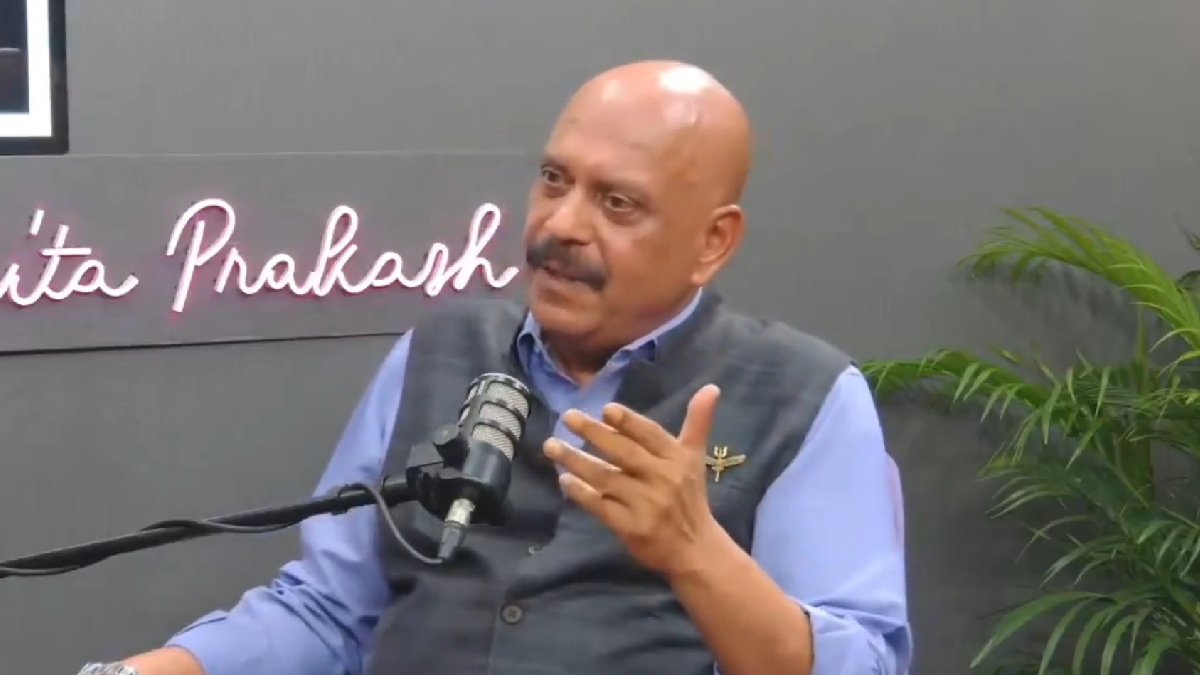
Mishra, who was commander of the Indian Air Force’s Western Air Command during Operation Sindoor, said the S-400 became one of Pakistan’s most important targets because of its ability to detect and engage aerial threats from far away.
The retired Air Marshal said the Pakistani fighter aircraft were prevented from approaching within 200 kilometres of the Indian border because the Indian air defence capabilities were so poor. He claimed Pakistan tried hard to find the locations of the S-400 systems with satellite support from other countries and human intelligence networks.
Mishra said Pakistan was “desperate” to find the locations of the S-400 systems and claimed that the country activated spies and sleeper cells within India for this purpose. He stressed the importance of secrecy regarding the deployment of strategic air defence assets, especially at times of tension in the military.
The S-400 Triumf is a long-range surface-to-air missile system that can detect, track and engage various types of airborne threats such as fighter aircraft, cruise missiles, surveillance platforms and other aerial targets. The system has significantly strengthened India’s layered air defence capabilities and is an integral part of the country’s strategy to protect critical military and strategic installations.
During Operation Sindoor, the S-400 played a key role in India’s air defence posture according to the media. Mishra also mentioned the attack on Adampur Air Force Station, and Pakistan felt the place was linked to S-400 systems’ deployment. The airbase is strategically important because of its proximity to the western sector, and it is part of India’s air operations.
The S-400 system was also used against drone threats. The increasing usage of unmanned aerial systems in modern warfare has made long-range detection and interception capabilities even more important. India’s ability to track and respond to aerial threats is becoming a major component of its defence preparedness.
“When they send a barrage of UAVs & LMs, we decided to teach them a lesson. We hit radar & underground C2 nodes to show them we can hit you across the length & breadth of Pakistan, not by writing letters but dropping a missile on your head”
— SilentFrame (@SilentFrameM) August 26, 2026
- AM Mishra (ex-AOCinC WAC)#PKMKB pic.twitter.com/RI45mMQ7iR
India has been steadily expanding its S-400 inventory. In June it got its fourth S-400 squadron from Russia, and the country has more robust air defense coverage. It is part of India’s larger aim to create a multi-layered air defence system that can deal with aircraft, missiles and drones.
Mishra also spoke about another major component of India's military capabilities - BrahMos missile. BrahMos is one of India’s most successful indigenous missile programmes and there was increasing international interest in the weapon following Operation Sindoor, he said.
BrahMos is a supersonic cruise missile developed jointly by India and Russia. It is high in speed, manoeuvrability and low-altitude flight profile, making interception very difficult. It can be launched from land-based systems, naval vessels and aircraft, so that the Indian armed forces are able to operate more flexibly.
Mishra said that BrahMos is especially powerful because of its speed and flight profile. The missile can reach fast speeds in different stages of its flight so it is very powerful today, he said.
The retired Air Marshal’s comments are an insight into the strategic importance of India’s air defence and precision-strike capabilities. While the claims regarding intelligence activities inside India are in line with Mishra’s account of Pakistan’s efforts during Operation Sindoor, they also illustrate how important information on the location of air defence systems can be during a military battle.
The focus on the S-400 indicates that information, surveillance and electronic intelligence will be as important as conventional military power in warfare. The mobility, concealment and operational readiness of advanced air defence systems, the most important aspect in India in the face of threats from aircraft, missiles and drones, will be maintained to keep India ahead in the fight for survival.
Mishra’s comments illustrate the strategic value of the S-400 and BrahMos in India’s defence architecture. The S-400 offers a long-range shield against aerial threats while BrahMos is fast enough to strike at targets. These capabilities together with India’s greater network of fighter aircraft, radars, missiles and other defence systems are part of the country’s evolving military preparedness.