India came very close to winning a medal at World Rowing Championships 2026 but Rohit and Ujjwal Kumar Singh had to settle for fourth place in the Lightweight Men's Double Sculls final.
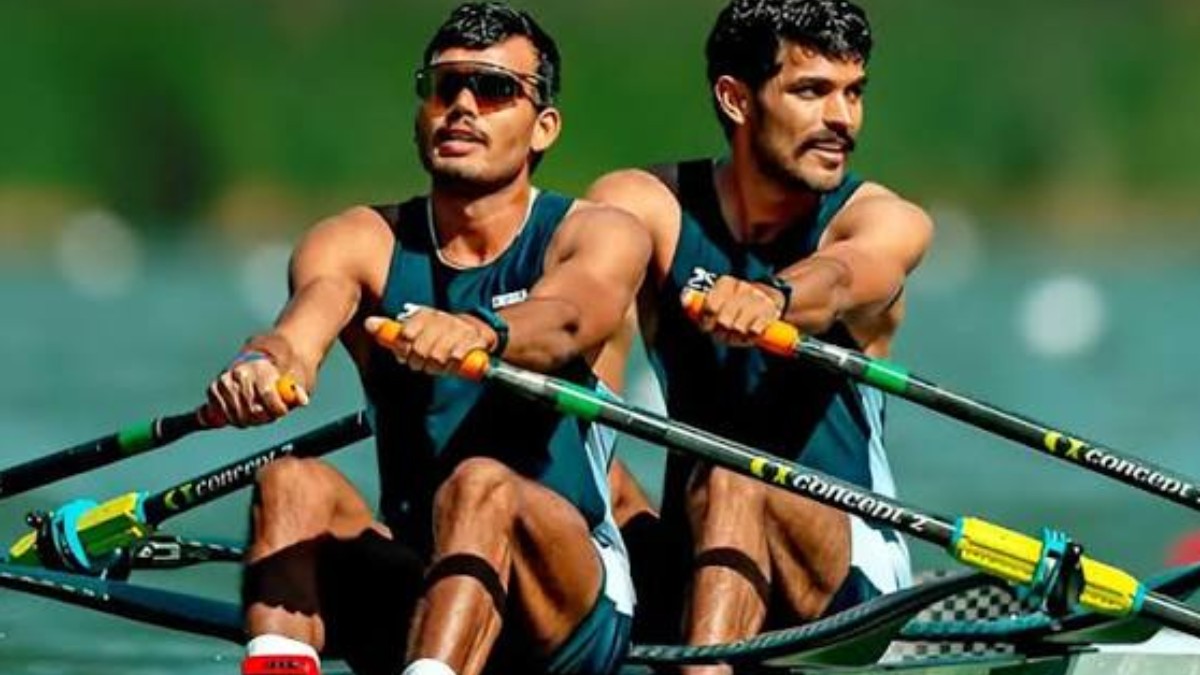
The Indian pair finished in 6:29.08 with only 1.63 seconds left in the race for the bronze medal and they did not stand out in the final. India might not have won the podium but it did bring India the biggest win in rowing at the World Championships.
Rohit and Ujjwal were up against some of the best crews in the world and managed to stay in the fight for a medal until the final stretch.
India started slowly but fought back
The Indian pair did not have the best start to the race.
In the first 500 metres, Rohit and Ujjwal were sixth with a time of 1:35.82. The Netherlands had the best start and Uzbekistan and Germany were also ahead of India.
But the Indians did not let the slow start affect their race.
They gradually moved up the field as the race progressed. They had climbed to fourth place at the halfway point with a time of 3:12.65.
That was an important moment because it put India within striking distance of the medal positions.
Rohit and Ujjwal remained fourth at the 1,500-metre mark. Their time at that stage was 4:51.62.
With only 500 metres left, the Indian crew had a chance to challenge for bronze.
Bronze Was Just 1.63 Seconds Away
The medal positions were ultimately decided in the final stretch.
The United States managed to stay ahead of India and finished third with 6:27.45.
India crossed the finish line in 6:29.08.
That meant Rohit and Ujjwal missed bronze by just 1.63 seconds.
Uzbekistan won the gold medal with a time of 6:21.93 while Germany took second place with 6:23.87.
The Netherlands was fifth at 6:31.01, followed by Brazil at 6:31.34.
And so India was comfortably ahead of two other crews in the final.
The Results
The final results for Lightweight Men's Double Sculls were:
Gold: Uzbekistan, 6:21.93
Silver: Germany, 6:23.87
Bronze: USA, 6:27.45
Fourth: India, 6:29.08
Fifth: Netherlands, 6:31.01
Sixth: Brazil, 6:31.34
The small gap between India and the United States shows just how close the race was.
At the end of 2,000 metres, less than two seconds separated India from a World Championships medal.
Reaching the Final was An Achievement In Itself
Rohit and Ujjwal first had to go to the Final A to compete for a medal.
The pair ran 7:26.77 in their heat and placed fourth. Their performance was enough to make them into the six-boat final.
That allowed India to compete directly against the strongest crews in the event.
They showed that with each other in the final, they could compete at that level.
The sixth place after 500 metres could have been an extremely disappointing race. But they pushed forward, took fourth place and stayed there until the end.
That comeback is one of the biggest positives India can take from the race.
A New Pair Making a Big Impact
The Rohit-Ujjwal combination is also relatively new.
Ujjwal had earlier competed with Lakshay in the Lightweight Men’s Double Sculls. The two won gold at the World Rowing Cup in Lucerne last year, which was a historic moment for Indian rowing.
That victory was later rescinded when Lakshay tested positive for a banned substance.
Rohit was paired with Ujjwal for the World Championships with Lakshay unavailable.
The new combination has now finished fourth in a World Championships final.
That is a good start for the partnership considering the competition.
India Is Rising.
Indian rowing is also making progress on the international stage, and this result is a further sign of that.
For so long, Indian rowers have struggled to contend for medals at the biggest international events.
Rohit and Ujjwal’s performance suggests that the gap is getting smaller.
They were not just participants in the final. They were involved in the race for the medals and remained within touching distance of the podium. That matters.
A fourth place finish is often overlooked because there is no medal to show for it. In this case, however, the result provides India with plenty of encouragement.
In the fourth position, the difference between fourth and third was only 1.63 seconds.
What The Pair Can Take From The Race
Missing a medal by such a small margin will obviously be disappointing for the Indian duo.
But they also have something to gain from the race: experience.
They now know what it takes to compete in a World Championships final against the world’s top crews.
They also know where they need to be better.
India’s slow start left the pair with ground to make up early on in the race. They were able to recover well, but starting stronger could have helped them to stay in the medal-winners’ grip from the start.
The final 500 metres will also be something the pair can learn from.
The difference from a medal to a fourth place is about a second, so small improvements can make a great difference.
A result to build on.
Rohit and Ujjwal may have missed the podium, but their fourth place finish gives Indian rowing a big boost to build on. They reached the Final A at the World Championships and finished ahead of the Netherlands and Brazil.
More importantly, they showed that India can remain competitive against some of the world’s strongest rowing nations. So for a relatively new partnership, that is a good sign.
And the next challenge is to make performances like this into medals. India Missed Bronze, But Made A Statement
There is no hiding from the fact that a medal was within reach.
Rohit and Ujjwal finished just 1.63 seconds behind the bronze medal-winning US crew. With such a fantastic comeback in the race, they would have been expected to place on the podium.
But fourth place should not take away from what they achieved.
The pair also made India’s best performance in the event at the World Rowing Championships, reached the biggest final and competed against some of the world’s best crews.
And for Indian rowing, that is a major step forward.
The medal didn’t come this time. But the performance showed that Indian rowers are getting closer to the podium, and Rohit and Ujjwal now have a World Championships final experience to build on.
Sometimes the difference between a breakthrough and a medal is measured in seconds. For India, that gap is now just 1.63 seconds.