India’s push for self-reliance in defence technology has been further supported by the launch by Hyderabad-based Paninian India of the Yantur 4.5 kN turbofan engine programme, which the company calls the first privately developed compact turbofan engine in the country. If developed and certified, the engine could be a huge step in India’s indigenous defence propulsion capabilities and reduce dependency on imported power plants for advanced military systems.
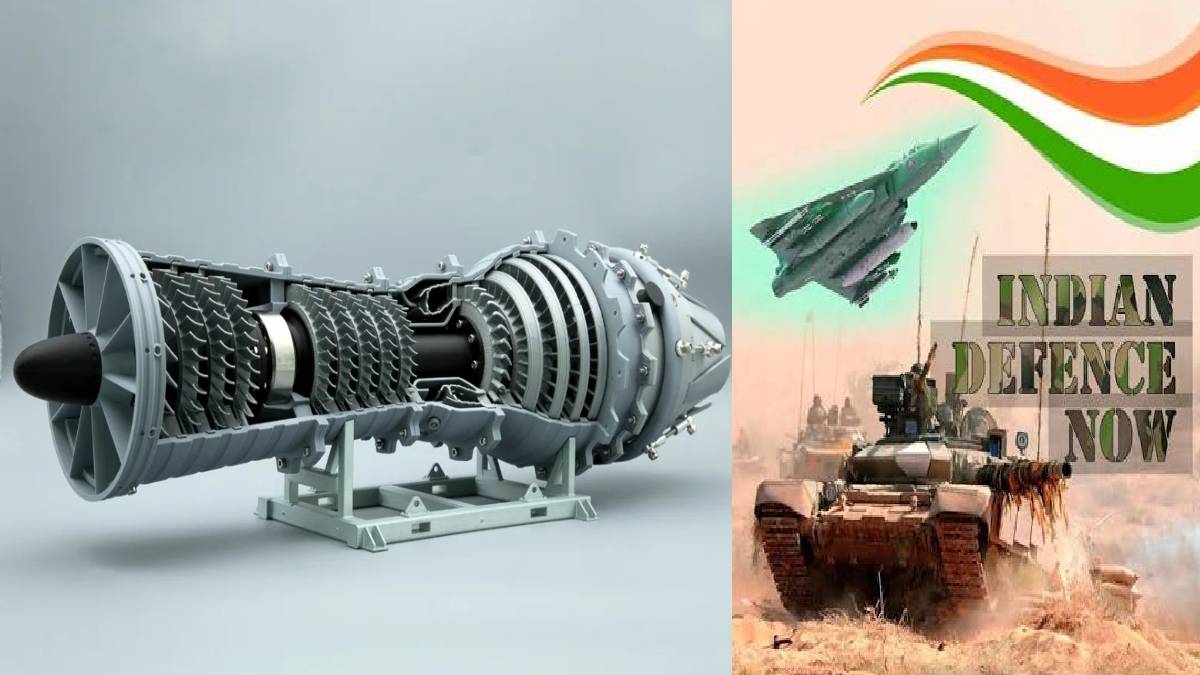
The Yantur programme was designed to enable Paninian India's SVAYATT-L1 long-range cruise missile, and eventually more advanced systems will be developed for collaborative combat drones and other advanced unmanned aerial systems. The announcement reflects the growing involvement of the private sector in the development of sophisticated defence technologies that are traditionally the domain of government agencies and public sector enterprises.
Modern turbofan engines are among the most advanced engineering systems in aviation. They combine aerodynamics, advanced manufacturing, high-temperature materials, combustion technology, digital control systems, and lightweight design to deliver efficient and reliable propulsion. Developing such engines domestically is a major technological achievement and could considerably strengthen India’s defence industrial base, too.
The company noted that the Yantur 4.5 kN programme has already completed the conceptual design and detailed engineering design phase. Subsystem development, testing, validation, and finally full engine certification are on the way for this project. The latter stages are critical to demonstrate reliability, safety, durability, and operation under challenging military conditions.
The engine's initial application is expected to be the SVAYATT-L1 long-range cruise missile. Cruise missiles require compact, fuel-efficient propulsion systems that can sustain long-duration flight at low altitudes while maintaining high precision. An indigenous turbofan engine would bring India greater freedom of choice in developing the next generation of missile systems and less dependence on foreign suppliers.
Apart from cruise missiles, Paninian India plans to build higher-power versions of the Yantur engine for collaborative combat aircraft and unmanned aerial systems. Collaborative combat drones, also known as loyal wingman systems, are meant to fly alongside manned fighter aircraft in missions like reconnaissance, electronic warfare, target acquisition, and precision strikes with minimal risk for human pilots.
Defence forces around the world are investing in autonomous and semi-autonomous unmanned systems as military operations have increasingly become technology-driven. Indigenous propulsion technology will be a key enabler for the development of advanced drone platforms tailored to India’s operational requirements.
The programme also aligns with the Government of India’s broader vision of Aatmanirbhar Bharat (self-reliant India) and Make in India in the defence sector. Over the past few years, the government has encouraged private companies, startups, and research institutions to participate more actively in defence innovation through policy reforms, procurement initiatives, and technology development programmes.
So far, propulsion technology has always been one of the most challenging areas in the Indian defence industry. While the country has achieved great success in missile systems, launch vehicles, and aerospace manufacturing, developing indigenous aircraft and missile engines has involved sustained investment in advanced engineering capabilities. The emergence of private companies pursuing turbofan engine technology represents a significant step towards broadening India’s defence manufacturing ecosystem.
If the Yantur engine is certified, it will stimulate growth in related industries, including precision engineering, advanced metallurgy, aerospace materials, digital control systems, electronics, and component manufacturing. The programme is likely to create highly skilled jobs and strengthen domestic supply chains for defence and aerospace production.
As global geopolitical uncertainty continues to stress the importance of resilient defence supply chains, indigenous propulsion capabilities have become increasingly important. Countries that have domestic engine development expertise enjoy greater strategic autonomy, quicker technology developments, and less dependence on external suppliers for critical defence equipment.
Despite the fact that the Yantur programme still needs to be tested, verified, and certified before going into operation, its progress is indicative of the maturity of India’s private defence sector. If successful development is made, it would be a great achievement for the country’s aerospace industry and a step towards India’s aim to become a global centre for advanced defence manufacturing.
With the Yantur 4.5 kN turbofan engine in the testing phase, Paninian India is at the forefront of indigenous defence propulsion development. If the programme is effective, it will have the potential to power India's next generation of cruise missiles, collaborative combat drones, and other advanced defence platforms, strengthening the country's technological capabilities and strategic self-reliance.